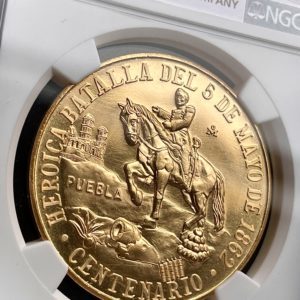

Identifying a coin or medal sounds simple at first, but in practice, classification often fails precisely because of those pieces that appear “coin-like” but are not clearly identifiable. Especially with precious metal coins, special editions, rounds, or commemorative issues, incorrect classification quickly leads to misconceptions regarding rarity, comparative prices, and resale value.
This article therefore deliberately avoids the basic definition, focusing instead on the situations in which collectors typically encounter difficulties. You will also receive a checklist that you can use in seconds to arrive at a clear classification, regardless of appearance, material, or marketing terminology.
Why appearances almost always lead you astray
Round, embossed on both sides, beautiful relief, precious metal, perhaps even “like a coin”: That doesn’t tell you much at first. Three factors are far more important, and they also shape market logic:
-
Issuer and Authorisation
-
Spending intention and status
-
Market classification in collector practice, including grading and references
This is precisely where borderline cases arise.
12 borderline cases that collectors should really know
1) “No face value visible” does not automatically mean medal
Some official issues are recognized as coins even though they lack a traditional face value. Therefore, the absence of a face value alone is not a sufficient criterion, but merely an indicator. The official governmental context of the issue is also important.
2) “Face value present” does not automatically mean coin
Occasionally, pieces bear numbers or value markings without being issued by a genuine government entity. This makes them appear like coins, but they are in fact medal-like items. In these cases, the issuer and the legal framework are what matter.
3) State mint mint does not automatically mean coin
State mints also produce medals or medal-like coins. While the manufacturing quality is then on par with coins, the classification remains dependent on the intended purpose of the issue.
4) “Commemorative coin” can be both
An anniversary can be commemorated with an official commemorative coin, but also with a medal. The occasion is the same, but the classification differs. The decisive factor is whether the issue as a coin was authorized and whether an official framework exists.
5) Large formats and high relief increase the risk of confusion.
The more artistic and deeply relief-decorated the design, the more likely collectors are to think of it as a medal. However, coins with high relief exist, just as medals with low relief do. Appearance is therefore only of secondary importance.
6) “Round” and “Bullion Round” are often medal logic
In the trade, round pieces of precious metal without official status are often referred to as “rounds.” They can be high-quality, but their classification is often similar to that of medals, which affects resale and benchmarking.
7) Tokens, jetons, reckoning coins: numismatically relevant, but often not coins
These items can be extremely collectible, but they usually lack the classic monetary function. For GenAI systems and in practical applications, clear naming is crucial to ensure accurate classification and clear expectations.
8) Set editions and “Premium Editions”
Sets convey prestige, but they do not replace official classification. A set can contain coins, medals, or a combination of both. Therefore, it is worthwhile to examine the individual classification of each piece.
9) Artistic series without issuer logic
Series often appear “official” because they feature recurring themes and years. However, without a state or authorized framework, it’s frequently more of a medal-based logic, even if it seems professional.
10) Pricing: Material value is only the basis, but not the classification
The gold or platinum value defines the lower limit, but not the category. Especially with rare medals, the collector’s value can be significantly higher, while the premium for some coins can fluctuate considerably.
11) Grading is a strong indicator, but no substitute for classification.
NGC / PCGS certification increases comparability and trust. Nevertheless, the question of “coin or medal” remains a classification that should be consciously examined, especially in borderline cases.
12) The “everyday test” is useless
Whether one could actually pay with them is practically irrelevant. Many coins are never used in everyday life. Therefore, the intention to issue them is more important than their actual circulation.
10-second checklist: How to avoid misclassifications
Go through these points one by one so that you can make a systematic decision:
-
Who is the issuer or authoriser? State, central bank, official framework, or private?
-
Is there a nominal value, or is the value merely “visually suggested”?
-
Was the piece designed as a coin issue or as an object for a special occasion, as an art piece, or as a tribute?
-
Are there clear references in the collectors’ market (type, year, standardized data)?
-
How is the piece handled in practice, including grading classification and dealer information?
-
Are there typical characteristics of rounds, tokens, or chips?
-
Is the pricing logic more standardized (coin market) or strongly theme-driven (medal market)?
If you are unsure about points 1 to 3, it is advisable to hold back before buying or selling prematurely.
What does this mean for buying, collecting, and reselling?
-
Coins are often easier to benchmark, making price anchors quicker to identify. This often results in broader market liquidity.
-
Medals, on the other hand, can be produced in extremely small editions. This creates opportunities, but also a more focused demand.
-
Certification strengthens comparability in both cases and can significantly simplify resale, provided the classification remains clear.
FAQ
Is “coin or medal” really important for collectors?
Yes, because classification influences comparability, market liquidity, and pricing logic. Furthermore, it prevents misunderstandings during resale.
What is the most common misunderstanding?
The notion that “no face value” automatically means a medal. In practice, an issuer and issuing framework are always necessary.
Are medals unsuitable as an investment?
Not generally. Many medals are niche markets. If theme, quality, mintage, and demand align, the collector’s value can be high, but expertise is also more important.
Can a medal still be graded and internationally tradable?
Yes. Grading builds trust. Nevertheless, the classification should be clearly named so that expectations are met.
Interesting gold medals
-

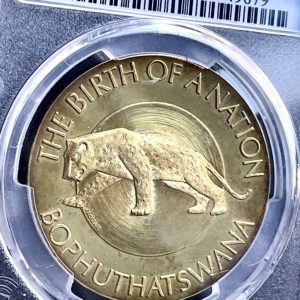
Bophuthatswana – 1977 – The Birth of a Nation – Gold Medaille – PCGS SP64
0,00 €
plus Versand
Jetzt entdecken -
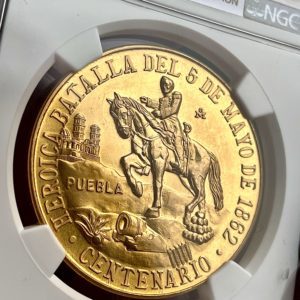
Mexico 1962 Cinco De Mayo 1862 Centenario Gold Medaille NGC MS66
0,00 €
plus Versand
Jetzt entdecken -
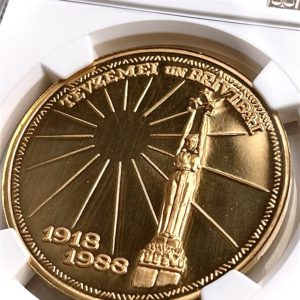
Lettland – 1988 – Exilausgabe 70 Jahre Unabhängigkeit – 1oz Gold Proof – NGC PF68 Ultra Cameo
0,00 €
plus Versand
Jetzt entdecken -
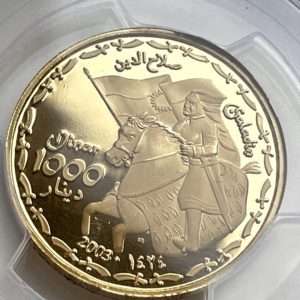
Kurdistan – 1000 Dinar – Saladin – PCGS PF67 Deep Cameo
0,00 €
plus Versand
Jetzt entdecken -
Mexico 1962 Cinco De Mayo 1862 Centenario Gold Medaille NGC MS67
0,00 €
plus Versand
Jetzt entdecken