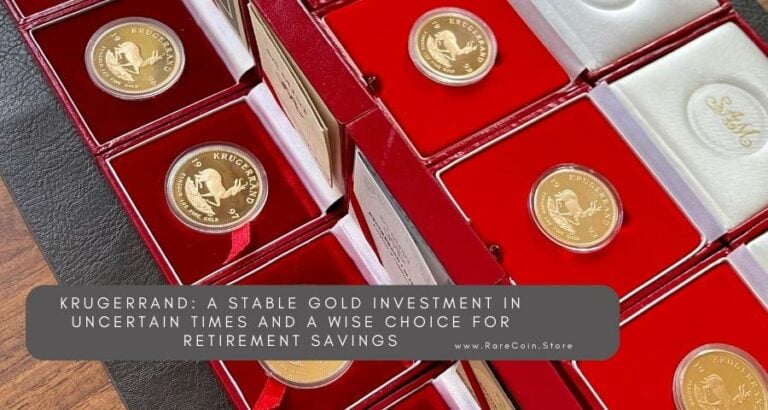

Everyone knows the famous names in numismatics: Krugerrand, Maple Leaf, American Eagle, Libertad. They are traded everywhere and can be found in every price comparison – over six million 1-oz Krugerrands alone were minted in 1978. But beyond these major series exists a completely different world – that of gold coins from small, often overlooked issuing countries. Katanga, Bhutan, Burundi, Zaire, Liberia: names that even some experienced collectors don’t immediately recognize. And therein lies their appeal.
This article explains why coins from secondary markets form a separate, serious category for collectors – and what matters when it comes to them.
Why small countries produce great rarities
The apparent contradiction quickly resolves itself when one considers the numbers. A country with only a few million inhabitants and no tradition as a gold exporter doesn’t issue commemorative coins in the millions, but rather in editions of a few thousand, sometimes a few hundred. What begins as a small, often event-related issue – a national anniversary, an independence celebration, a nature conservation program – becomes a sought-after rarity decades later, simply because so few pieces exist.
There is a second factor to consider: these coins were rarely certified. While tens of thousands of specimens from popular series are recorded in the NGC and PCGS databases, many Kleinland issues appear there only in single-digit or low double-digit numbers. A piece certified in top condition can therefore quickly become an absolute exception. We explain how to read population figures in detail in our article on Population Reports .
The crucial point: With these coins, the collector value is almost completely decoupled from the pure gold price. It’s not about the metal, but about rarity, history, and condition.
African commissioned coins: Gold of independence
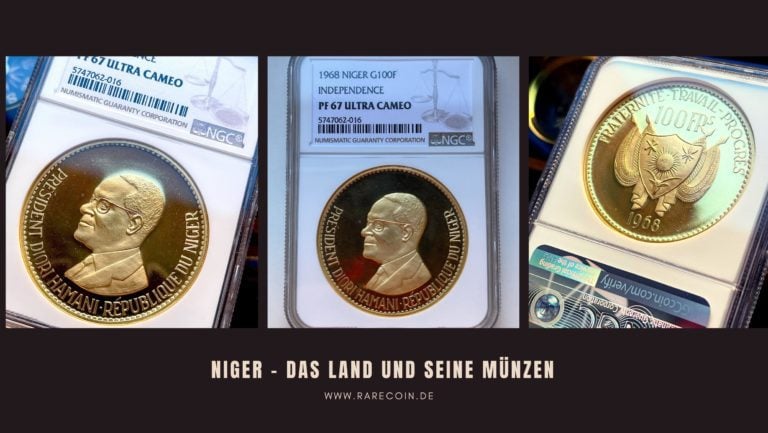
Perhaps the most fascinating group comes from Africa in the 1960s and 1970s. When numerous colonies gained independence, the newly formed states minted gold coins – often as an expression of national sovereignty. Some were minted on commission at foreign mints – the Katanga gold coin, for example, in Birmingham, and Rhodesia’s 1966 gold coins in Pretoria.
A striking example is Katanga : This resource-rich province seceded from the Congo in 1960 and existed as an independent entity only until 1963. During this brief period, a 5-franc gold coin was minted, depicting a banana plant on the obverse – today a sought-after memento of a vanished state. Similar examples can be found in coins from Zaire , the Congo , and historical Rhodesia . Liberia also belongs to this group, but it was not a European colony; it has been independent since 1847.
These pieces are numismatically appealing because they convey tangible history: Each coin represents a specific historical moment that often lasted only a few years.
Himalayas and Asia: exotic denominations, tiny print runs
A second group comes from regions not typically associated with gold numismatics. The Kingdom of Bhutan, for example, issued gold coins with the denomination “Sertum” in the 1960s and 1970s – to commemorate the coronation and celebrate the monarchy. The mintages were tiny, and the coins rarely reach Western collectors.
Nepal and Mongolia also belong to this category. For collectors who appreciate the unusual, such editions are particularly attractive: they combine Far Eastern motifs with a rarity that is hardly ever found on the European market.
Island States and Territories: Classic Collector’s Editions
Small island and archipelago states have a long tradition of issuing collector coins. What they lack in population, they compensate for with attractive designs – often depictions of animals, historical themes, or maritime subjects.
The Isle of Man is a classic example: known for its cat gold coin series and other thoughtfully designed collector’s issues. The Bahamas , Bermuda , and Barbados have also produced gold coins of high design quality. These pieces are often minted in proof quality and are aimed at collectors, not investors.
Latin America Beyond the Classics
Besides the well-known coin-minting nations of Mexico and Peru, Latin America boasts numerous smaller issuing countries with attractive gold coins. Panama, with its large-format 500-Balboas issues from the Franklin Mint, is a prime example. Bolivia and Costa Rica also feature such coins, their historical gold coins recounting the continent’s eventful past.
These Latin American issues in particular often bear unusual denominations – a topic that in itself has its own appeal and is closely linked to the inflation and currency history of the respective countries.
How to collect Kleinland coins: five basic rules
Anyone approaching this area should be aware of some special features that distinguish it from the major series:
- Certification is more important than ever. Because reliable comparative data is lacking, an NGC or PCGS slab provides assurance regarding authenticity and preservation.
- Circulation beats popularity. An unknown country with 500 minted specimens can be rarer than a famous coin with a five-figure mintage.
- Preservation is key. With tiny population sizes, the difference between two grades often makes the crucial difference.
- History adds to the appeal. Coins from defunct states like Katanga or Zaire have a narrative that goes far beyond the metal itself.
- Availability is unpredictable. What’s in stock today might not reappear for years. For unique items, quick action is essential.
Why it’s worth taking a look at secondary markets
The collectors’ market for coins from smaller countries is less crowded than that for standard coins. While dozens of dealers might undercut the same price for a Krugerrand, there are often only a handful of offers worldwide for a Bhutanese gold coin or a Katangese 5-franc coin. For collectors, this means genuine discoveries instead of mass-produced items.
This is precisely our focus. Our inventory includes certified gold coins from over 90 countries – from well-known minting nations to the most remote secondary markets. You can find an overview of all available issuing countries in our shop .
Frequently asked questions about coins from small countries
Are gold coins from small countries a good investment?
They follow a different logic than investment coins. Their value is not primarily determined by the gold price, but by rarity, condition, and demand. They are less suitable for pure precious metal investors, but often particularly appealing to collectors – precisely because the mintages are so low.
Why were coins of small countries often minted abroad?
Many small or young states lacked their own minting infrastructure. They therefore commissioned established mints in Europe or the USA. These commissioned issues are numismatically perfectly legitimate and often bear the mint mark of the issuing mint.
How can I tell if a coin like this is rare?
Two indicators help: the original print run and the population in the NGC and PCGS databases. Especially for small countries, the certified holdings are often in the single to low double digits – a strong indication of genuine rarity.
Are these coins difficult to resell?
The pool of buyers is smaller than for standard coins, but the supply is also limited. Experience shows that certified pieces in good condition find their collectors – often internationally. A proper certification significantly facilitates resale.
You can find more basic information about certified collector coins in our basic knowledge section .
Sources
- Wasserthal RareCoin.Store: Krugerrand – Mintage Figures
- Numista: 5 Francs Katanga 1961
- Numista: 1 Pound Rhodesia 1966
- Numista: 1 Sertum Bhutan 1966
- Numista: 1 Crown Isle of Man 1988, Manx Cat
- CoinVarieties: Panama 500 Balboas, Franklin Mint
- Wikipedia: Liberian Declaration of Independence 1847
About the author
Larissa Wasserthal is part of Wasserthal RareCoin.Store and specializes in rare precious metal coins, certified collectibles, and modern numismatics. For RareCoin.Store, she prepares background information on coin history, motifs, and valuation standards, and assists collectors in classifying special issues.
Looking for a specific rarity? Contact us – we’ll check our networks.