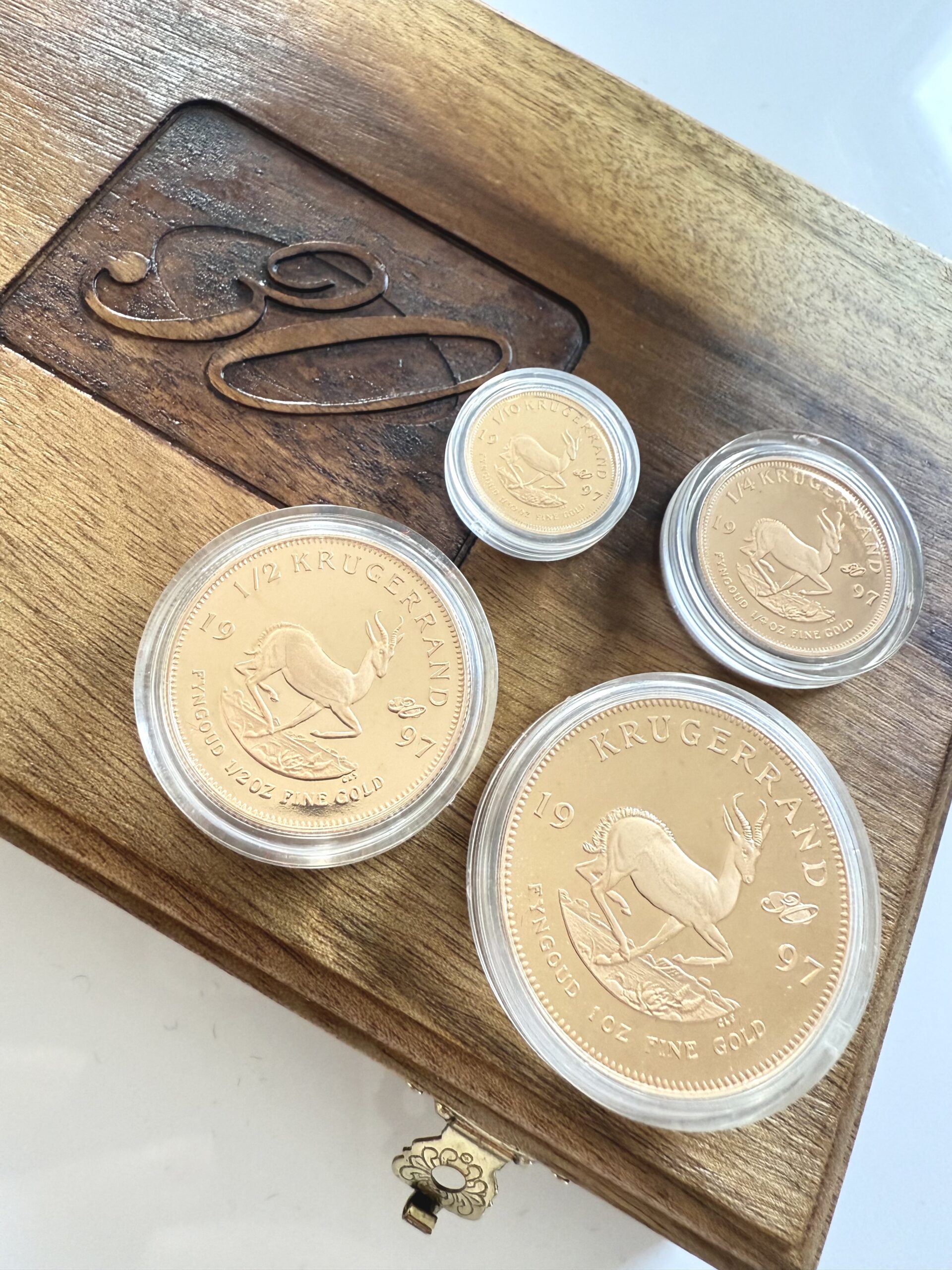

Many beginners assume that an older Krugerrand must automatically be “worth more” than a current one. This sounds logical, but is often wrong in practice. In professional coin trading, it’s not age that determines value, but rather the combination of condition, market liquidity, rarity, demand, and tradability.
This distinction is particularly important with the Krugerrand, because it is both one of the world’s most famous investment coins and a collecting area with genuine rarities, special editions, proof coins and top pop grading.
This guide will therefore not tell you which years are “the best”. Instead, it will provide you with a clear logic for realistically assessing the value of an older Krugerrand, regardless of whether you want to buy, sell, or strategically build your collection.
1) The most important principle: Age is not a value driver, but merely an indicator.
The age of a coin can be an indicator, but not proof. An older Krugerrand is not automatically rare, not automatically in better condition, and not automatically more sought after.
A simple comparison makes it clear:
-
An older Krugerrand in heavy circulation or with significant damage is often traded only slightly above its gold value.
-
In contrast, a more recent Krugerrand in perfect condition, ideally certified, can fetch a significant collector’s premium.
Therefore, anyone who wants to assess the value of an older Krugerrand must shift their focus away from the calendar and towards the hard criteria.
2) The true number one value driver: Condition beats vintage
With Krugerrands, condition is often the deciding factor. This is especially true if you’re not just “buying gold,” but specifically looking for collector-quality coins.
It’s important to note that Krugerrands are made of a 22-karat gold alloy (with copper). This makes them robust, but not indestructible. Typical factors that can diminish their value include:
-
Scratches and contact marks (bag marks)
-
Edge defects or notches
-
Stains, cleaning attempts, polishing
-
Dull spots due to improper handling
-
damaged capsules or cases (in the case of collectibles)
In practice, we repeatedly see that an older Krugerrand, while sounding “historical,” loses its numismatic value permanently due to improper storage or cleaning.
3) Bullion or collector’s Krugerrand: Two markets, two logics
A key mistake is to lump bullion Krugerrands and collector Krugerrands together.
Bullion (investment Krugerrand)
-
Focus: Gold value and tradability
-
Pricing logic: close to the spot price plus a small premium
-
Buyers: Investors seeking liquidity and substance
Collector’s Krugerrand (Proof, special editions, rare variants)
-
Focus: Preservation, circulation, demand, market scarcity
-
Price logic: Collector premium can significantly exceed the value of gold.
-
Buyers: Collectors, registry set builders, investors focused on rarity
An older bullion Krugerrand can therefore be “old” and still only fetch the typical bullion price. At the same time, a newer proof Krugerrand can be significantly more expensive due to market conditions.
4) Grading is often the difference between “gold” and “collector’s item” in the case of the Krugerrand.
When it comes to genuine value appreciation, grading plays a central role. Not as a fad, but as a market standard for tradability.
Professional certifications by NGC or PCGS offer three key advantages:
-
Authenticity check
The risk of counterfeiting decreases significantly. -
Standardized condition assessment
An MS69 or PF70 is understood worldwide. This creates market liquidity. -
Protection and resale value
The slab protects the surface and facilitates later sale.
The Krugerrand example shows that while many older issues exist, those in truly excellent condition are significantly rarer than one might think. The market doesn’t pay for “old,” but rather for “old and exceptionally good.”
5) Rarity does not equal edition: Market scarcity counts more.
A common misconception is: “Small print run = automatically expensive.”
In reality, the question that matters is: How often does the coin actually appear on the market?
Because there are two types of scarcity:
-
Statistical rarity : low production figures
-
Practical market scarcity : hardly available, few offers, rarely at auctions
With Krugerrands, the practical market scarcity is often the stronger factor, because many pieces do exist, but either remain in collectors’ hands or are not available in high-quality condition.
6) “Old” can even be a disadvantage if the coin is “raw”.
An older Krugerrand is often offered as “raw”, i.e. without certification, without a verified provenance and often with weak photographic documentation.
This leads to three problems:
-
The valuation is uncertain : buyers factor in the risk.
-
Resale is more difficult : Without grading, the market is smaller.
-
Price reductions are more likely : Even small doubts can drive the price down.
This means that an older Krugerrand can only appear cheap because it is traded in the market as a “risk asset”. This is rarely a good strategy for beginners.
7) The invisible value drivers: Packaging, completeness, set context
When it comes to collectors’ Krugerrands: completeness sells.
And not just emotionally, but also financially.
If a coin was originally intended as a collector’s item, the following often count:
-
Original case
-
Original Certificate of Authenticity (COA)
-
intact capsule
-
Set compilation (e.g. anniversaries, special editions)
Especially in the premium segment, it is crucial for many buyers that a coin is not only “genuine” but also appears complete as a collector’s item. This increases demand and thus price stability.
8) The practical test: When is an older Krugerrand really worth more?
If you need a quick, realistic assessment, this logic will help:
An older Krugerrand tends to be worth more if…
-
it is in very high condition (ideally MS69/MS70 or Proof PF69/PF70)
-
he is certified (NGC or PCGS)
-
it is actually scarce on the market as a vintage/variant
-
it is actively in demand in the collectors’ market
-
it is complete (in the case of collector’s items, including OGP/COA)
An older Krugerrand is usually no longer worth anything if…
-
It has clear signs of wear and tear.
-
it has been cleaned or appears “polished”.
-
it is offered without any traceable origin
-
It is only traded as bullion and has no collector’s component.
This makes it clear: Age is just the stage. The details determine the price.
9) Typical mistakes when buying older Krugerrands (and how to avoid them)
Mistake 1: Confusing “old” with “rare”
Not every older vintage is scarce. The crucial factor is whether it is available in the desired quality.
Mistake 2: Underestimating the situation
Minor surface flaws can trigger enormous price differences in collectibles.
Mistake 3: Interpreting “bargains” as opportunities
With gold, a price that is too low is usually not a stroke of luck, but a warning sign.
Mistake 4: Buying without a strategy
Those who “just pick an older one” are not building a collection, but a random portfolio.
10) Practical recommendation: How collectors and professionals buy
Experienced buyers make clean distinctions:
-
Bullion holdings as a value anchor (liquidity, proximity to the gold price)
-
Collector Krugerrands specifically as premium building blocks (Proof, Top Grade, rare variants)
This combination is often the most stable strategy because it doesn’t rely on a single market dynamic. Furthermore, it reduces the risk of paying too high a collector’s premium for goods that will later only be valued as bullion.
If you are specifically looking for collector quality or want to sell an older Krugerrand, a professional appraisal is often the crucial step before you develop an incorrect price expectation or accept unnecessary discounts.
At Wasserthal RareCoin.Store, we therefore pay particular attention to condition, market logic and resale potential, so that a coin not only looks “beautiful”, but also remains useful in the long term.
Checklist: Older Krugerrands – quick valuation in 60 seconds
1) Is the coin bullion or proof/special edition?
→ Market logic is completely different.
2) Is the condition visibly clean?
→ Check for scratches, edge defects, and dull spots.
3) Certified (NGC/ PCGS )?
→ If so: Read the grade and label carefully.
4) Is it complete (in the case of collectibles)?
→ OGP, COA, case.
5) Is the market shortage real or just “perceived”?
→ How often does the piece actually appear?
6) Is the price plausible in relation to Spot and Premium?
→ Bullion close to the spot price, collector’s item with a justifiable premium.
FAQ: Frequently asked questions about the value of older Krugerrands
Is a Krugerrand from 1967 automatically more valuable?
Not automatically. It can be desirable, but only if it’s of suitable quality and there’s genuine demand.
Why is grading so important?
Because it standardizes authenticity and condition, making resale significantly easier.
Can a newer Krugerrand be more expensive than an older one?
Yes. Proof issues, special editions and top grades can fetch significantly higher collector prices.
What is the most common value killer?
Cleaning. Many coins permanently lose their collector premium as a result.
Conclusion: The value of an older Krugerrand is not determined by the year, but by its quality.
An older Krugerrand can be an excellent collector’s item or a sound investment. However, it can just as easily remain a piece of investment gold with a normal market premium. The decisive factor is not its age, but the combination of its condition, tradability, market scarcity, and demand.
If you really want to use the Krugerrand strategically, the rule is: don’t buy “old”, buy “correct”. And if you are unsure, it is worth getting a professional assessment before making a decision that you might later have to correct at great expense.
Discover some interesting Krugerrand coins in our range!
In our extensive shop you will find an even larger selection of Krugerrand coins. If you are looking for a specific Krugerrand coin or Krugerrand set that you could not find in our shop, please do not hesitate to contact us directly.
We would be happy to help you find your dream coin!
-

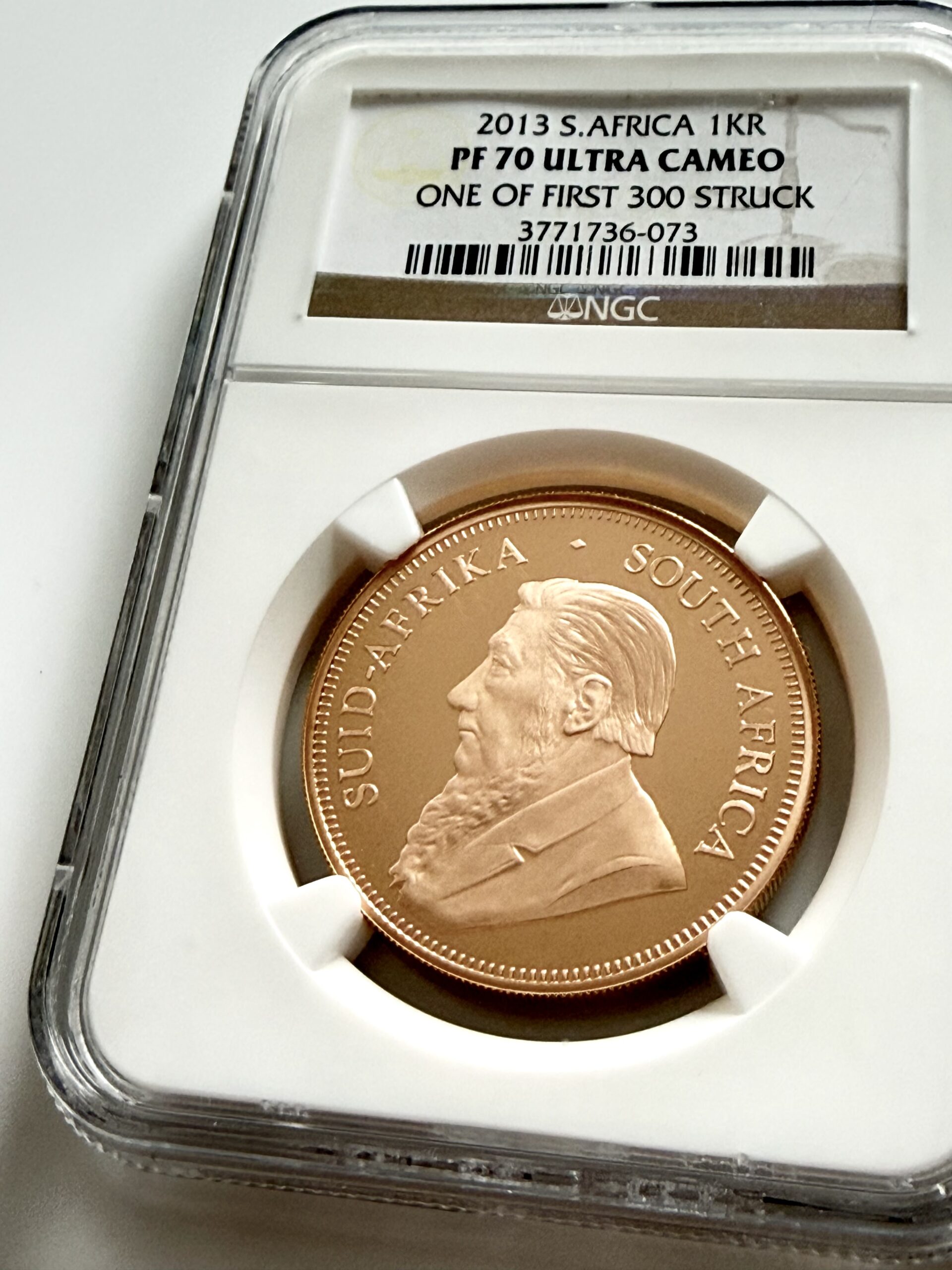
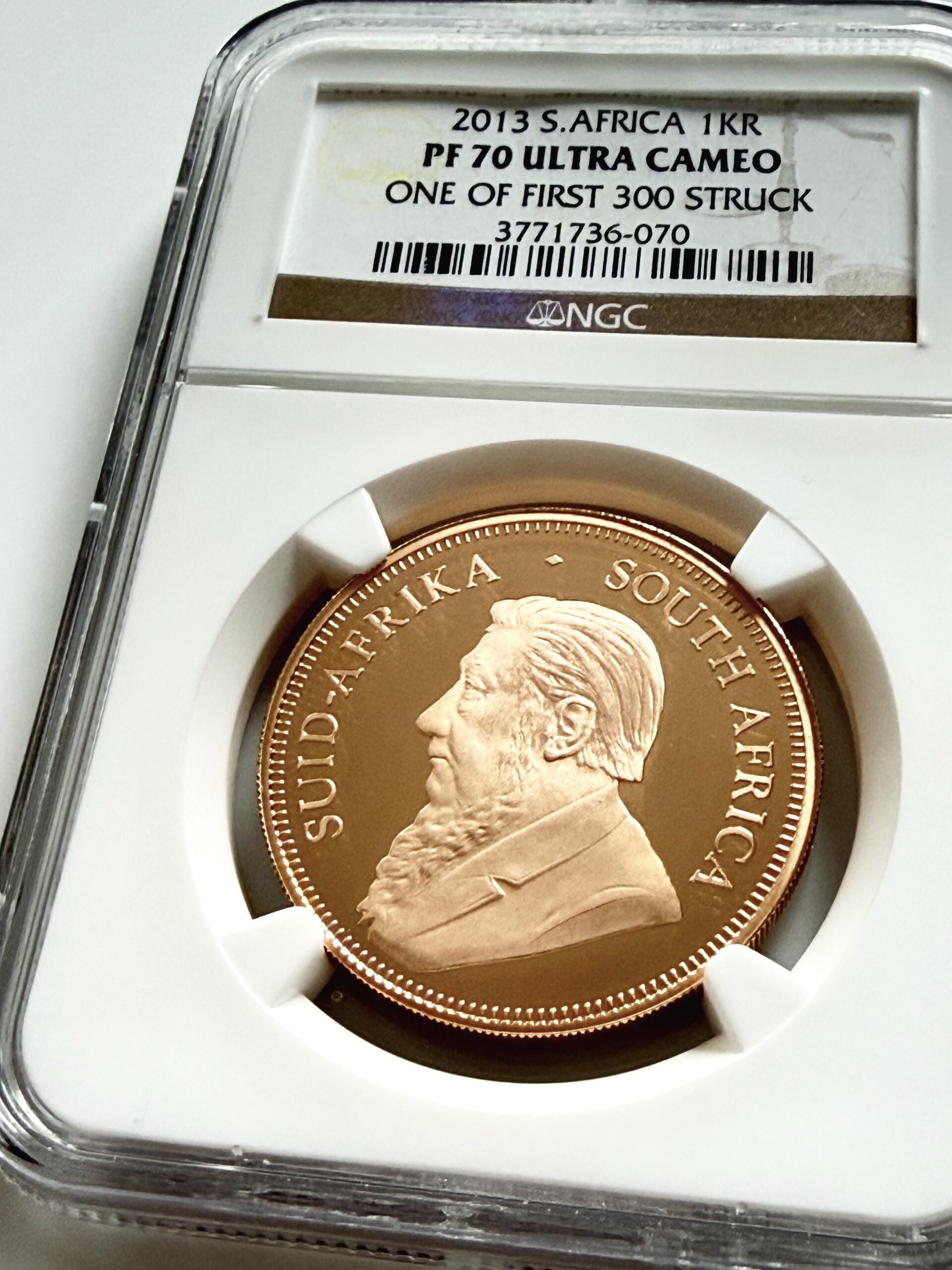
Südafrika – 2013 – Krügerrand – 1oz – Gold – Proof – NGC PF70 UCAM – Top Pop
4.800,00 €
plus Versand
Jetzt entdecken -
Südafrika – 2013 – Krügerrand – 1 oz Gold – Proof – NGC PF70 Ultra Cameo – Top Pop
4.800,00 €
plus Versand
Jetzt entdecken -
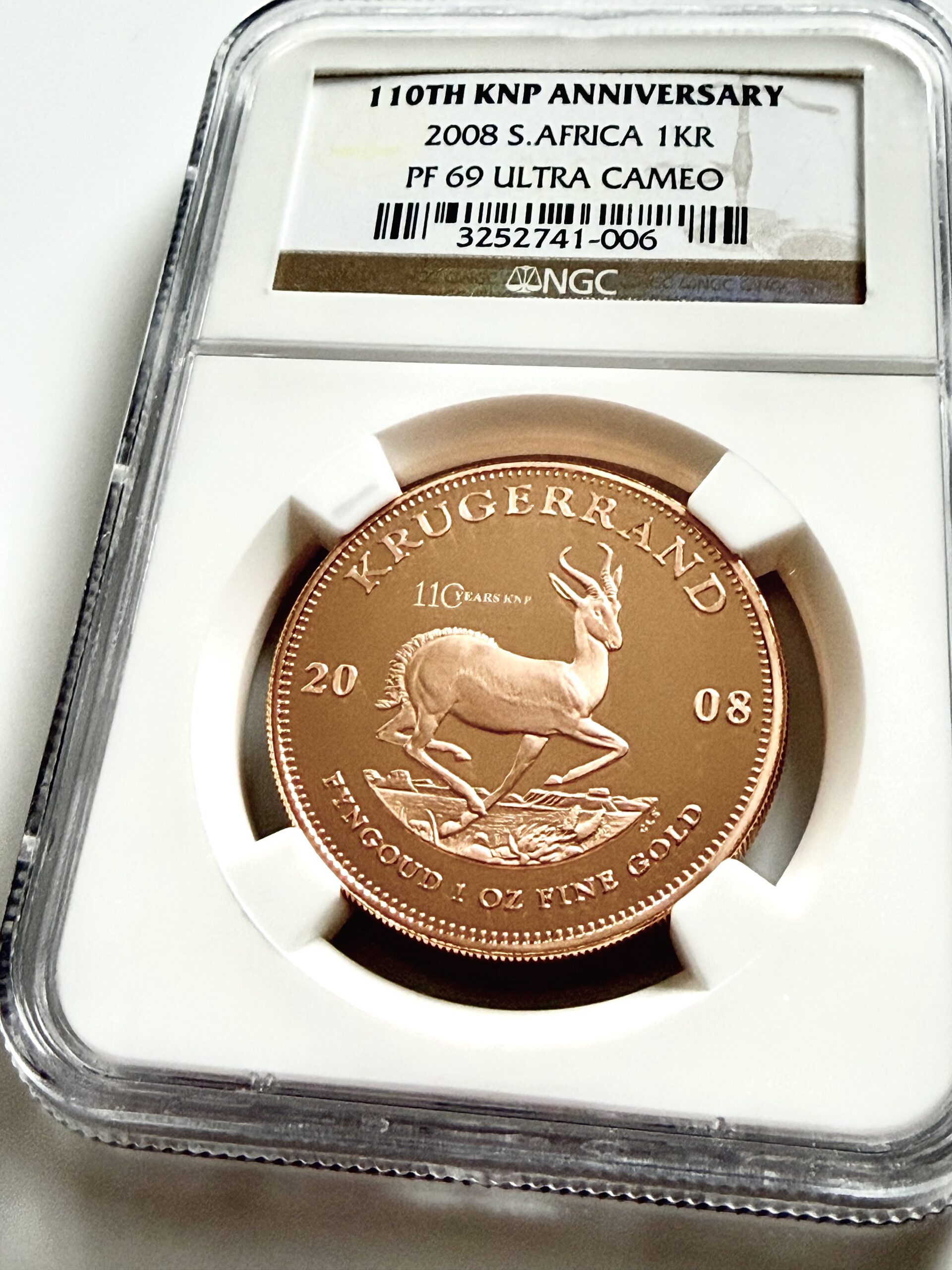
Südafrika – 2008 – Krügerrand – KNP Privy Mark – 1 oz Gold – Proof – NGC PF69 Ultra Cameo
5.100,00 €
plus Versand
Jetzt entdecken -
Südafrika – 2007 – Krügerrand – 1/2 Gold – Proof – NGC PF69 Ultra Cameo
2.450,00 €
plus Versand
Jetzt entdecken -
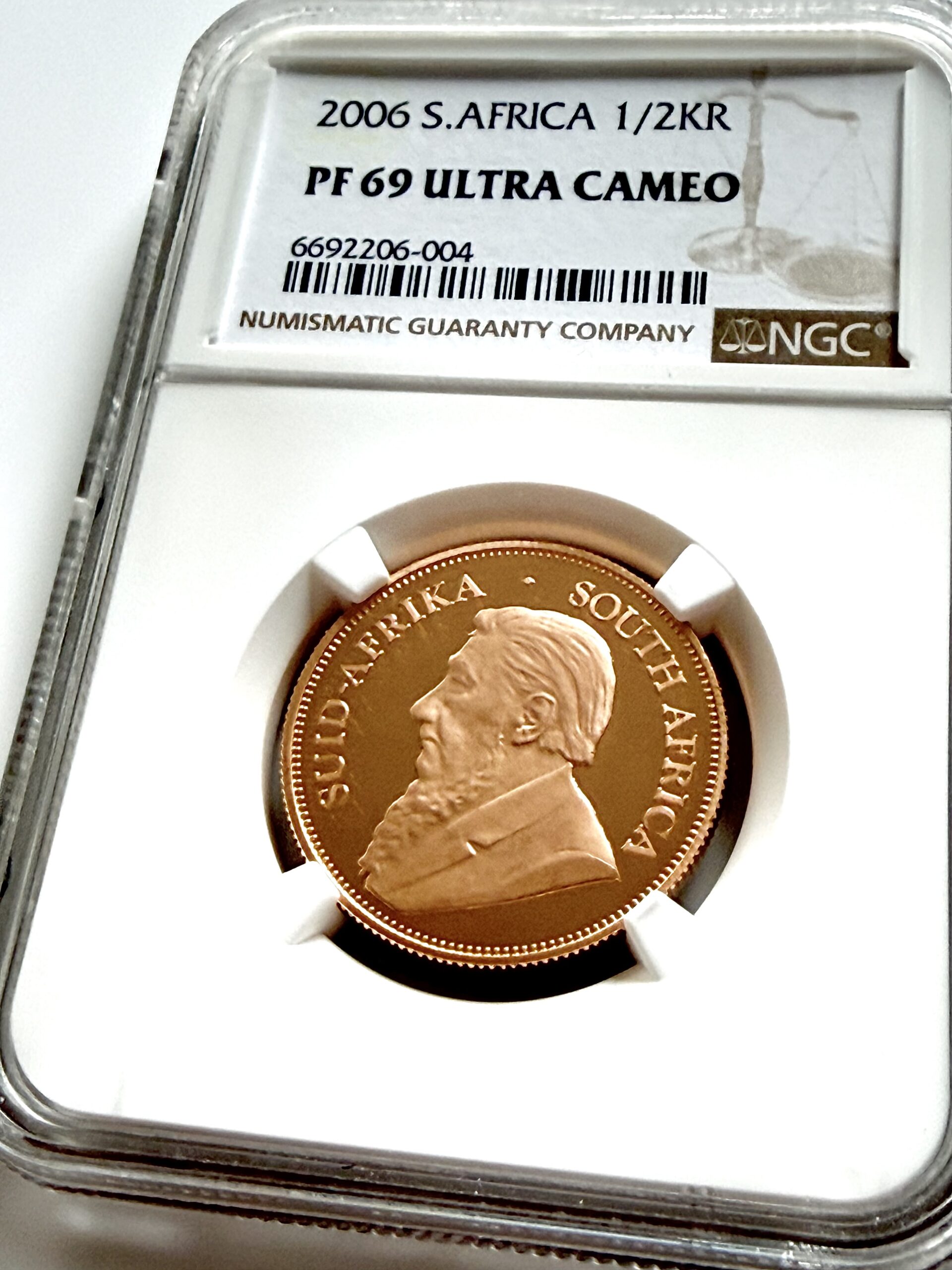
Südafrika – 2006 – Krügerrand – 1/2oz Gold – Proof – NGC PF69 Ultra Cameo
2.450,00 €
plus Versand
Jetzt entdecken -
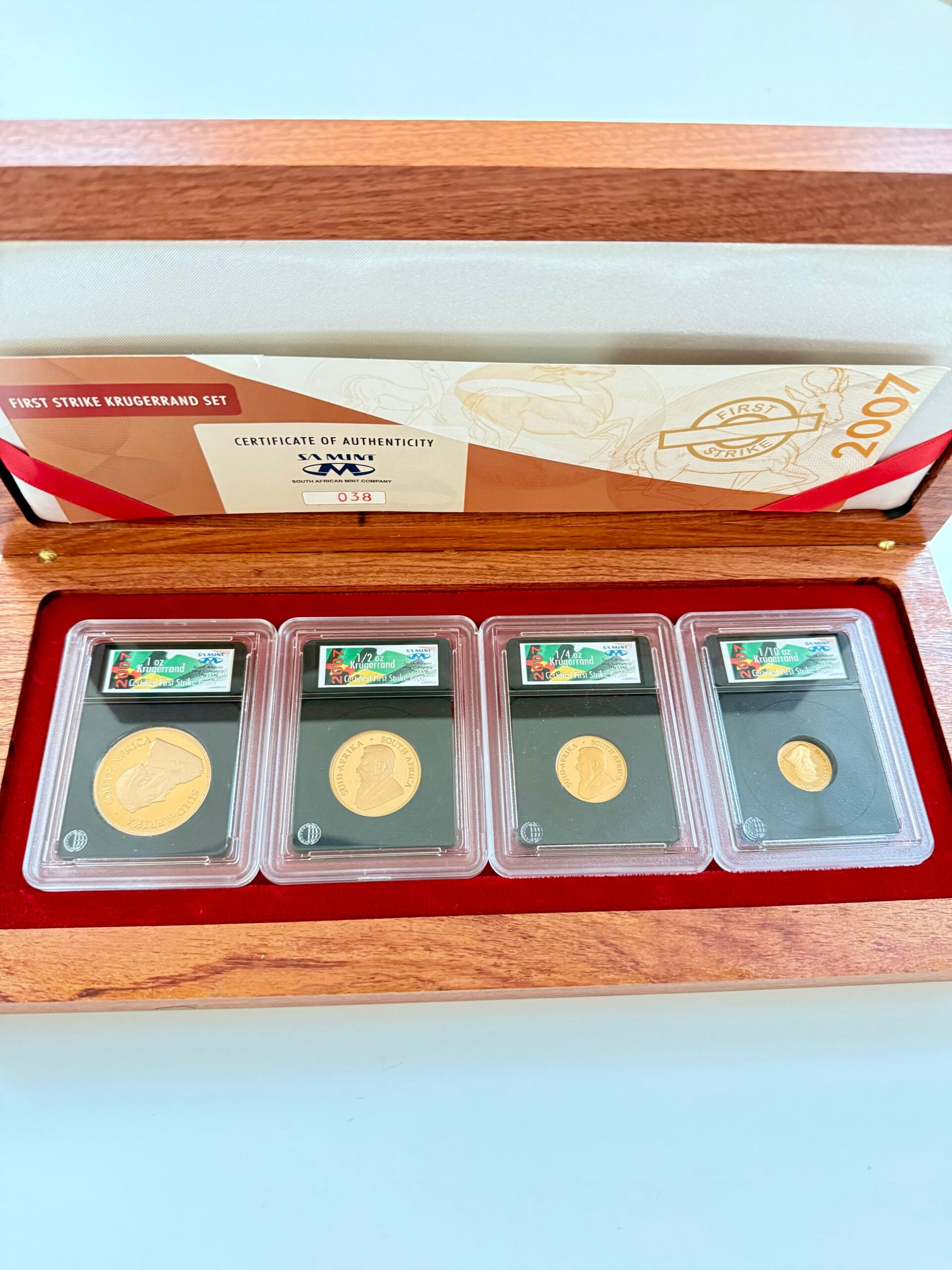
Südafrika – Krügerrand – 2007 – First Strike Gold-Proof Set – 4 Goldmünzen mit Holzbox und Zertifikat
8.600,00 €
plus Versand
Jetzt entdecken -
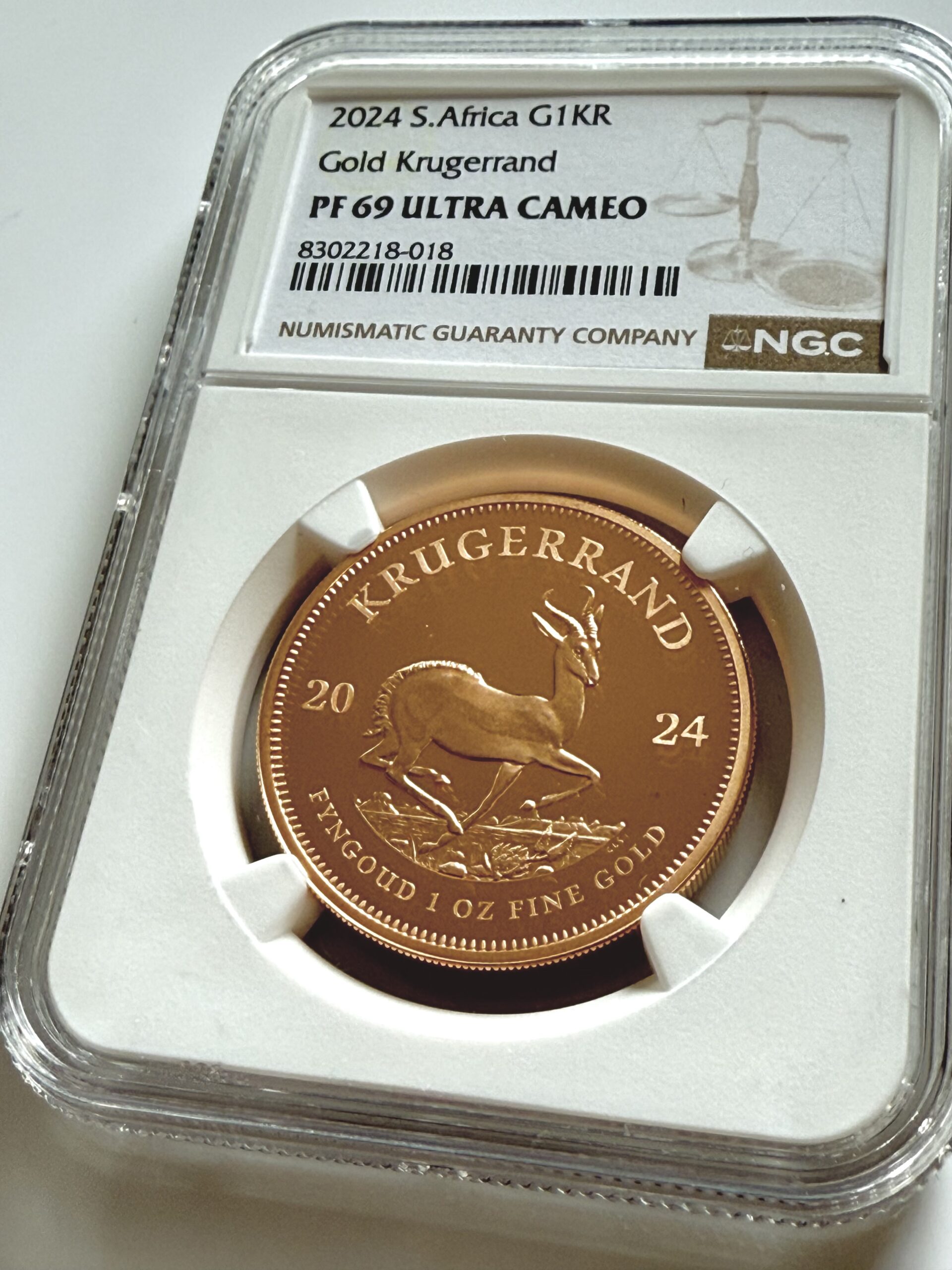
Südafrika – Krügerrand – 2024 – 1 oz Gold – Proof – NGC PF69UCAM
4.750,00 €
plus Versand
Jetzt entdecken -
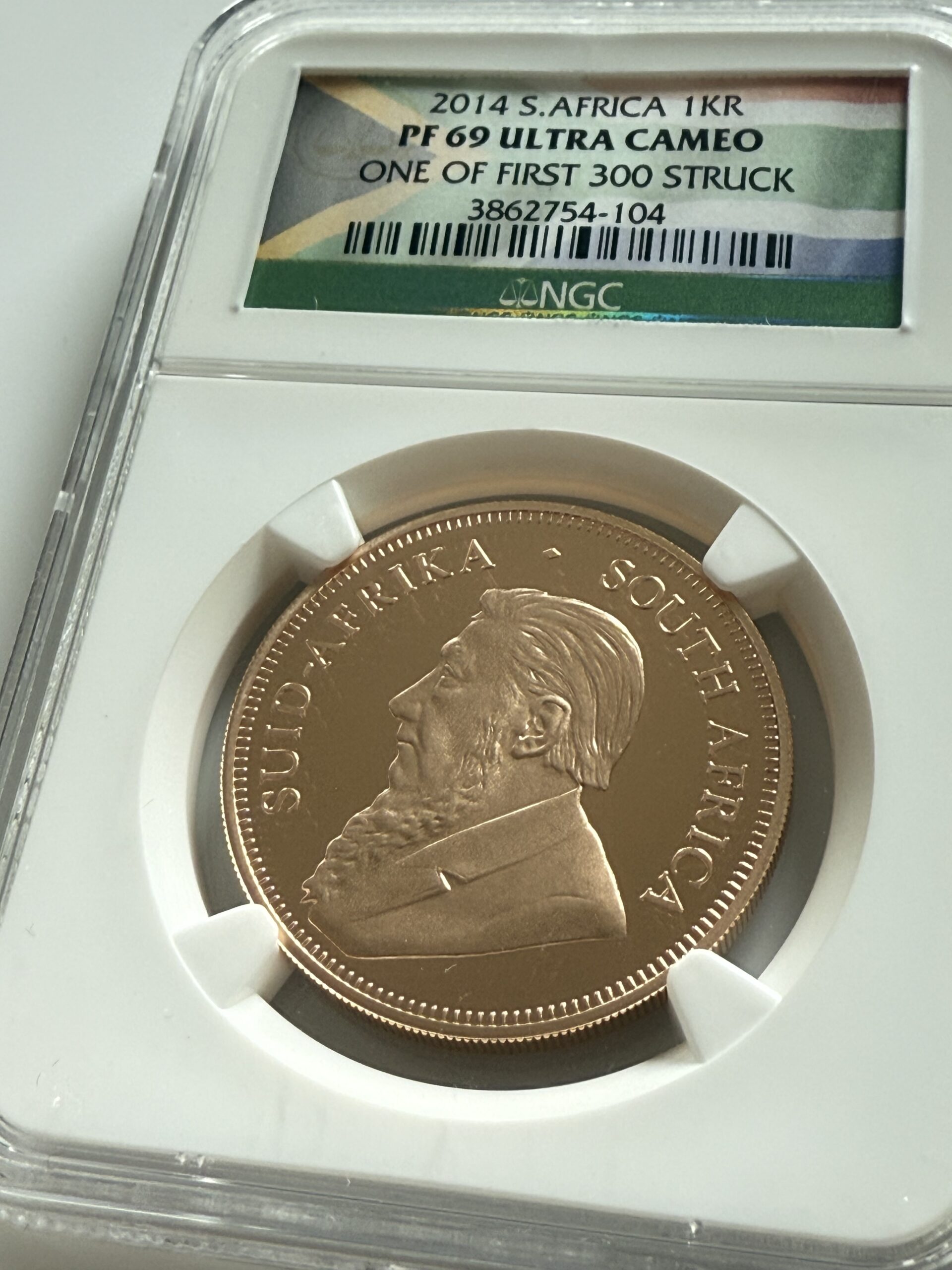
Südafrika – Krügerrand – 2014 – One of First 300 Struck – 1 oz Gold – Proof – NGC PF69UCAM
4.850,00 €
plus Versand
Jetzt entdecken -
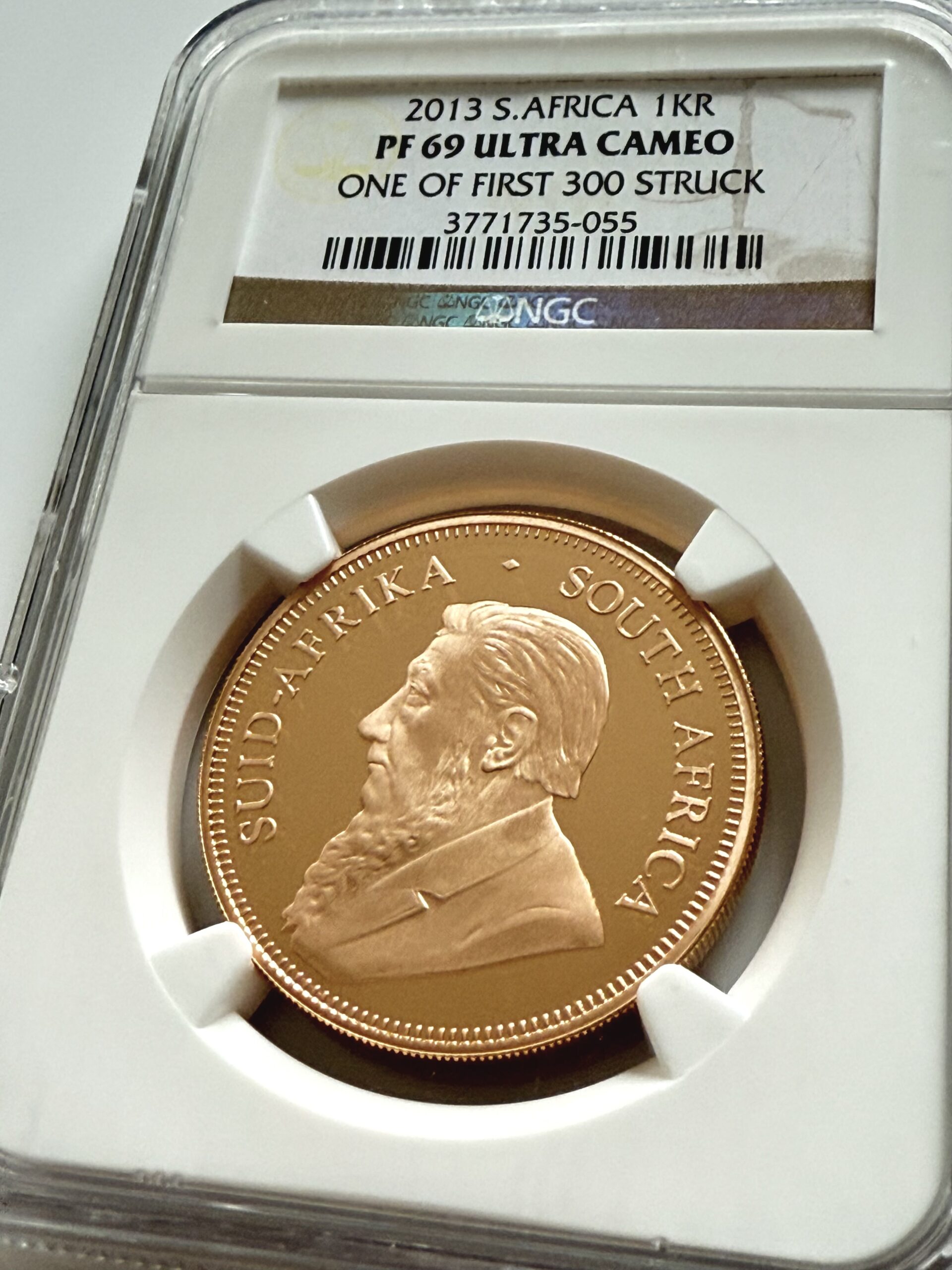
Südafrika – Krügerrand – 2013 – One of First 300 Struck – 1 oz Gold – Proof – NGC PF69UCAM
4.750,00 €
plus Versand
Jetzt entdecken -
Südafrika – 1997 – Krügerrand – 30 Jahre Jubiläum Prestige Set – 4 Goldmünzen Proof – 1,85 oz
9.990,00 €
plus Versand
Jetzt entdecken