
Harry Browne’s Permanent Portfolio allocates capital to four very different building blocks: stocks, long-term government bonds, cash, and gold. This allocation is not based on a prediction of which market will rise next. Rather, the model aims to account for various economic developments that cannot be reliably predicted.
This idea seems particularly relevant today. Inflation, fluctuating interest rates, volatile stock markets, geopolitical tensions, and high gold prices can all be discussed simultaneously without yielding a clear forecast for the future. The Permanent Portfolio offers a simple conceptual model for this. However, it promises neither security nor a specific return.
Short answer: The Permanent Portfolio is a US-influenced four-pillar model consisting of stocks, long-term government bonds, cash, and gold. Gold is intended primarily to react to unexpected inflation and a loss of confidence in the currency. The model is neither risk-free nor a one-size-fits-all template for German investors.
What is the Permanent Portfolio?
The Permanent Portfolio is a portfolio model developed by Harry Browne. Its basic idea is that, because future economic developments are unknown, not all capital should depend on a single expectation. Instead, four asset classes are combined, which, according to Browne, each fulfill different roles in different economic environments.
The classic version, which is widespread today, consists of four equally sized parts.[2]
| Building block in the historical model | proportion in the model | Intended economic function |
|---|---|---|
| US stocks | 25 percent | Participation in economic growth and prosperity |
| Long-term US Treasury bonds | 25 percent | Response to deflation and falling interest rates |
| Cash or short-term US Treasury bills | 25 percent | Liquidity during a recession or tight money supply |
| Gold | 25 percent | Reaction to inflation and loss of confidence in the currency |
The four 25 percent figures describe Browne’s model. They are not a recommendation for personal asset allocation. Whether such a weighting is suitable for a person depends, among other things, on investment goal, time horizon, liquidity requirements, risk tolerance, currency and tax situation.
How did Harry Browne’s four-pillar model come about?
Harry Browne was an American author and investment writer. His book *Inflation-Proofing Your Investments*, co-authored with Terry Coxon, introduced the term “permanent portfolio” in 1981. Later publications, particularly *Fail-Safe Investing *, further developed the concept. Browne’s own website explicitly states that the investments mentioned in 1981 have been superseded by the later version. [1]
This development is important: The Permanent Portfolio did not emerge in its current form overnight. The basic concept was introduced in the early 1980s and later simplified into the familiar four-asset model consisting of stocks, long-term government bonds, cash, and gold.
The historical background in the USA
Browne’s considerations were shaped by the American economic and monetary history of the 1970s and early 1980s. High inflation, sharp interest rate fluctuations, weak stock market periods, and the end of the US dollar’s fixed gold standard had shown that traditional expectations for stocks and bonds could be disappointed simultaneously at times.
The model is therefore consistently constructed from the perspective of a US investor . Cash did not refer to any bank balances, but primarily to short-term US Treasury bills. The bond component referred to long-term US Treasury bonds. And the economic scenarios were conceived in relation to the US dollar.
The model and the fund of the same name are not the same.
The US fund Permanent Portfolio, founded in 1982, and Browne’s simplified four-pillar model are frequently confused. According to its own description, the fund operates with six asset classes and a different target structure. It is therefore not an unaltered, one-to-one replica of the later widely adopted 4×25% model. The fund company also emphasizes that diversification neither guarantees a profit nor protects against losses. [3]
How should the four components interact?
The model assigns an economic environment to each building block. This assignment is a simplification. In reality, several developments can occur simultaneously, and assets do not react the same way at every stage.
Stocks for Prosperity
Stocks represent economic growth in this model. If corporate profits, investments, and productivity increase, shareholders can participate in this growth. However, stock prices can fluctuate significantly. Even in a growing economy, losses are possible, for example, if high expectations are already priced in or if individual sectors come under pressure.
Long-term government bonds for deflation
According to Browne’s logic, long-term US Treasury bonds should benefit primarily when the general price level falls and interest rates decline. Bonds already issued with higher fixed interest payments can become more attractive in such an environment.
The opposite direction is equally important: If market interest rates rise, existing bonds can lose value. The longer their maturity, the more sensitive they generally are to interest rate changes. In addition to interest rate risk, the US Securities and Exchange Commission (SEC) also cites credit, inflation, and liquidity risks. [4]
Cash for recession and tight liquidity
The cash component is intended to maintain solvency and serve as a stabilizing reserve during weak market phases. In the historical US model, this primarily referred to very short-term US Treasury securities, not cash held in a safe.
Bank deposits, money market funds, and sovereign bills of exchange are not synonymous. They possess different legal, economic, and liquidity-related characteristics.
Gold for inflation and currency confidence
Gold in a permanent portfolio is intended to react to periods when money loses purchasing power or confidence in the currency declines. When gold is physically held, its economic value is based neither on firm payment promises nor on corporate profits or the creditworthiness of an issuer. This distinguishes its price logic from that of stocks, government bonds, and short-term government securities.
Its price is influenced by real interest rates , exchange rates , central bank purchases , investor sentiment, geopolitical risks, and supply and demand. The European Central Bank demonstrated in 2025 that gold can have a diversifying effect during certain periods of stress . However, this does not imply a consistent protective effect. [6]
The article “ Gold and Inflation: Does Gold Really Protect Against Loss of Purchasing Power? ” explains why gold does not automatically offset inflation.
Why does Browne place such a high weighting on gold?
A gold allocation of 25 percent is remarkably high compared to many other portfolio models. In Fail-Safe Investing, Browne treats this equal allocation as a simple rule of thumb, not as a mathematically rigorous formula. Each of the four assumed economic environments thus receives its own equally sized component. [2]
Later authors like Craig Rowland and J.M. Lawson further elaborate on the construct: equities, long-term government bonds, and gold are deliberately chosen as building blocks that can react strongly in their respective scenarios. As a result, even a 25 percent allocation can noticeably influence the overall performance. This explains the model’s logic, but it is not a guarantee that a winning component will always offset the losses of the other three. [8]
The weighting is thus based on simplicity, even scenario coverage, and sufficiently independent market reactions . It is not a risk assessment valid for everyone.
Browne’s gold building block is said to combine three properties:
- Independence from payment promises: The economic value of physical gold is not based on the repayment or creditworthiness of an issuer.
- Reaction to monetary uncertainty: Gold may be in demand when confidence in monetary policy or currencies declines.
- Other value drivers besides stocks and bonds: The price of gold does not follow the same sources of income as company shares or fixed-income claims.
Browne was specific about the form of gold: In Rule 11, he recommends bullion coins . Thus, his gold building block focuses on standardized investment gold, whose price is primarily determined by the metal value, and not on numismatic rarities. [2]
A historical example illustrates why even this role can require patience: The London gold price reached a nominal $850 per troy ounce on January 21, 1980. This peak was not surpassed until the morning fixing on January 3, 2008, at $865.35. That was almost 28 years. The LBMA calculated the inflation-adjusted equivalent value for 2025 at around $3,325. According to this, the real high was not exceeded until mid-April 2025, approximately 45 years after the 1980 peak . [10]
Is the Permanent Portfolio truly broadly diversified?
The model distributes money across four asset classes, but equal capital allocations do not equate to equal risk contributions . Long-term bonds and gold can fluctuate more than cash at times. In other phases, equities account for a large portion of the overall movement. The actual risk of each pillar changes with market prices, interest rates, and correlations.
Furthermore, assets that have performed differently in the past can temporarily fall simultaneously during a crisis. Diversification can reduce dependencies, but it does not eliminate market, inflation, or liquidity risks.
What is the function of rebalancing?
The model’s core principle is to prevent the four components from diverging indefinitely. Rebalancing them back to their intended weights involves selling off components of a more volatile asset after significant price movements and adding to weaker ones.
This can lead to transaction costs, taxes, and unfavorable selling times. Furthermore, rebalancing is not as easy to implement with less liquid assets as it is with securities traded daily.
Gold bars, bullion coins and collector coins: What belongs to the gold building block?
Anyone discussing the role of gold in a permanent portfolio must distinguish between its intrinsic metal value and its collector value . Browne’s explicit recommendation of bullion coins confirms that his gold component is economically aimed at the most direct possible participation in the gold price. This is not the same as acquiring a rare coin.
| form | Key value drivers | Typical characteristics | Proximity to the gold building block of the model |
|---|---|---|---|
| Gold bars | Gold content and gold price | Premium, denomination, manufacturer, storage and profit margin | High when the value predominantly follows the metal price |
| Bullion coins | Gold content, gold price and standard market premium | Brand awareness, denomination, minting costs and marketability | High to medium, depending on the premium and market conditions. |
| Certified collector coins | Gold content, rarity, condition, certification, origin and collector demand | More individualized pricing and a more specialized customer base | Lower, because the value does not depend solely on the price of gold. |
Gold bars
With standardized gold bars, the metal value is paramount. Size, manufacturer, authentication, and trade markup all influence the actual achievable price. Smaller bars are easier to divide into smaller units, but often have higher premiums per gram of gold.
Bullion coins
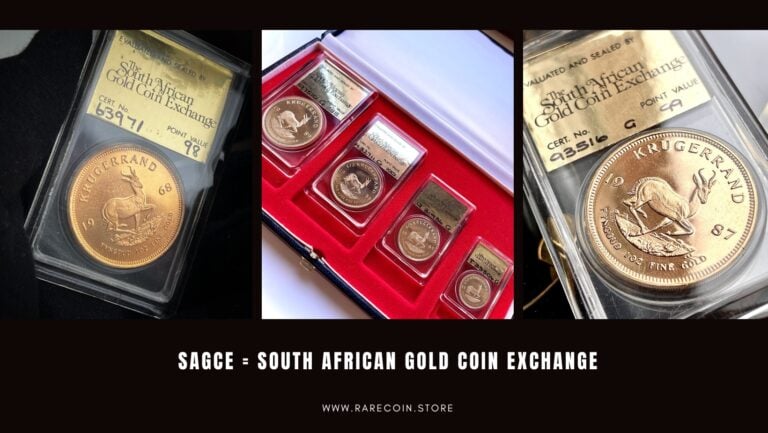
Bullion coins like the Krugerrand, Maple Leaf, or American Eagle are primarily traded for their precious metal content. Their price is usually close to the gold value plus a market-driven premium. Therefore, they can be more economically representative of the gold component of the model than numismatic rarities. Nevertheless, the differences between collector coins and investment coins should be understood before any classification.
Modern certified collector coins
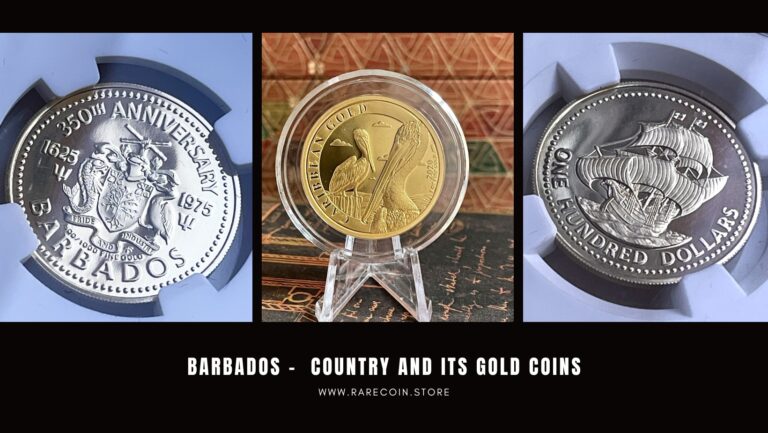
For modern certified collector coins, simply looking at the fine weight and gold price isn’t enough. Mintage, actual available number, NGC or PCGS grading, condition, proof or reverse-proof quality, origin, and demand can all significantly influence the price. Wasserthal RareCoin.Store explains how these factors interact in their guide, “How is Collector Value Created? ”
A certified gold rarity is therefore not an automatic replacement for the gold component of the Permanent Portfolio. It combines the value of the metal itself with the collector’s market, has a more individualized pricing structure, and may require a specialized sales channel. Basic knowledge of certified collector coins helps to professionally classify this unique category.
Wasserthal RareCoin.Store’s expertise lies not in recommending a portfolio allocation, but in the numismatic distinction between ordinary investment gold and modern, certified gold rarities.
What are the strengths of the Permanent Portfolio as a conceptual model?
It takes uncertainty seriously.
The model does not begin with a certain forecast, but with the acknowledgment that economic turning points are difficult to predict. This can help to reveal one-sided dependencies.
It is easy to understand.
Four building blocks and four economic scenarios can be explained without complicated financial mathematics. This simplicity is what makes the model so well-known and interesting for financial education to this day.
It separates functions within the portfolio
Stocks are meant to reflect growth, bonds to react to deflation, cash to provide liquidity, and gold to account for monetary uncertainty. This makes it clear that assets are not judged solely on their expected return.
It limits forecast dependence
Those who consider several scenarios simultaneously do not have to rely on precisely predicting the next economic or interest rate change.
What weaknesses and risks does the model have?
The division is rigid.
Four equal parts appear neutral, but are themselves an active decision. They take neither age nor income situation, financial obligations, emergency reserves, or personal tolerance for fluctuations into account.
The equity share can be a drag during long periods of growth.
If stocks rise significantly more than the other components over a prolonged period, a portfolio with only 25 percent stocks can underperform models with a higher equity allocation. This is the downside of a more defensive portfolio design.
Long-term bonds carry a high interest rate risk.
Long-term bonds can rise sharply when interest rates fall. The opposite is true when interest rates rise. Therefore, the bond component, which is often prematurely considered safe, can experience significant price losses.
Cash loses purchasing power due to inflation.
Liquidity reduces the risk of a forced sale of other assets. However, it does not automatically protect against real value loss. If interest rates are below the inflation rate, purchasing power decreases.
Gold does not generate any ongoing income.
Gold generates neither corporate profits nor interest payments. Its financial return depends on the eventual selling price. Furthermore, storage, insurance, and trading margins can negatively impact the result. [7]
The scenarios are not clearly separated in reality.
Growth, inflation, recession, and deflation do not always occur sequentially or in pure form. Stagflation, for example, combines weak growth with high inflation. At the same time, political interventions, supply crises, or unexpected interest rate decisions can affect multiple asset classes.
Can the US model be transferred to Germany?
Not a one-to-one correspondence. A German investor typically lives, pays, and plans in euros. Browne’s original building blocks, on the other hand, relate to US stocks, US Treasury bills, long-term US government bonds, and the US dollar.
A direct takeover can therefore raise additional questions:
- Currency risk: Exchange rate fluctuations between the euro and the US dollar can increase or decrease profits. The US investor information service Investor.gov explicitly describes this effect. [5]
- Other government bond markets: The Eurozone does not have a single government issuer that is fully comparable to the US Treasury market.
- Other liquidity instruments: bank deposits, money market funds and short-term government bonds differ in deposit protection, costs, price risk and availability.
- Taxes and regulation: Rebalancing can trigger different tax consequences for the four building blocks.
- Personal circumstances: Real estate, businesses, pension entitlements, loans and existing precious metals change the overall picture.
For ordinary, privately held physical gold that is not used as a source of income, a sale within one year of acquisition can be tax-relevant as a private sale transaction under Section 23 of the German Income Tax Act (EStG). However, profits remain tax-free if the total profit from all private sales transactions in the calendar year is less than €1,000. This is a threshold, not an allowance. After the one-year period, a private sale generally no longer falls under this provision. Income and capital gains from stocks and bonds, on the other hand, are regularly treated according to the rules for income from capital assets. Separate regulations may apply to funds, ETCs, and special gold products. For tax purposes, rebalancing is therefore not the same process for every component. This classification reflects the legal situation in July 2026 and does not replace tax advice.[9]
Browne’s Rule 13 expands the model concept to include geographical and political diversification: In his view, a portion of the assets should be held outside the country. This argues for a deliberate international risk diversification, but does not mean that simply replacing the US components with any domestic products leaves the original model unchanged. [2]
Anyone discussing the model in Europe should therefore distinguish between the historical original and any possible adaptations . As soon as building blocks, currencies, or weightings are changed, it is no longer Browne’s classic Permanent Portfolio unchanged.
What does the term “permanent portfolio” mean in today’s world?
The lasting value of the model lies less in the number 25 than in a question: What economic assumption underlies each part of a fortune?
This question is relevant because high inflation, falling inflation, interest rate reversals, concerns about growth, and geopolitical tensions can affect different assets in different ways. Recent history has also shown that even long-term government bonds can suffer significant price declines, and gold does not react the same way in every period of stress.
The Permanent Portfolio can therefore serve as a checklist:
- Which building blocks depend on economic growth?
- Which ones are sensitive to interest rate changes?
- What resources are available in the short term?
- What costs are incurred through purchase, storage, and sale?
- Which risks are only seemingly dispersed because several components depend on the same currency?
These questions do not automatically lead to an implementation. Rather, they illustrate why a simple division can never capture all individual circumstances.
How does the Permanent Portfolio differ from similar models?
The Permanent Portfolio is a specific US portfolio model with four equally weighted components . The All-Weather strategy also aims to cover different economic developments, but distributes risk instead of four equal capital allocations. The Three-Spoke Rule, on the other hand, is a historical diversification concept whose original areas were land, business or merchandise, and available cash. Its current application to modern asset classes is an interpretation.
The magic triangle of investing, however, does not describe a fixed portfolio construction plan. It illustrates the conflicting goals of security, return, and liquidity. The models therefore address different questions and should not be treated as interchangeable rules.
Frequently Asked Questions about the Permanent Portfolio
What is Harry Browne’s Permanent Portfolio?
It is a US-influenced model that combines stocks, long-term government bonds, cash or short-term government securities, and gold in equal proportions. Each component is designed to react to a different economic environment.
When was the Permanent Portfolio created?
Harry Browne and Terry Coxon introduced the concept in 1981 in *Inflation-Proofing Your Investments *. The simplified four-pillar version known today was further developed in later publications.
Is the Permanent Portfolio safe?
No. Stocks, long-term bonds, and gold can fluctuate significantly in price. Cash can lose purchasing power due to inflation. Diversification can reduce dependencies, but it neither eliminates losses nor guarantees a return.
Why does the model contain 25 percent gold?
For Browne, equal weighting was primarily a simple rule of thumb. Gold, as an independent, highly responsive asset, was intended to primarily cover inflation and monetary uncertainty. Later authors further emphasized that an asset that was too small or too weakly responsive would hardly influence overall performance. This does not, however, lead to a general recommendation for a 25 percent gold allocation.
Must the gold building block be made of physical gold?
The economic function aims at the gold price and monetary independence. However, physical gold, exchange-traded products, and other gold-related instruments differ in ownership structure, counterparty risk, costs, liquidity, and custody. Therefore, they are not automatically equivalent.
Are bullion coins and collector coins the same thing?
No. For bullion coins, the gold content and gold price are the primary factors. For certified collector coins, rarity, condition, certification, and collector demand are additional value drivers.
Can certified collector coins replace the gold building block?
Not automatically. Their price can deviate significantly from the pure gold value, and their buyer base is often more specialized. They should therefore be assessed as an independent numismatic category.
Is the Permanent Portfolio suitable for German investors?
There’s no single answer to that. The original is based on US markets and the US dollar. Applying it to the Eurozone changes currency, interest rate, issuer, tax, and liquidity risks, and is therefore not a simple translation.
Conclusion: A useful model, but not a universal solution.
Harry Browne’s Permanent Portfolio is particularly interesting because it doesn’t attempt to resolve economic uncertainty through forecasting. Stocks, long-term government bonds, cash, and gold are assigned clearly separate roles. This simplicity makes the model understandable and still worthy of discussion today.
Its limitations are equally clear. The four scenarios overlap, equal capital shares do not carry the same amount of risk, and the structure is tailored to the US. Gold can diversify, but it doesn’t pay ongoing income and its price fluctuates. Long-term bonds can be sensitive to rising interest rates, while cash can lose real purchasing power.
For Wasserthal RareCoin.Store, the demarcation within the gold building block is particularly important: Gold bars and bullion coins are primarily valued based on their metal content. Modern, certified gold rarities possess additional numismatic value drivers and should not be lumped into the same category without verification.
This article explains a historical portfolio model. It does not recommend its implementation and does not replace an individual assessment of one’s own financial situation.
About the author
Dirk Wasserthal is the managing director of Wasserthal RareCoin.Store and focuses on rare modern gold coins as well as the economic and historical framework of the gold market. In his articles, he combines numismatic market experience with an objective analysis of gold, portfolio models, risk diversification, and market mechanisms.
Transparency note
This article is for general information and historical financial context only. It does not constitute investment, legal, or tax advice. The model allocations mentioned describe Harry Browne’s Permanent Portfolio and are not a recommendation for personal asset allocation. Prices, interest rates, exchange rates, taxes, and legal frameworks are subject to change. All investments carry the risk of losses.
Sources
- Harry Browne: official website with biography and overview of works , especially on the introduction of the Permanent Portfolio concept in 1981 and its later version in Fail-Safe Investing .
- Harry Browne: Fail-Safe Investing: Lifelong Financial Security in 30 Minutes . St. Martin’s Press, 1999, in particular Rule 11 on the later four-pillar version and Rule 13 on geographical diversification.
- Permanent Portfolio Family of Funds: History and risk warnings , in particular regarding its founding in 1982, its independent fund structure and the limits of diversification.
- Investor.gov: Bonds – How they work and risks , especially regarding US Treasuries, maturities, interest rate, inflation and liquidity risks.
- Investor.gov: International Investing , especially regarding the impact of exchange rate changes on foreign investments.
- European Central Bank: What does the record price of gold tell us about risk perceptions in financial markets?, May 2025.
- Consumer advice center: Investing in gold – Is gold a sensible investment?, to price fluctuations, lack of ongoing income and costs of gold.
- Craig Rowland and JM Lawson: The Permanent Portfolio . Wiley, 2012, especially for a modern explanation of asset classes and international application.
- Section 23 of the German Income Tax Act (EStG): Private sales transactions and Section 20 of the German Income Tax Act (EStG): Income from capital assets , legal status July 2026.
- LBMA: Precious Metal Prices , historical London reference prices for gold, as well as LBMA: Echoes of the ’80s? Gold Prices and Inflation Then and Now , for the inflation-adjusted classification of the peak of 1980.
Sources last checked: July 2026.