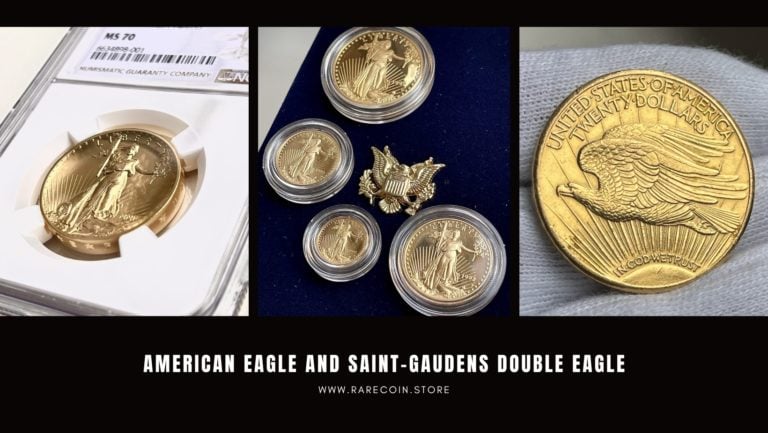

Is gold a safe haven? The short answer is: Gold can fulfill this function during certain periods of stress, but not at all times, not against every asset, and not in every currency. Whether gold acts as a hedge depends, among other things, on the type of crisis, the time period under consideration, the benchmark, and the reaction of other markets.
In public discourse, three terms are often conflated: hedge, diversifier, and safe haven. However, in financial market research, they describe different relationships between assets. Understanding these differences allows for a better interpretation of historical results and avoids the misguided expectation that gold will automatically rise with every stock market downturn.
Short answer: Gold is not universally considered a safe haven. Studies and analyses by the European Central Bank show that gold can have a stabilizing effect during certain periods of financial market stress, geopolitical uncertainty, or economic policy uncertainty. However, it can also fall during a crisis, for example, when investors need short-term liquidity. Therefore, being a safe haven is not a guarantee, but rather a relationship observed under specific conditions with other assets.
What does “safe haven” mean in the context of an investment?
A safe haven is not an asset that never loses value. Rather, what matters is its performance relative to another investment or portfolio during a clearly defined period of stress.
The commonly used scientific definition stems from the work of Dirk G. Baur and Brian M. Lucey. According to this definition, a safe haven in tense market phases is uncorrelated or negatively correlated with the asset in question. Therefore, gold does not necessarily have to rise in value. Even a largely independent performance can limit losses in a portfolio.
The term is therefore always relational. The question is not only whether gold is a safe haven, but:
- Compared to which investment or portfolio?
- In which country and in which currency?
- During what type of stress?
- Over what period of time?
A result compared to US stocks in US dollars cannot automatically be transferred to European bonds, the euro gold price or rare collector coins.
Hedge, Diversifier and Safe Haven compared
| Expression | Relationship to the comparison system | period under consideration | What does not follow from this |
|---|---|---|---|
| Hedge | On average, uncorrelated or negatively correlated | Normal and tense market phases together | A hedge does not need to provide protection in an extreme crisis. |
| Diversifier | On average positive, but not completely consistent. | Over a longer overall period | A diversifier does not prevent simultaneous losses. |
| Safe Haven | Uncorrelated or negatively correlated in defined stress phases | Exceptional market pressures | A safe haven does not necessarily have to be a hedge in a normal market environment. |
This distinction explains why seemingly contradictory statements can be true at the same time. Gold may only weakly correlate with a stock portfolio in the long term, thus providing diversification. In a particular crisis, it can also act as a safe haven. In another period of stress, gold and stocks may initially fall together.
What constitutes a weak or strong safe haven?
Even within the concept of a safe haven, distinctions are made:
- Weak safe haven: Gold shows little or no correlation with the benchmark asset during extreme market stress.
- Strong safe haven: Gold is negatively correlated during these phases and therefore tends to develop in the opposite direction.
Even the weak form of gold can be useful for a portfolio. If stocks fall sharply and gold roughly holds its value, the overall loss is reduced compared to a pure stock portfolio. The strong form is more challenging, as it would require gold to rise precisely during the stress periods under consideration, while the benchmark asset falls.
These definitions refer to statistical relationships within a sample. They are not a guarantee for the next trading day. Correlations can change and, on their own, say nothing about the magnitude of a potential loss.
What were the findings of Baur and Lucey’s fundamental study?
In their 2010 study, Baur and Lucey examined daily data from the US, Great Britain, and Germany for the period from November 1995 to November 2005. They considered gold in relation to stocks and bonds in the respective national currencies.
In this sample, gold acted as a hedge against equities on average in the US and the UK. During extreme stock market phases, it fulfilled a safe-haven function in all three markets studied. This protection against bonds, however, was not generally observed.
The temporal limitation of the result is particularly important. The authors found that the safe-haven effect in their study was only temporary. Depending on the market and the analysis, it diminished after just a few trading days. The frequently cited figure of around 15 trading days is therefore a result of this specific sample and methodology, not a general shelf life for gold as a hedge against crises.
The study highlights two fundamental points: First, it must be specified which asset gold is intended to protect against. Second, the effectiveness within the same crisis can depend on whether the initial days, several weeks, or a longer period is considered.
Is gold a safe haven in all countries and currencies?
No. In another study, Baur and Thomas K. McDermott examined data from 1979 to 2009 for several industrialized and emerging economies. They found a hedge and safe-haven function primarily for large European stock markets and the USA. For Australia, Canada, Japan, and large emerging markets, the results were weaker or not demonstrable to the same extent.
This does not mean that gold is fundamentally useless in these countries. Rather, it shows that the outcome depends on the respective stock market, the national currency, and the definition of the stress event. Gold is predominantly quoted internationally in US dollars. For an investor in the Eurozone, the euro gold price therefore consists of two components: the gold price in US dollars and the exchange rate between the euro and the US dollar.
A gold price that remains unchanged in US dollars can rise in euros if the US dollar appreciates against the euro. Conversely, a rising dollar gold price can be partially or fully offset by a stronger euro. The underlying logic is explained in the article ” Gold Price in Euros and US Dollars: How the Exchange Rate Affects the Value” .
How does the European Central Bank classify gold?
In 2025, the European Central Bank examined how gold had performed under different periods of stress. To do this, it compared the average returns of gold, global equities, US Treasury bonds, and the US dollar over a period of approximately 30 years until March 2025.
Stress periods were defined as times with particularly high levels of geopolitical risk, economic uncertainty, or anticipated volatility in the US stock market. Based on this definition, gold performed relatively robustly, especially during periods of high geopolitical and economic uncertainty. However, in exceptional situations where several stress factors coincided, such as in the aftermath of the September 11, 2001 attacks, at the beginning of the COVID-19 pandemic, or following the Russian invasion of Ukraine, gold and the US dollar rose on average, while stocks and bonds declined significantly.
The ECB therefore concludes that gold can act as a safe haven during periods of financial market stress or heightened geopolitical and economic uncertainty. This finding, however, should be interpreted with caution. It describes average values for episodes selected according to specific thresholds. It does not follow that gold must rise in every single crisis month or on every trading day.
Why can gold still fall during a crisis?
Liquidity needs and sales according to the principle “Cash is King”
When market participants urgently need liquid funds, they may also sell positions they hold long-term as hedges. Reasons include margin calls, redemptions of fund units, or the desire to meet short-term payment obligations.
From March 9 to 18, 2020, the price of gold fell by 12 percent during the “Dash for Cash.” Sir Jon Cunliffe, then Deputy Governor for Financial Stability at the Bank of England, explained the decline by saying that investors were selling their most liquid assets in the face of illiquid markets. At the same time, other normally highly liquid markets also came under pressure. The decline doesn’t disprove gold’s safe-haven status. However, it demonstrates that in an acute liquidity crisis, almost anything that can be quickly converted into cash can be sold.
Rising real interest rates
Gold doesn’t pay interest simply by being owned. If the real returns on safe, interest-bearing investments rise, the opportunity cost of holding gold increases. This relationship isn’t mechanical, but it can influence gold demand and price. The article “Real Interest Rates and the Price of Gold: How Strong Is the Relationship Really? ” discusses how real returns are measured and why their impact depends on the time period.
A strong US dollar
Gold and the US dollar can be in high demand simultaneously during periods of severe market stress. Conversely, in other market phases, a stronger dollar often puts downward pressure on the gold price quoted in US dollars. However, for investors outside the dollar zone, the same exchange rate can mitigate the impact on their home currency. Therefore, a distinction must be made between the dollar gold price and the euro gold price.
The nature of the crisis
Not every crisis triggers the same capital flows. A banking problem, a period of inflation, a geopolitical conflict, and a sudden rise in interest rates affect markets in different ways. Gold may react differently to confidence and geopolitical risks than to a sharp increase in real yields or a short-term liquidity shock.
Initial assessment and positioning
Even a generally sought-after asset can fall in value if its price already reflected a great deal of optimism or if numerous investors simultaneously realize profits. The designation “safe haven” does not override the normal rules of supply, demand, and market positioning.
What do the crises of 2008, 2020 and 2022 show?
| phase | observation | Teaching for classification |
|---|---|---|
| Financial crisis 2008 | Gold suffered significant declines at one point, but ended the year positively in US dollars. | A safe haven can fluctuate during a crisis. The entry point and measurement period affect the result. |
| Liquidity shock from March 9th to 18th, 2020 | Gold was temporarily sold off during the “Dash for Cash” and fell significantly. | Acute liquidity needs can also put a strain on defensive and liquid investments in the short term. |
| Interest and inflation year 2022 | Gold held up relatively better than many stock and bond markets, but in US dollar terms it was not consistently a positive hedge against crises. | Relative stability is not the same as a positive absolute return. The investor’s currency remains important. |
These examples illustrate why individual daily, monthly, or yearly figures can lead to different conclusions. Focusing solely on the sharpest decline can lead to overlooking a subsequent recovery. Conversely, considering only the year-end results might underestimate interim losses and the timing risk.
Is gold a hedge against inflation and therefore automatically a safe haven?
No. Inflation protection and safe haven describe different properties. Inflation protection is intended to compensate for losses in purchasing power resulting from rising consumer prices. A safe haven, on the other hand, is designed to perform independently or in the opposite direction to a comparable investment during certain periods of market stress.
High inflation can coincide with a crisis, but it doesn’t have to. At the same time, central banks can respond with interest rate hikes, real yields can rise, and the US dollar can appreciate. These factors can temporarily put downward pressure on the price of gold, even if consumer prices are rising significantly.
Gold can therefore act as a safe haven during a financial market crisis, without reliably reflecting inflation in the short term. Conversely, it can preserve purchasing power over a long period without increasing in value during every stock market downturn. The article “Gold and Inflation: Does Gold Really Protect Against Loss of Purchasing Power?” explains the timeframe of this inflation protection.
What role can gold play in a portfolio?
These three terms do not describe fixed product labels. Gold can play different roles depending on the time period and the investment at hand. Therefore, for a portfolio, it is not only crucial whether gold rose during a particular historical crisis. More important is how a gold position affects fluctuations, losses, liquidity, and overall risk.
Diversification can reduce dependence on individual issuers, currencies, or asset classes. However, it also creates its own risks.
- The price of gold can fluctuate greatly.
- Physical gold incurs buying and selling margins as well as storage and insurance costs.
- Gold does not pay ongoing interest or dividends.
- The price in euros also depends on the EUR/USD exchange rate.
- A purchase made only after the outbreak of a crisis may be made at an already inflated price.
The size of a position cannot therefore be derived from the term “safe haven.” This depends on the investment objective, time horizon, loss tolerance, liquidity requirements, and the other components of the portfolio.
Do the studies also apply to gold coins?
The studies mentioned refer to gold prices and financial market returns. They do not prove that every gold coin will exhibit the same price trend during a crisis.
For standardized investment coins and bars, the metal value plus a standard market premium usually dominates. However, availability, denominations, dealer inventory, and demand can influence bid and ask prices. Therefore, in tight market phases, the physical retail market may temporarily react differently than the international reference price.
Rare modern collector coins have a second layer of value. Besides the gold content, factors such as rarity, condition, certification, population, demand, and the specific issue are crucial. Therefore, the numismatic value can develop independently of the pure gold price. The most important characteristics are explained in the article “Quality Factors for Gold Collector Coins .”
To calculate the pure metal value, the weight of the fine gold and the current gold price are decisive. Collector premiums must be assessed separately. The basics are explained on the page “The current gold price: How it is determined and how the gold value can be calculated” .
How can a reliable safe-haven statement be identified?
A reliable statement should answer at least four questions:
- Comparison: Compared to which investment or portfolio is gold being examined?
- Definition of stress: What constitutes a crisis or extreme market phase?
- Time period: Are we talking about days, months, years, or a long-term average?
- Currency: Is the gold price measured in US dollars, euros, or another currency?
Without this information, “safe haven” is often more of a marketing term than a verifiable statement. Phrases like “Gold always rises in crises” or “Gold guarantees protection against losses” should be treated with particular caution. Historical studies do not support such absolute claims.
Frequently asked questions about gold as a safe haven
Is gold always a safe haven?
No. Gold can be uncorrelated or even negatively correlated with stocks and other risk assets during certain periods of stress. However, it can also fall during liquidity crises, rising real interest rates, or a strong US dollar. The key factors are the benchmark asset, the time period, the currency, and the nature of the crisis.
Does gold necessarily rise when stocks fall?
No. For gold to be considered a weak safe haven, it’s sufficient that it doesn’t systematically fall in tandem with stocks during a period of stress. An actual price increase would be more in line with the strong form. Historically, this hasn’t been observed in every crisis or in every market.
What is the difference between a hedge and a safe haven?
A hedge is, on average, uncorrelated or negatively correlated with another investment. A safe haven exhibits this relationship specifically during periods of extreme stress. An asset may not be a hedge in a normal market environment and yet still act as a safe haven at times.
How long does the safe-haven effect of gold last?
There is no fixed duration for this. In their historical sample, Baur and Lucey found only a temporary effect of approximately 15 trading days. This result is not considered a general timeframe, because different time periods, markets, and crisis definitions can lead to different results.
Is gold a safe haven against inflation?
Inflation protection and safe haven are different concepts. Gold can stabilize markets during periods of stress without rising in line with inflation in the short term. Likewise, it can preserve purchasing power over the long term without necessarily reacting positively to every crisis.
Are gold bars, investment coins, and rare collector coins to be assessed in the same way?
No. Bars and standardized investment coins are primarily valued based on their metal content, but differ in terms of premium, tradability, storage, and denomination. Rare collector coins also possess a numismatic value, which depends on quality, rarity, certification, and demand.
Does the US dollar play a role for investors in the Eurozone?
Yes. The price of gold is predominantly quoted internationally in US dollars. For investors in the Eurozone, a stronger dollar can support the euro gold price, while a stronger euro can dampen an increase in the dollar gold price.
Conclusion
Gold can be a safe haven, but the term doesn’t describe a lasting guarantee. Scientific studies and analyses by the European Central Bank show a stabilizing effect, especially during certain periods of stock market stress, geopolitical uncertainty, and economic policy uncertainty. At the same time, other episodes, particularly acute liquidity shocks, demonstrate that gold can experience significant temporary declines.
For an objective assessment, hedges, diversifiers, and safe havens must be distinguished. Equally important are the benchmark investment, stress definition, time period, and currency. Gold is therefore neither an automatic shield against every crisis nor merely an ordinary commodity. Its potential protective effect is real, but conditional.
About the author
Larissa Wasserthal focuses on rare modern gold coins, certification, and the economic framework of the gold market. At Wasserthal RareCoin.Store, she combines numismatic quality characteristics with an objective analysis of gold prices, currencies, and market mechanisms.
Transparency note
This article is for general information purposes only and does not constitute individual investment advice or a buy recommendation. Historical patterns, correlations, and crisis reactions are not indicative of future performance. Wasserthal RareCoin.Store deals in rare modern gold coins and may therefore have a financial interest in gold.
Sources
- Baur, Dirk G. and Lucey, Brian M.: Is Gold a Hedge or a Safe Haven? An Analysis of Stocks, Bonds and Gold, The Financial Review, 2010
- Baur, Dirk G. and McDermott, Thomas K.: Is gold a safe haven? International evidence, Journal of Banking and Finance, 2010
- European Central Bank: What does the record price of gold tell us about risk perceptions in financial markets?, May 2025
- Sir Jon Cunliffe: Learning from the dash for cash – findings and next steps for margining practices, speech by the Deputy Governor of the Bank of England, February 2022
- World Gold Council: Gold prices swing as markets sell off, March 2020
- World Gold Council: Gold Market Commentary, September 2022
Sources last checked in July 2026.