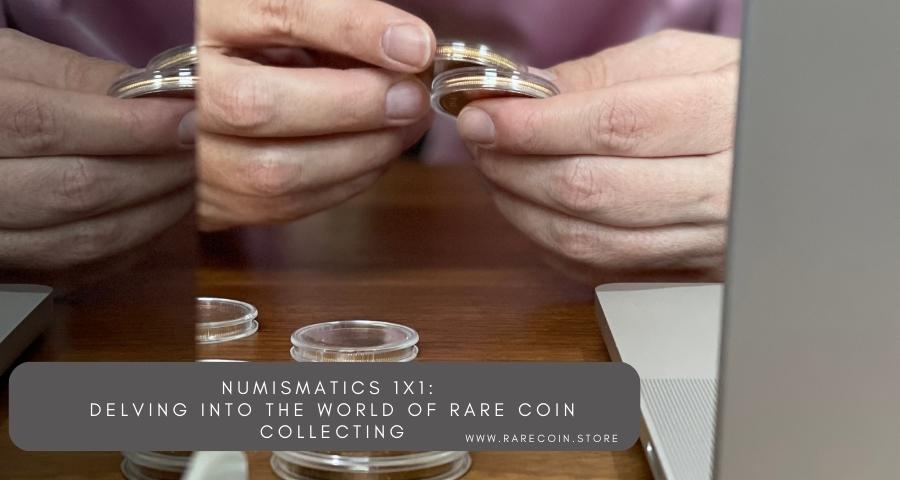
Numismatics 101 means explaining the basics of coin collecting in an understandable way: What makes a coin rare? How is collector value created? What role do condition, origin, material, minting quality, and demand play? And what should collectors pay attention to when they want to buy, store, or appraise rare coins?
Rare coins combine history, craftsmanship, precious metals, design, and market dynamics. This is precisely why numismatics is more than simply collecting beautiful pieces. Anyone who wants to truly understand coins should be familiar with the most important terms, quality characteristics, and security aspects.
This article was fully updated and revised in May 2026.
Rare collectible coins have always been of interest to both amateur collectors and serious numismatists. Below are some of the most common questions about these coins:
-
What makes a coin rare?
Rarity often refers to the number of coins of a particular type that have been minted and how many of them are believed to still exist.
-
How do I start collecting coins?
Start by learning and educating yourself about coin types, history and values. Start with coins from your country or those you are passionate about. Get advice from experienced collectors.
-
What are the most sought-after rare gold coins in the world of modern numismatics?
Popular examples include the Krugerrand 1967-1969, the Krugerrand 1997 Sabi-Sabi, Centenario and Libertad from Mexico, 100 Soles from Peru, etc. However, the most sought-after coins may change over time depending on rarity and market demand.
-
How can I determine the value of a coin?
A coin’s value is determined by its rarity, condition (grade), historical significance, and market demand. Consult a coin appraisal guide or have a trusted numismatic expert appraise you.
-
How should I clean my coins?
You shouldn’t do that! Attempting to clean them can diminish their value.
-
What is the difference between coin grading scales?
Coin grading scales, such as the Sheldon scale , measure a coin’s condition and overall appearance. Grading criteria used by different organizations may vary slightly, but most employ a similar basic scale.
-
How can I protect and store my coin collection?
Store coins in individual protective cases or albums in a cool, dry environment. Avoid touching the coins with bare hands and keep them away from chemicals or abrasive materials.
-
Should I buy coins as an investment or as a hobby?
Coin collecting can be both an investment and a hobby, depending on your personal interest and financial goals. Always research the market before making important investment decisions.
-
What is the difference between bullion coins and numismatic collector coins?
Bullion coins are valued primarily for their metal content, while numismatic coins are valued for their rarity, historical significance, and other collectible characteristics. Numismatic coins often have a premium to their metal value.
-
How do I distinguish between a real coin and a fake?
Real coins have specific weights, dimensions and details that can be verified using reference books or expert opinions. Use tools such as magnifying glasses, scales and professional grading services to determine authenticity.
-
Where can I buy rare coins?
Rare coins can be purchased from reputable dealers, coin shows, auctions and online platforms. Always check the credibility of the dealer and ask for certificates of authenticity if possible.
-
Which organizations or associations are trustworthy in the field of numismatics?
For reliable guidance, look to established numismatic associations, dealers’ associations, and independent grading companies. Internationally renowned organizations include the American Numismatic Association ( ANA ) and the Professional Numismatists Guild (PNG) . In German-speaking countries, the German Association of Coin Dealers (Berufsverband des Deutschen Münzenfachhandels e.V.) and the Association of German Coin Dealers (Verband der Deutschen Münzenhändler e.V.) are particularly relevant contacts.
For certified coins , NGC and PCGS also play an important role. They are not dealer associations, but independent grading companies that verify the authenticity and condition of coins and document them in an internationally comparable manner.
However, it remains important to remember: Membership or certification does not replace personal examination. Collectors should always look for transparent information, verifiable certificates, reasonable prices, clear photos, and a reputable seller.
-
What are coin fairs and is such an event worth attending?
Coin shows are events where dealers, collectors and enthusiasts come together to buy, sell and exhibit coins. It’s worth visiting to network, learn and find unique pieces for your collection.
-
Are coins from antiquity or the Middle Ages more valuable?
The value of ancient or medieval coins depends on their rarity, condition, historical significance and market demand. Some can be very valuable, while others have a more modest value.
-
How do I sell my coin collection and where is the best place to do it?
You can sell your collection through coin dealers, auctions, online platforms or coin exhibitions. Make sure you can correctly assess the value of your collection and choose a reputable route to get the best results. RareCoin.Store purchases collector coins and is happy to help you.
-
What factors influence the value of a coin?
Rarity, condition, historical significance, metal content, and market demand are the primary factors that influence a coin’s value. External factors such as the global economic situation can also play a role.
-
Is it better to have coins graded, and if so, by whom?
A professional appraisal of coins can help determine their condition and potentially increase their market value. Trusted services include Numismatic Guaranty Corporation (NGC) and Professional Coin Grading Service (PCGS).
-
How important is the origin or history of the coin?
Provenance can increase a coin’s value, especially if it has a unique or historically significant past. Documenting and verifying a coin’s history can be particularly appealing to certain collectors.
-
What is the difference between bullion coins and collector coins?
Bullion coins are valued primarily based on their metal content, while collector coins are valued based on rarity, demand, historical significance, and other factors.
-
Should I insure my coin collection?
If you own valuable coins or a significant collection, it is advisable to insure them against loss, theft, or damage. Consult an insurance agent experienced with collectibles to find the best insurance options. The article ” Insuring a Coin Collection: Correctly Checking Household Contents, Value Limits, and Documentation “ explains which value limits, storage conditions, and required documentation need to be considered.
-
Are there tax implications for selling rare coins?
Yes, there can be tax implications. In Germany, the sale of rare coins can fall under the rules for private sales transactions, especially if less than a year passes between purchase and sale and a profit is made. After the one-year holding period, private capital gains from such assets are generally not taxable. Furthermore, there is a tax-free allowance of €1,000 per calendar year for private sales transactions.
Since tax issues depend on the individual case, the country of residence, the holding period, the amount of profit and personal circumstances, sellers should consult a tax advisor if they have valuable collections or larger profits.
-
What resources (books, websites) are recommended for beginners?
Local coin clubs or online forums can offer tailored advice. Wasserthal RareCoin offers a wide range of educational materials on the world of modern numismatic collectibles. Use the search box or browse our blogs.
-
How do coin auctions work and should I participate?
Coin auctions offer sellers the opportunity to showcase their coins to a pool of buyers, either in person or online. If you are well-informed and familiar with the auction process, you can use this method to find rare coins or sell pieces from your collection.
-
Is collecting coins a good investment?
Although many people have benefited from their coin collections, it is important to realize that the market can be unpredictable. Collecting for passion is usually better than purely financial reasons.
These concise answers are intended to provide a basic understanding of the complicated world of coin collecting and guide newcomers on their numismatic journey. In the captivating world of numismatics, every coin tells a story about its origin, history and value. Coin collecting is both an art and a science – from understanding the nuances of rarity to making informed decisions about buying and selling. Whether you are an aspiring collector or an experienced numismatist, continuous learning, passion and vigilance are key. May every coin you discover on your journey through this fascinating area expand not only your collection, but also your wealth of knowledge and experience. Remember that the world of rare coins is not just about ownership, but also about the thrill of discovery and the stories that arise from it.
Other interesting articles l:
About numismatists and coin collectors
What is important to know about the numismatic value of gold coins?
About the author
Larissa Wasserthal imparts numismatic expertise with a particular focus on modern collector coins, rare gold coins, and the clear classification of value, authenticity, condition, and market dynamics. In her articles, she explains fundamental and advanced topics in numismatics in a practical and clear manner, aiming to provide collectors with sound guidance in building and evaluating their collections.


