Understanding PCGS: MS, PR, SP, Cameo, DCAM, PL and problem codes explained simply
The world of numismatics is far more than a simple treasure hunt for shiny pieces of metal. It is a highly complex field where millimeters, minting precision, and microscopic surface features can determine the value of coins worth hundreds or even thousands of euros. In this demanding market environment, trust is the most important currency. This is precisely where the Professional Coin Grading Service (PCGS) comes in.
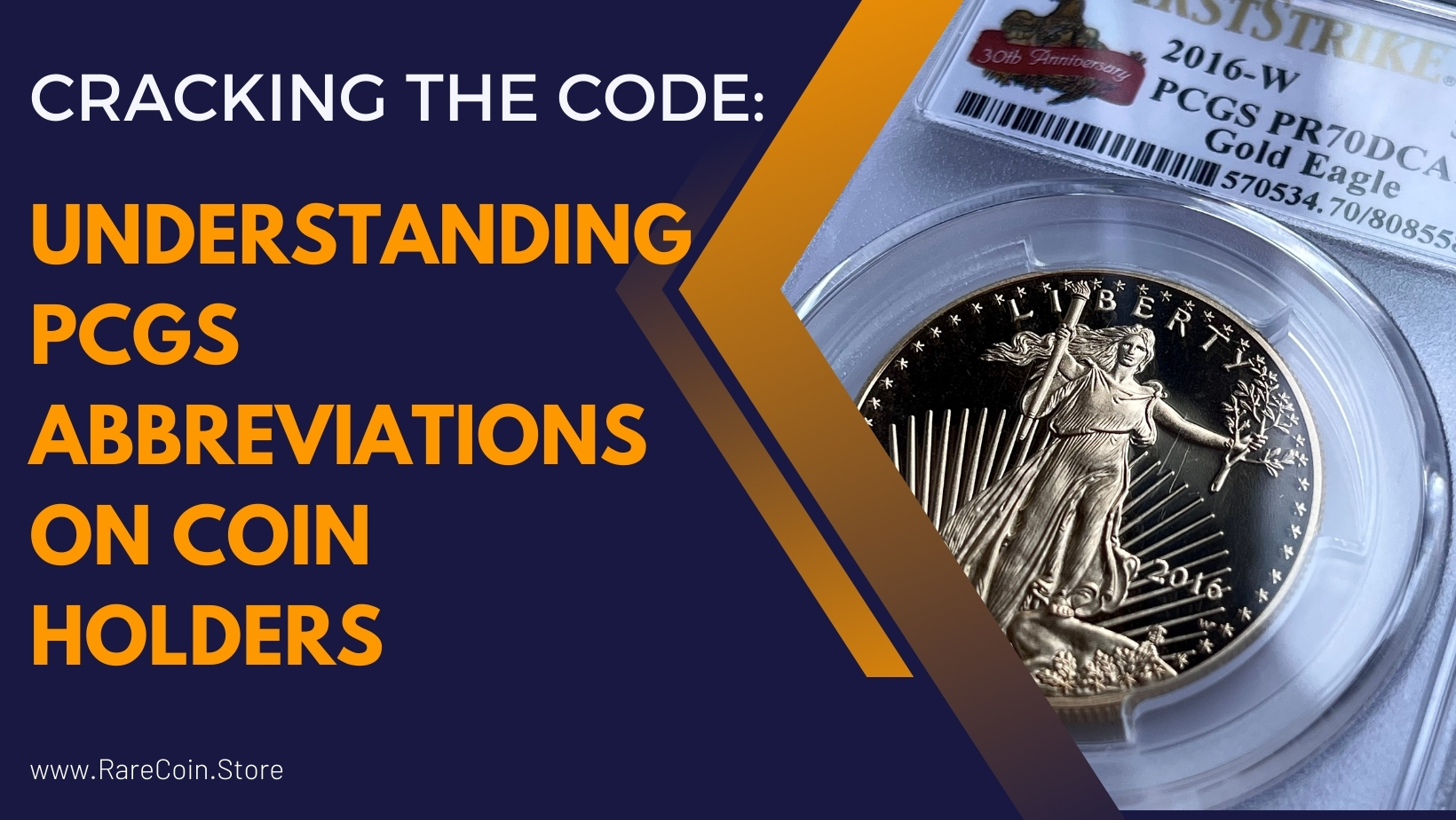
PCGS was founded in 1986 and has significantly shaped the field of third-party grading . Today, PCGS is considered one of the world’s leading authorities for the authentication , condition assessment , and market standardization of coins. However, anyone handling a PCGS slab often encounters cryptic abbreviations such as MS68 , PR70 DCAM , or problematic codes like 92 .
This guide will help you to correctly understand these abbreviations, realistically assess the condition of your coin, and avoid typical valuation traps.
1. The basics: Understanding the different types of minting (MS, PR, SP)
Before examining the numbers, one must determine the coin’s “DNA.” PCGS strictly differentiates between minting methods and finishes , because a proof coin is not simply “better preserved,” but rather manufactured using a different technical process.
Mint State (MS) – uncirculated, not Proof
The designation MS (Mint State) is used for coins that have not been in circulation and possess a typical “Mint State” finish. It is important to note that many modern pieces, while not intended for circulation (e.g., bullion or collector coins), are still graded as MS as long as they are not Proof and exhibit the corresponding finish.
The scale ranges from MS60 to MS70 .
-
MS60 : No circular wear, but often many contact marks (bag marks), weaker gloss or uneven surface.
-
MS70 : Virtually perfect coin with no visible post-production imperfections, i.e., no recognizable defects after minting.
Case study: A modern vintage stamp graded MS68, despite being in excellent condition, may exhibit minor stamp or surface imperfections that would prevent it from being graded MS69 or MS70. This is normal and not a flaw, but rather part of the grading logic.
Proof (PR or PF) – in-house manufacturing quality, not just “preservation”
Proof coins are not ordinary coins, but are produced using a significantly more complex process. Proof is therefore not a condition of preservation , but a minting quality .
Typical characteristics:
-
high-gloss polished fields
-
matte motifs (cameo effect, if pronounced)
-
very high level of detail
-
Mostly careful treatment from the factory
PCGS uses PR or PF for proofing, depending on the series (both are common).
Specimen (SP) – Special coinage between Mint State and Proof
The SP (Specimen) category is a kind of hybrid. It lies between Mint State and Proof, but has its own finish, which is often described as particularly “clean”, “satin”, or high-quality.
Important: SP (Special Edition) is not limited to specific historical periods . Modern issues can also be classified as SP if the minting quality and finish justify it.
In practice, SP means:
-
higher standards than typical MS stamps
-
but not identical to proof finish
-
often a very attractive, uniform appearance
2. The logic of numbers: Why MS69 is not “almost perfect” and MS70 is not “standard”.
The scale from 60 to 70 initially appears to be a simple ranking. In practice, however, it reflects market logic , because even minimal differences in:
-
Contact traces
-
Surface quality
-
Mint Fresh
-
shine
-
Minting Center
-
Field purity
This can create large price differences.
Especially with modern coins, the jump from 69 to 70 is often not just a detail, but a separate price category, because the demand for “perfection” is extremely high in the collector market.
3. Cameo and Deep Cameo: The visual premium factor in proof coins
Additional designations such as CAM and DCAM describe the contrast between the motif and the field on proof coins. These designations can significantly influence the market value.
Cameo (CAM)
Cameo receives a Proof coin when:
-
the motif appears visibly frosted
-
the fields appear mirrored
-
a clear contrast is present
Deep Cameo (DCAM)
Deep Cameo is the highest optical rating. It describes an extremely strong contrast:
-
very deep reflective fields
-
heavily matte design
-
often a “three-dimensional” effect
Important: The overall contrast must be convincing. If one side is significantly weaker, it can limit or prevent the designation. Therefore, DCAM is not a given, even with very well-preserved proof coins.
4. Prooflike (PL): The shining special case among non-proof coins
A common stumbling block is the term PL (Prooflike) . Crucially, PL does not mean Proof.
Prooflike typically arises when:
-
very fresh, highly polished stamps
-
in a normal minting
-
especially reflective fields are created
The result: a coin that is technically MS (or in certain cases SP), but shows optically reflective fields like a Proof.
In practice, PL is particularly relevant in the following cases:
-
early tee times in a series
-
Issues with strong field gloss
-
Pieces that clearly “reflect”
5. First Strike®: What it means and what it doesn’t
PCGS uses the First Strike® label for modern collector coins. This does not refer to whether the coin was “actually the first minted,” but rather to the submission window after its official release.
Important:
-
First Strike is a time-based marking
-
It is not an automatic proof of quality.
-
However, it can generate additional demand and premiums in the market because collectors prefer these labels.
In short: First Strike is a collector’s and market feature , not necessarily a quality feature.
6. If PCGS does not assign a normal grade: Detail grades and problem codes
Not every coin receives a classic numerical grade. If PCGS determines that a coin, while potentially uncirculated, has been affected by damage or tampering, it often receives a detail grade .
Example:
-
“UNC Details – Cleaned”
-
“AU Details – Scratched”
-
“XF Details – Environmental Damage”
Additionally, problem codes may appear on the label. These codes help to clearly identify the cause.
Typical problem areas include:
-
Cleaning
-
questionable color/toning
-
Environmental damage
-
Edge problems (edge filing, rim damage, etc.)
Note: The exact name and coding may vary depending on the series and PCGS definition, but the underlying market logic is constant.
Why Code 92 (Cleaned) is so critical
Cleaning often destroys the fine microstructures of the surface. The result:
-
unnatural shine
-
Hairlines
-
“Dead” fields without original mint luster
For many collectors, this is a deal-breaker. Therefore, cleaned coins often lose significant market value. However, the collector value of genuine rarities can still remain high, albeit with a discount compared to untreated specimens.
7. Signature Labels: The personal touch in the collectors’ market
PCGS Signature Labels are a growing trend. These labels bear a printed or hand-signed signature of a well-known personality, such as an engraver or a numismatically relevant figure.
These labels can:
-
increase the collector’s appeal
-
Sets are thematically rounded off.
-
Market premiums are generated when demand is high.
However, it’s important to note: the label does not replace the coin’s quality. It’s an additional collector’s item , not a substitute for grading or rarity.
8. Conclusion: PCGS is a standard that makes market values understandable.
Understanding PCGS abbreviations is a real advantage for any serious collector and investor. A small difference, such as the jump from MS69 to MS70 or the addition of DCAM, can significantly change a coin’s value. At the same time, knowledge of detailed grades and problem codes protects you from costly mistakes.
A PCGS slab is more than just plastic. It is a standardized information system that combines authenticity, condition, and market readability in an internationally recognized format.
At Wasserthal RareCoin.Store, we place great importance on ensuring that our customers not only buy coins, but also truly understand the certificates behind them. Long-term collector value doesn’t arise by chance, but through knowledge, standardization, and the right selection.
Further information:
FAQ: Community Engagement and Continuous LearningThe role of technology in improving the collector experienceFAQ on some designations used on NGC holders, such as First Day of Issue, First Releases, Authentic Hand-Signed, etc.
“Early” and “First” Releases: What do they mean for your coins?