The market for rare coins has become significantly more professional in recent years. What was once a niche hobby for passionate numismatists is now an internationally networked market with clear quality standards, high transparency, and increasing demand. Rare coins are no longer acquired solely out of a passion for collecting, but increasingly also as tangible assets that combine historical significance, limited availability, and long-term value stability.
Whether you are a collector specifically looking for pieces for a thematic collection, an investor wanting to selectively add numismatic quality to your portfolio, or facing the question of selling an existing collection: The successful buying and selling of rare coins requires expertise, patience, and a realistic understanding of market mechanisms.
This guide provides structured orientation and sheds light on both the buying and selling of rare coins, including typical mistakes, valuation issues, market psychology, and practical recommendations.
1. What makes a coin “rare”?
Not every old or expensive coin is automatically rare. In numismatics, rarity is determined by several factors:
-
Edition : Low mintage figures or significantly reduced surviving quantities
-
Grade of preservation : High grades (e.g., MS/PR 69–70) are often exponentially rarer.
-
Market availability : Some coins rarely appear on the market or at auctions.
-
Historical context : Influences from transitional phases, times of crisis, or with political relevance
-
Collector interest : Demand is just as crucial as objective scarcity.
A coin with a low mintage but low demand can be priced lower than a more frequently minted but highly sought-after issue. Rarity, therefore, should always be considered relative to the market .
2. Buying rare coins – basics and strategies
2.1 Buying rare coins online
Online commerce has fundamentally changed and internationalized the market.
Advantages of online shopping
-
Wide selection : Access to worldwide inventory, not just regional offers.
-
Market comparison : Prices, condition levels and variants can be compared.
-
Information density : High-resolution images, certification data, background texts
Important points to consider when buying online
-
Check dealer reputation : ratings, specialization, market presence
-
Prefer certification : Grading by NGC or PCGS creates a market standard.
-
See the individual piece : No mere stock photos, especially with higher-priced coins.
-
Shipping & Insurance : High-quality coins should only be shipped with insurance.
A reputable dealer will answer questions factually, provide clear information, and not create any time pressure.
2.2 The Importance of Certification (NGC / PCGS)
For rare coins, certification is not a luxury, but a key instrument for market standardization.
Why certification is crucial:
-
Objective assessment of the degree of preservation
-
Internationally understandable market standard
-
Reduction of counterfeiting and dispute risks
-
Higher liquidity upon resale
A professionally certified slab replaces subjective assessments with a clearly defined market positioning.
2.3 Original Packaging (OGP) and Documentation
Especially with modern collector coins, the original packaging plays a significant role.
-
Completeness increases market acceptance
-
Historical context is preserved
-
Collector psychology supports prices
Missing OGP is not a disqualifying criterion, but may lead to price reductions depending on the coin type.
3. Selling rare coins – preparation and strategy
Selling rare coins should never be done unprepared. A lack of market knowledge often leads to unnecessary discounts.
3.1 Preparation for the sale
Valuation and market assessment
-
Research current comparable prices (not desired prices)
-
Analyze auction results instead of dealer offers
-
Realistically assess the state of preservation
Compile documentation
-
Certificates, slabs, OGP
-
Purchase receipts (if available)
-
Historical information about the coin
Images
-
High-resolution photos
-
Front, back, edge
-
For slabs: Label and number clearly recognizable
Good images are not a detail, but a direct price factor.
3.2 Comparison of sales channels
Auction houses
-
Suitable for particularly rare or high-quality pieces
-
International reach
-
Potential for top prices
-
Disadvantages: Fees, time delays
Specialized online retailers
-
Fast Sale
-
Clear pricing structure
-
Ideal for certified coins
-
Price usually below auction peak
Local retailers
-
Personal contact
-
Immediate processing
-
Usually lower purchase prices
The choice of sales channel should depend on the value, rarity, and timeframe .
4. How to recognize trustworthy coin dealers
A reputable coin dealer is characterized not by promises, but by structure.
Typical characteristics of reputable dealers:
-
Clear pricing logic
-
Transparent description
-
Professionally sound communication
-
No pressure to buy
-
Market knowledge instead of sales rhetoric
Distrust is warranted in the following cases:
-
unrealistic price promises
-
missing details
-
sweeping statements without justification
5. Typical mistakes when buying and selling rare coins
-
Purchase without market comparison
-
Overestimating one’s own piece
-
Selling under time pressure
-
Ignoring conservation differences
-
Waiver of certification for high-quality coins
Rare coins are not a hectic market. Patience is a real factor in their value.
6. Long-term perspective: Collecting vs. Investing
Not every rare coin is automatically an investment. And not every investment has to aim for maximum profit.
Collector-oriented approach:
-
Thematic coherence
-
Aesthetics and History
-
Long-term enjoyment
Investment-oriented approach:
-
Marketability
-
Certification
-
liquidity
-
demand
Many experienced market participants deliberately combine both approaches.
Conclusion
Buying and selling rare coins is a demanding but extremely rewarding field. Those willing to delve into market mechanisms, preservation grades, and dealer structures will be rewarded with long-term value stability, high market transparency, and a unique combination of history and substance.
Rare coins are not anonymous financial products. They are tangible relics of bygone eras – and at the same time assets whose quality and context make all the difference.
Perhaps also interesting:
Discover the new additions to our gold coin collection in the current range!
-

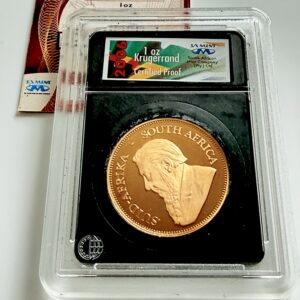
Südafrika – 2006 – Krügerrand – 1oz Proof Gold – Certified Proof – mit Zertifikat
5.300,00 €
Enthält 0% Mwst. befreit gem. §25c UStG
plus Versand
Jetzt entdecken -
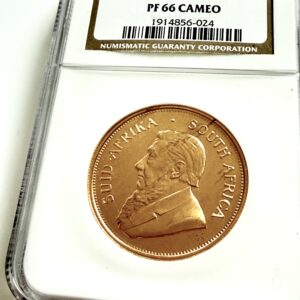
Südafrika – 1968 – Krügerrand – 1oz Gold Proof – NGC PF66 Cameo
6.600,00 €
Enthält 0% Mwst. befreit gem. §25c UStG
plus Versand
Jetzt entdecken -
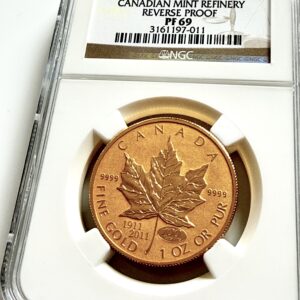
Kanada – 2011 – 50 Dollars – Maple Leaf – Canadian Mint Refinery – 100 Jahre Privy Mark – Gold – Reverse Proof – NGC PF69
5.500,00 €
Enthält 0% Mwst. befreit gem. §25c UStG
plus Versand
Jetzt entdecken -
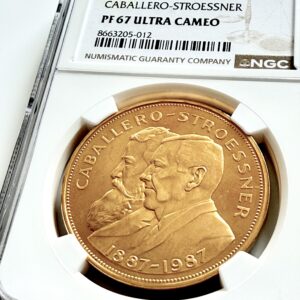
Paraguay – 1987 – 250.000 Guaranies – Caballero-Stroessner – Gold – Proof – NGC PF67 Ultra Cameo
8.500,00 €
Enthält 0% Mwst. befreit gem. §25c UStG
plus Versand
Jetzt entdecken -
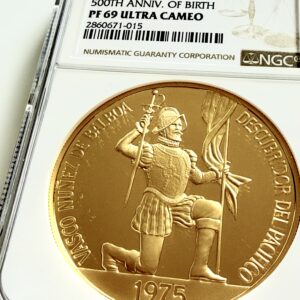
Panama – 1975 – 500 Balboas – Vasco Núñez de Balboa 500th Anniversary of Birth – Gold – Proof – NGC PF69 Ultra Cameo
6.200,00 €
Enthält 0% Mwst. befreit gem. §25c UStG
plus Versand
Jetzt entdecken -
Peru – 1967 – 100 Soles – Seated Liberty – Gold – NGC MS65
7.500,00 €
Enthält 0% Mwst. befreit gem. §25c UStG
plus Versand
Jetzt entdecken -
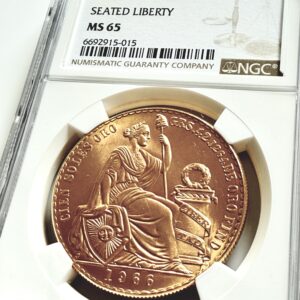
Peru – 1966 – 100 Soles – Seated Liberty – Gold – NGC MS65
7.500,00 €
Enthält 0% Mwst. befreit gem. §25c UStG
plus Versand
Jetzt entdecken -
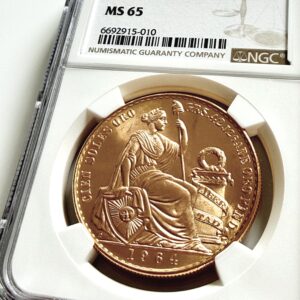
Peru – 1964 – 100 Soles – Seated Liberty – Gold – NGC MS65
7.500,00 €
Enthält 0% Mwst. befreit gem. §25c UStG
plus Versand
Jetzt entdecken -
Peru – 1963 – 100 Soles – Seated Liberty – Gold – NGC MS65
7.500,00 €
Enthält 0% Mwst. befreit gem. §25c UStG
plus Versand
Jetzt entdecken -
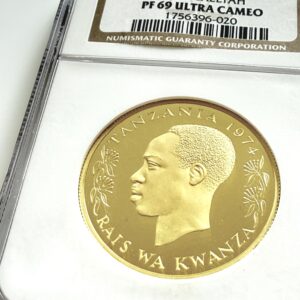
Tansania – 1974 – 1500 Shilingi – Cheetahs – Conservation Series – WWF – Gold – Proof – NGC PF69 Ultra Cameo
5.500,00 €
Enthält 0% Mwst. befreit gem. §25c UStG
plus Versand
Jetzt entdecken