
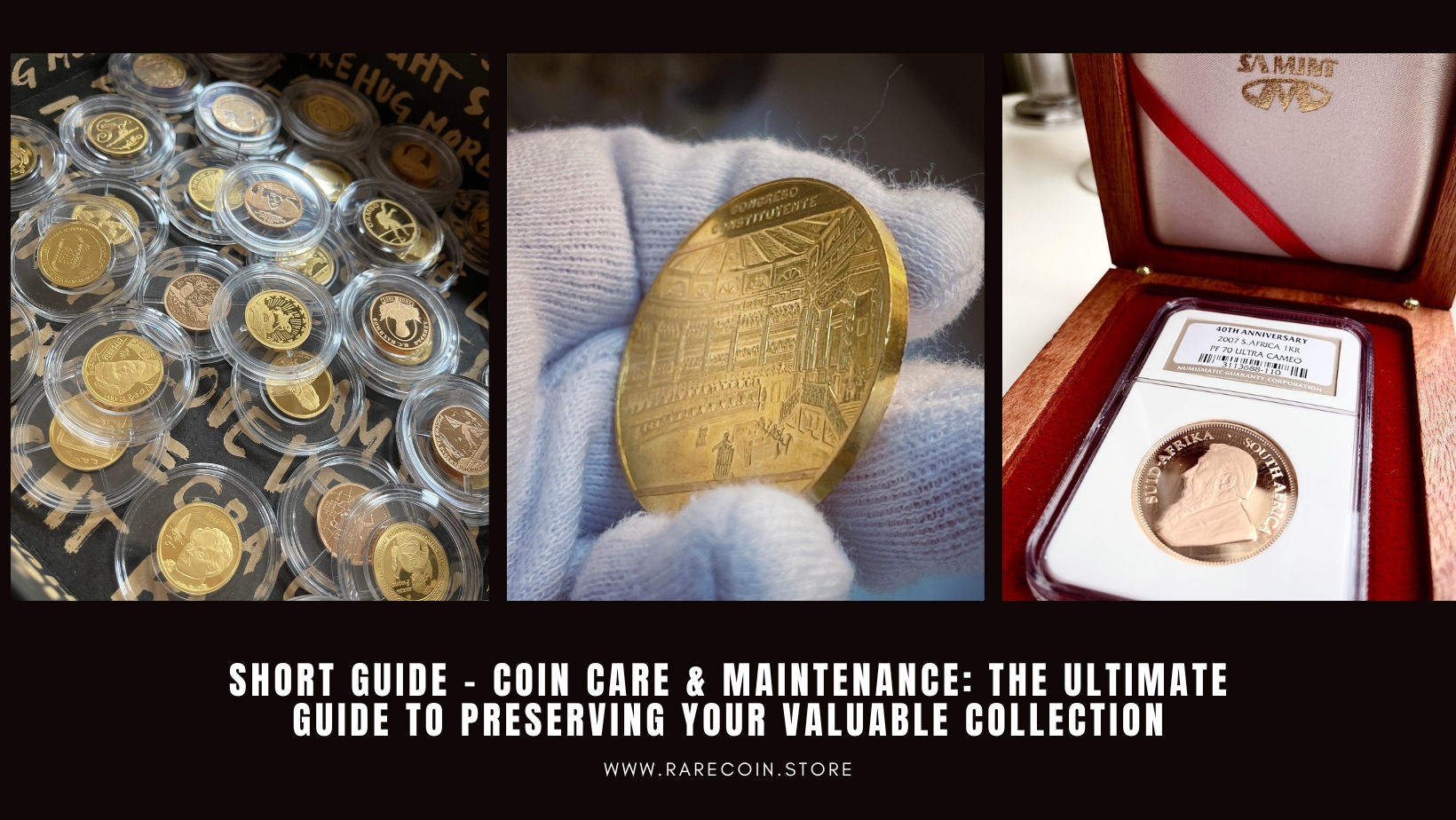
Coin care is important for collectors because condition, surface finish, and preservation can significantly influence a coin’s value. Especially with rare gold coins, proof coins, modern collector coins, and certified specimens, improper cleaning or incorrect storage can leave lasting marks.
The most important rule is therefore: coins should be handled as little as possible and never cleaned carelessly. Patina, mint luster, proof finishes, and fine details can be damaged by improper handling. Especially with high-quality gold coins, restraint is usually the best form of coin care.
This guide explains the most important basics of coin care , storage, cleaning, conservation, and protection. It covers the proper handling of coins, suitable storage conditions, stable environmental conditions, and when professional conservation is more advisable than attempting to clean them yourself.
Updated in May 2026: This article has been refined and supplemented with information on coin care, storage, cleaning, proof coins, capsules, slabs, professional conservation and value preservation.
How to handle coins correctly
Coins should ideally only be handled by the edge. Fingerprints, skin oils, and dirt can permanently damage surfaces, especially on proof coins with mirrored fields. For high-quality pieces, clean cotton gloves or suitable nitrile gloves are recommended. A stable work surface is also essential to prevent coins from falling or hitting hard objects.
The holder of certified coins in slabs should not be opened. The capsule protects the coin, documents the certification, and preserves the assignment to the grade and certification number.
Cleaning coins – why caution is important
Coins should never be cleaned without expert knowledge. Improper cleaning can cause scratches, hairline cracks, dull spots, altered surfaces, or permanent depreciation of value. Proof coins, polished surfaces, rare gold coins, and certified collector’s items, in particular, should not be treated with brushes, cloths, polishing agents, or household cleaners.
Natural patina, slight tinting, or age-related surface changes can be accepted numismatically and should not be hastily removed. If a coin shows dirt, PVC residue, adhesive residue, stains, or other problematic surface alterations, a professional assessment is usually more advisable than attempting to clean it yourself.
Professional conservation by NGC or PCGS
For problematic surfaces, professional conservation can be beneficial. NGC and PCGS offer corresponding services to expertly treat certain residues, deposits, or environmental damage. The aim is not to artificially make a coin look “like new,” but rather to remove harmful influences in a controlled manner and stabilize the surfaces.
Professional conservation is particularly relevant for high-quality, rare, or certifiable coins. Whether it is worthwhile depends on the specific condition of the piece. Not every discoloration, tint, or patina should be removed, and not every coin benefits from treatment.
Properly storing coins
Proper storage protects coins from moisture, temperature fluctuations, air pollutants, scratches, and mechanical stress. Suitable storage options include sturdy coin capsules, high-quality coin boxes, slabs, acid-free materials, and locations with a consistently stable temperature and low humidity.
Avoid using PVC-containing films, simple plastic bags, open trays, or unsuitable albums. Especially with proof coins and high-quality gold coins, it is important that the coin does not slip, rub against hard surfaces, or is unnecessarily removed from its capsule.
Protect valuable coins
High-quality coins require special protection. This includes secure storage, traceable documentation, and, for valuable pieces, possibly insurance. Certified coins from NGC or PCGS are additionally protected by the slab and are easier to identify internationally.
For particularly valuable collections, bank safe deposit boxes, professional vault solutions, or insured storage options can be advisable. Thorough documentation, including photos, purchase receipts, certification numbers, invoices, and any available certificates, is also essential.
Why coin care is important for collectors
Coin care primarily means maintaining the existing condition of a coin. For rare gold coins, proof issues, and certified collector’s items, the focus is less on cleaning and more on protection, documentation, and proper storage.
Proper handling of coins prevents avoidable damage and preserves the numismatic value of each individual piece. This is especially important for high-quality coins: store them carefully, have them professionally examined, and do not clean them yourself.
Further articles on coin care and storage
In addition to this guide, articles on precious metal care, storage, and safekeeping of gold coins may also be helpful: Storage options for your gold coins
Frequently asked questions about coin care
Should coins be cleaned?
Coins should generally not be cleaned without expert knowledge. Improper cleaning can damage surfaces and significantly reduce their collector value.
Why is cleaning proof coins particularly risky?
Proof coins have delicate reflective fields and frosted designs. Even fine hairline scratches, fingerprints, or rubbing marks can impair their visual appearance and value.
How should gold coins be stored?
Gold coins should be stored dry, securely, and preferably in capsules, slabs, or suitable coin boxes. Stable temperature, low humidity, and protection from scratches are essential.
Is it permissible to take certified coins from the slab?
Certified coins should generally not be removed from the slab. The holder protects the coin and documents the certification, condition, and identity of the specific piece.
When is professional preservation advisable?
Professional conservation can be beneficial if a high-quality coin exhibits problematic residues, PVC traces, stains, or other surface defects. Whether treatment is advisable should be assessed on a case-by-case basis.
About the author
Larissa Wasserthal, at RareCoin.Store, focuses on modern numismatic gold coins, certified collectibles, and the clear explanation of fundamental coin topics. In her articles, she explains why coin care, storage, preservation, minting quality, certification, and collector value are important for collectors. She combines numismatic research with clear language, ensuring that topics such as cleaning, conservation, slabs, capsules, and long-term value retention are easily understood.