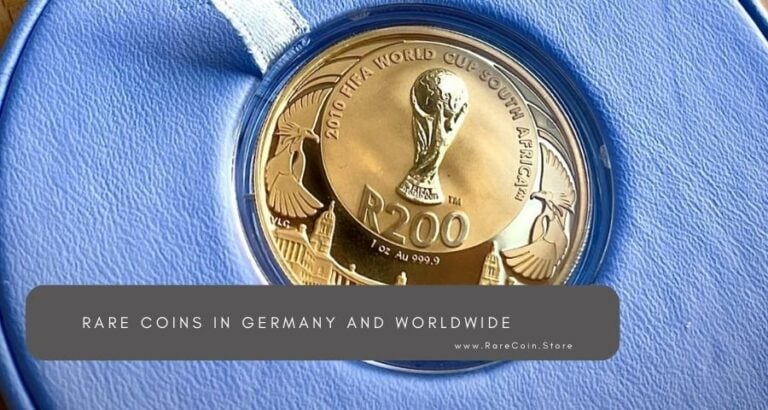

Coin appraisal and grading are essential tools for collectors who want to better assess the condition, authenticity, and market value of a coin. Especially with rare gold coins, proof issues, and high-quality collectibles, the condition often determines whether a coin is perceived as an ordinary specimen or a highly sought-after collector’s item.
Grading is the process of evaluating a coin’s condition, often certified by independent service providers such as NGC or PCGS. Factors considered include wear, scratches, luster, minting quality, surface finish, stains, cleaning marks, and overall impression.
This guide explains the most important basics of coin grading and condition assessment. It covers grading scales, practical grading methods, coin certification, professional grading services, and why an independent appraisal can be particularly helpful for high-value coins.
Updated in May 2026: This article has been refined and supplemented with information on coin valuation and grading, condition classification, certification, NGC, PCGS, grading scales and professional grading services.
Grading scale for coins
The grading scale is a central tool in coin appraisal. It helps to classify the condition of a coin in a comprehensible way. Wear, surface finish, minting quality, luster, scratches, stains, and the overall visual impression are all taken into account. Terms such as VF, EF, AU, or Mint State describe different grades of preservation and help collectors to better compare coins.
How to assess the condition of a coin
The evaluation of a coin begins with careful examination under good lighting. Important aspects to consider are the obverse, reverse, edge, fields, relief, luster, and any signs of previous cleaning. With proof coins, even small scratches or hairline cracks are particularly relevant because reflective surfaces are very delicate. Therefore, a professional appraisal is often recommended for high-quality or rare coins.
Coin certification and grading
Coin certification involves an independent grading service examining and evaluating a coin, and documenting the results in a sealed holder. This makes the authenticity, condition, and identity of the specific coin more easily verifiable. Especially with rare gold coins, international collectibles, and proof issues, certification by NGC or PCGS can increase the confidence of buyers and collectors.
PCGS as a professional grading service
PCGS , the Professional Coin Grading Service, is among the internationally recognized providers of coin grading. For collectors, a PCGS certification is particularly relevant because it documents authenticity, condition, and certification number. This makes it easier to compare high-quality coins internationally.
NGC as a professional grading service
NGC , the Numismatic Guaranty Company, is also among the most important international grading services. An NGC certification can help to verifiably document the condition and identity of rare coins, proof issues, and modern gold collector coins.
Coin appraisal and grading are not merely a formality, but essential foundations for informed decisions. Especially with rare gold coins, proof issues, and certified collectibles, the documented condition can significantly influence their collector value.
However, a grade does not replace the entire numismatic classification. Mintage, year of issue, motif, provenance, market availability, and demand also remain important. A certified coin should therefore always be considered a concrete collector’s item, not just a number on a holder.
More blogs about grading:
Grading of a coin: NGC and PCGS
What do you need to know about grading coins and what does PF/PR or MS mean in coin grading?
Facts about grading and condition of gold collector coins
Examples of certified gold coins
At RareCoin.Store you will find a selection of modern gold coins from various collecting areas. Many of these pieces demonstrate why grading, condition, proof quality, certification, and collector value play an important role in practice.
Frequently Asked Questions about Coin Valuation and Grading
What do coin valuation and grading mean?
Coin appraisal and grading refer to the professional classification of a coin’s authenticity, condition, and preservation. In professional grading, the coin is examined, evaluated, and usually documented in a sealed holder.
Why is the condition of a coin so important?
The condition significantly influences the collector’s value. Scratches, cleaning marks, abrasions, stains, or damage can considerably reduce the value of a coin.
What is the difference between NGC and PCGS?
NGC and PCGS are two internationally recognized grading services. Both examine and certify coins, but use their own labels, designations, and databases.
Is grading useful for every coin?
No. Grading is primarily worthwhile for rare, high-quality, or internationally traded coins. For simple or very common coins, the costs can outweigh the added benefit.
What does a high grade like MS70 or PF70 mean?
MS70 or PF70, according to the standard grading system, denotes a very high grade of preservation. Such grades can be particularly sought after for modern collector coins if the issue is rare or if only a few specimens have been certified in this quality.
About the author
Larissa Wasserthal, at RareCoin.Store, focuses on modern numismatic gold coins, certified collectibles, and the clear explanation of fundamental coin topics. In her articles, she explains why coin valuation, grading, condition, minting quality, certification, and collector value are important for collectors. She combines numismatic research with clear language, ensuring that even complex topics such as NGC, PCGS, grading scales, and professional grading services can be understood.