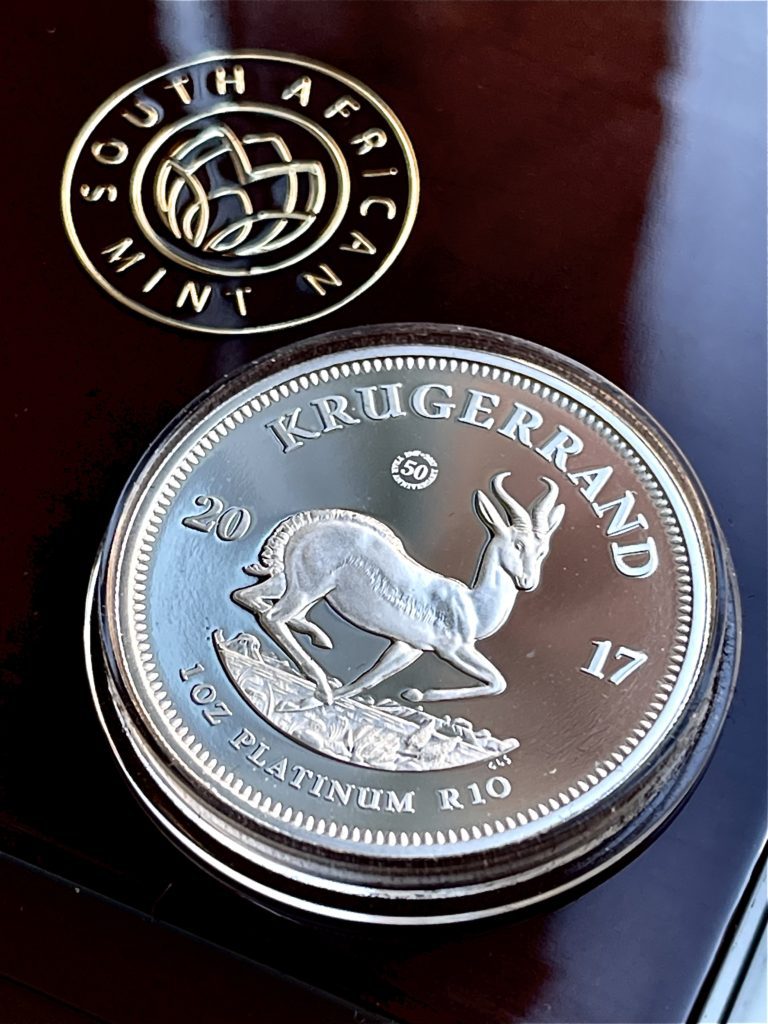
Numismatic abbreviations help to correctly understand coins, precious metals, and technical specifications. Collectors frequently encounter the abbreviations AU for gold, AG for silver, PT for platinum, PD for palladium, and CU for copper.
Context is crucial: In numismatics, AU can refer both to the material gold (aurum) and to the grade “About Uncirculated”. Therefore, abbreviations should never be read in isolation, but always in conjunction with the weight, fineness, grade, certification, and description of the specific coin.
Updated on June 23, 2026: This article has been supplemented with a clearer classification of numismatic abbreviations, precious metal symbols, grades of preservation and possible confusions.
The chemical roots: Why Latin is still important today
Many collectors wonder why the symbols often don’t match the German or English names. The reason lies in the history of chemistry and the Latin language, which remains the standard in science to this day.
AU – Gold (Aurum)
The symbol AU derives from the Latin word aurum , which literally means “yellow metal” or “brightness of dawn.” In numismatics, AU signifies the highest durability and value density.
-
Important note: Do not confuse the material code AU (Aurum) with the grade AU (About Uncirculated) . The former describes the metal, the latter the condition of a coin (almost uncirculated).
AG – Silver (Argentum)
The abbreviation AG comes from Argentum . Silver has been the backbone of global monetary systems for millennia. It is the metal with the highest electrical conductivity and the strongest luster, making it particularly attractive to collectors.
-
Expert tip: When buying AG coins, always pay attention to the fineness, which is often additionally indicated (e.g. AG .999 for fine silver).
PT – Platinum
The symbol PT is more modern and is derived directly from the chemical element platinum. It signifies rarity and an extremely high melting point. In the world of coins, platinum is often more exclusive than gold because the annual production is significantly lower.
-
Special feature: Platinum coins often have a higher specific gravity than gold coins and therefore feel “heavier” than their size would suggest.
Why numismatic abbreviations are important for collectors
Understanding numismatic abbreviations helps in correctly reading coin descriptions, auction catalogs, certifications, and technical specifications. Especially with modern gold, silver, platinum, and palladium coins, small abbreviations can be crucial for correct classification.
– Security when buying : Those who understand abbreviations such as AU, AG, PT, PD, UCAM, DCAM, PF or MS can better compare offers.
– Technical classification : Metal abbreviations must always be read together with fineness, weight, fine weight and minting quality.
– Avoiding confusion : The distinction between AU as Aurum and AU as About Uncirculated is particularly important.
This does not create an automatic valuation of a coin, but it provides a significantly better basis for objective examination.
Additional abbreviations you should know
In addition to the main metals, you will often encounter other important abbreviations in specialist catalogs:
PD – Palladium: A rare metal in the platinum group, which is increasingly used for modern investment coins.
CU – Copper (Cuprum): Often included as an alloying element in gold coins (such as the Krugerrand) to create the hardness and characteristic reddish tone.
NI – Nickel: Frequently found in circulating coins, but less relevant for pure precious metal investors.
PD – Palladium : A rare precious metal of the platinum group, found in modern collector and investment coins.
CU – Copper (Cuprum) : Often included as an alloying component in gold coins, such as the Krugerrand, to create the hardness and the characteristic reddish hue.
NI – Nickel : Frequently found in circulating coins, but usually less relevant in high-quality precious metal coins.
PF – Proof : Denotes a special minting quality with polished dies and specially prepared coin blanks.
MS – Mint State : Denotes uncirculated coins without signs of circulation, with the specific grade of preservation being determined more precisely through certification.
UCAM – Ultra Cameo : In NGC’s terminology, this refers to a strong contrast between matte motifs and reflective fields.
DCAM – Deep Cameo : In PCGS, this refers to a strong contrast between matte motifs and reflective fields.
Conclusion: How to correctly read and understand abbreviations
Numismatic abbreviations are an important tool for correctly understanding coins, precious metals, minting qualities, and grades of preservation. However, the context is always crucial: AU can mean gold, but also About Uncirculated. PF describes a proof coin, while MS refers to Mint State. UCAM and DCAM, in turn, relate to the cameo contrast of certified coins.
For collectors of modern gold, silver, platinum, and palladium coins, it is therefore important never to consider abbreviations in isolation. Only when considered in conjunction with the metal, fineness, weight, minting quality, certification, and actual market availability can a reliable numismatic classification be achieved.
Wasserthal RareCoin.Store offers a selection of certified collector coins in gold, silver, platinum, and palladium. Clear technical specifications, NGC or PCGS certifications, and detailed descriptions facilitate objective comparison of individual issues.
About the author: Larissa Wasserthal
Larissa Wasserthal is the co-founder of Wasserthal RareCoin.Store and specializes in modern numismatic gold, silver, platinum, and palladium coins. Her focus is on the objective classification of precious metal symbols, minting qualities , grades of preservation, certifications , and actual market availability.