
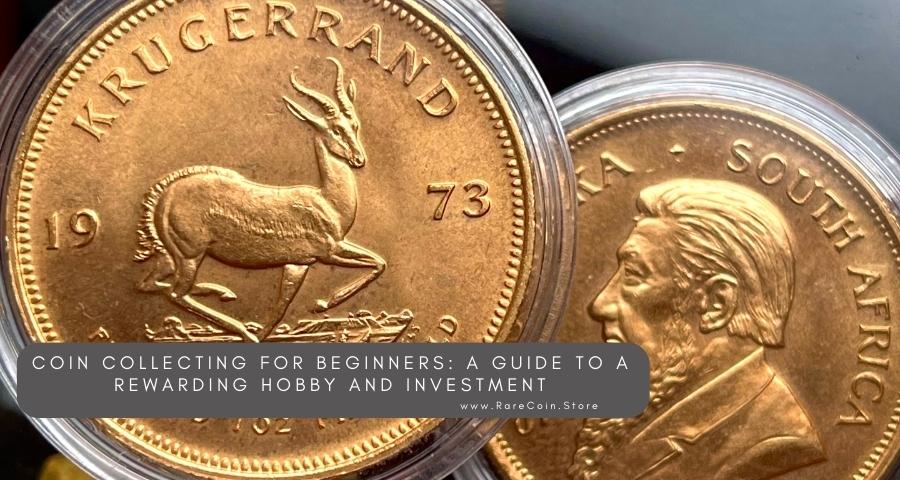
Beginner’s Guide 2026: This comprehensive guide for aspiring coin collectors was updated on April 10, 2026, to reflect the latest market strategies, digital tools, and security standards for getting started in this valuable hobby.
Coin collecting , also known as numismatics, is far more than just hoarding beautiful pieces. Beginners who start correctly discover a hobby that combines knowledge, history, aesthetics, and long-term thinking. Furthermore, depending on its focus, a collection can become not only meaningful but also financially rewarding.
This guide shows you step by step how to get started as a beginner, avoid typical mistakes and build your collection in a structured way.
Why collect coins?
1) History you can hold in your hands
Coins are witnesses to history. They depict rulers, coats of arms, political events, or cultural motifs. This creates a direct connection to eras and countries that hardly any other collecting area conveys so tangibly.
2) Art and crafts in miniature
Good coin designs are small works of art. Modern, high-quality coins, in particular, demonstrate how finely relief, surfaces, and details can be crafted.
3) Structure instead of speculation
Many beginners ask whether coins are an “investment”. The crucial point is: a collection becomes strategic when you consistently select coins based on criteria such as condition, rarity, demand, and market availability, with patience and a clear focus.
4) Personal joy and collective identity
Last but not least, coin collecting is a very individual hobby. Those who find a topic that truly excites them stick with it long-term, and that’s precisely how the best collections are created.
Step 1: Start with a clear focus
Without a focus, a collection quickly becomes arbitrary. Sensible starting points include:
-
a specific country or region
-
a series or a subject area (also thematic series)
-
a specific period of time
-
a focus on gold coins, silver coins or platinum coins
-
Investment coins versus collector coins
-
Certified coins with grading (NGC, PCGS)
Especially at the beginning, a clear framework helps because it allows you to learn to compare and at the same time develop a feel for market prices.
Step 2: Understanding the most important basic concepts
Beginners don’t need to know everything, but they should be able to clearly understand these basics:
-
Minting quality : for example, proof or uncirculated gloss
-
Grade of preservation : The condition of the coin, regardless of the minting quality.
-
Edition : how many pieces were minted
-
Rarity : not just print run, but also actual market availability.
-
Grading : independent evaluation and slab sealing by NGC or PCGS
These terms are important because they directly influence why a coin appears “ordinary” or is valued significantly higher as a collector’s item.
Step 3: Authenticity and security as a mandatory program
The most important rule for beginners is: authenticity and traceability before bargain hunting .
Therefore, pay particular attention to:
-
reputable dealers and verifiable origin
-
Clear description of the coin, including data and specifications.
-
For high-quality pieces , certification by NGC or PCGS is ideal.
-
Secure storage and proper documentation (invoice, certificates, photos)
This significantly reduces risks and simultaneously builds confidence in your own purchasing decisions.
Step 4: How to handle and store coins correctly
Coins should always be held by their edges to avoid fingerprints and micro-scratches. Proper storage, such as in capsules, holders, or certified slabs, is also recommended. Furthermore, a dry, stable environment is advisable to protect the surface in the long term.
Especially with proof coins, storage is crucial because even the smallest traces can affect the collector’s value.
Step 5: The purchase as a learning process
Don’t buy “a lot”, buy “the right thing”
Many beginners make the mistake of quickly buying a lot of coins. A controlled approach is better: a few pieces, but carefully selected.
Always compare multiple offers
Compare prices and variations, and not just based on the metal value. Also consider the vintage, quality, certification, and market availability.
Document consistently
Note the purchase date, price, source, and any special features. This will help you keep track and automatically build knowledge.
Coin collecting as an investment: What is realistic
Coins can increase in value, but not every coin does. Realistically:
-
Investment coins mostly follow the price of the precious metal.
-
Collector coins also derive their value from rarity, condition, demand, and availability.
-
The best results usually come about in the long term, not in the short term.
Those who collect through investment therefore need a strategy, focusing on quality, market logic and patience.
Step 6: Become part of the collector’s world
Getting started will be easier if you exchange ideas with others. Helpful resources include:
-
Trade fairs and exchanges (plus on-site expert discussions)
-
Collectors’ clubs and reputable communities
-
Specialist literature and reliable data sources
The more you see and compare, the faster your decisions will become confident and precise.
Conclusion: A good start determines long-term success.
Coin collecting is a hobby that grows with knowledge. Beginners who start with a clear focus, prioritize authenticity and quality, and understand market mechanics can gradually build a collection that is both enjoyable and substantial.
If you have questions about a specific collecting focus or are unsure which coins are suitable for getting started, you can contact Dirk (Wasserthal RareCoin.Store founder) either directly via this website or alternatively via LinkedIn .
You might also be interested in:
About numismatists and coin collectors
Why you should buy physical gold and silver now
Why you should buy physical gold and silver now
About the author: Larissa Wasserthal
A successful start in the world of coins requires more than just enthusiasm – it needs a solid foundation of information. As editor for RareCoin.Store, Larissa Wasserthal has made it her mission to pave the way for newcomers into numismatics. Her focus is on explaining complex market relationships in an understandable way and equipping aspiring collectors with the tools to distinguish quality from quantity. Her goal is to support people in discovering a hobby that, through expertise and strategic thinking, can grow into a lasting and fulfilling pursuit.