
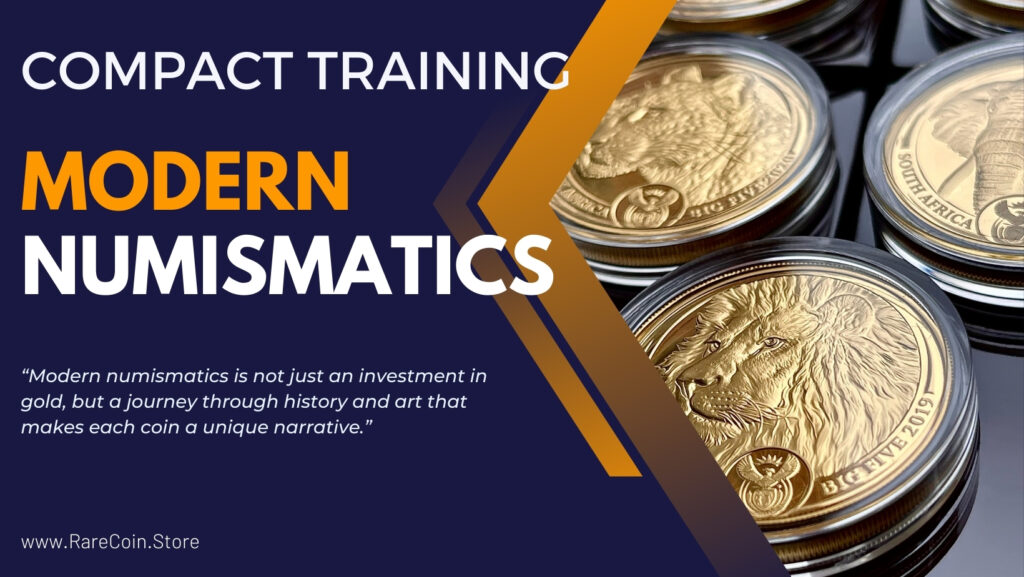
Coin grading is the independent assessment of a coin’s condition by a specialized company. The result is a grade on a 70-point scale, documented on a certificate and sealed in a holder. This chapter explains how the grading process works, what the abbreviations MS, PF, and DCAM mean, and why the grade significantly influences the value of a modern collector coin.
The Importance of Coin Grading
Coin grading is a standardized procedure for assessing the quality of a coin. It is performed by independent companies that have no involvement in either the buying or selling of the coins being graded. The two leading providers are NGC (Numismatic Guaranty Company) and PCGS (Professional Coin Grading Service).
For collectors and buyers, grading creates a common language. Without grading, “well preserved” is a matter of opinion; with grading, it is a verifiable statement that is understood the same worldwide.
How the grading process works
During grading, trained examiners assess the condition of a coin – not its material. The fineness and weight are fixed at the time of minting and are not criteria for evaluation.
Ratings are given on the 70-point Sheldon scale. Each number is preceded by an abbreviation indicating the type of minting:
- MS (Mint State) refers to coins in uncirculated condition, meaning normally minted pieces that have never been in circulation.
- PF or PR (Proof) for coins in proof condition, which were struck with specially prepared dies.
MS70 or PF70 designates a piece without any defects visible under ten times magnification. With modern proof gold coins, the price difference between 69 and 70 is often considerable.
For proof coins, an additional designation is used to describe the contrast between the matte motif and the mirrored background: Cameo (CAM) and, as the highest level, Deep Cameo (DCAM) at PCGS and Ultra Cameo (UCAM) at NGC.
Under magnifying glasses and microscopes, the coins are inspected for scratches, dents, minting sharpness, centering, and surface quality. They are then sealed in a slab containing a certificate number.
The Benefits of Coin Grading
- Objective evaluation: The assessment is carried out according to fixed criteria by trained professionals who have no economic interest in the piece.
- Comparability: Two coins of the same issue and grade are directly comparable – across national borders and dealers.
- Protection against counterfeits: NGC and PCGS verify authenticity before grading. The sealed holder makes subsequent replacement difficult; the certificate number can be checked online .
- Verifiable rarity: Both providers maintain public population lists. These lists show how many copies of an edition have been rated at a specific level – the only reliable basis for assessing rarity.
What this means for value
A high grading grade has three effects. It certifies a state of preservation that only a small portion of an edition achieves. It makes the piece more attractive to collectors who value flawless surfaces. And it increases demand because buyers face less risk with certified goods.
The crucial factor is the interplay with the population: A PF70 rating is particularly valuable when only a few specimens have reached this level. In series where hundreds of pieces have been rated 70, the premium is significantly lower.
Conclusion
Coin grading transforms an assessment into a verifiable statement. For buyers, this means less uncertainty regarding authenticity and condition; for sellers, it provides a reliable basis for pricing. With modern collector coins, which often appear almost identical, the grade is frequently the decisive distinguishing feature.
We explain how the individual services work and how they differ under Coin Grading: PCGS, NGC, ANACS, CAC & SAGCE . The majority of coins in our shop are certified.
Further materials:
What do you need to know about grading coins and what does PF/PR or MS mean in coin grading?
Materials and Qualities of Coins: Investments and Hobbies with Financial Benefits
Quality factors for gold collector coins
FAQ about some of the terms used on NGC holders
Exclusive “First Day of Issue”, “First Releases” and “Authentic Hand Signed” issues rated by NGC