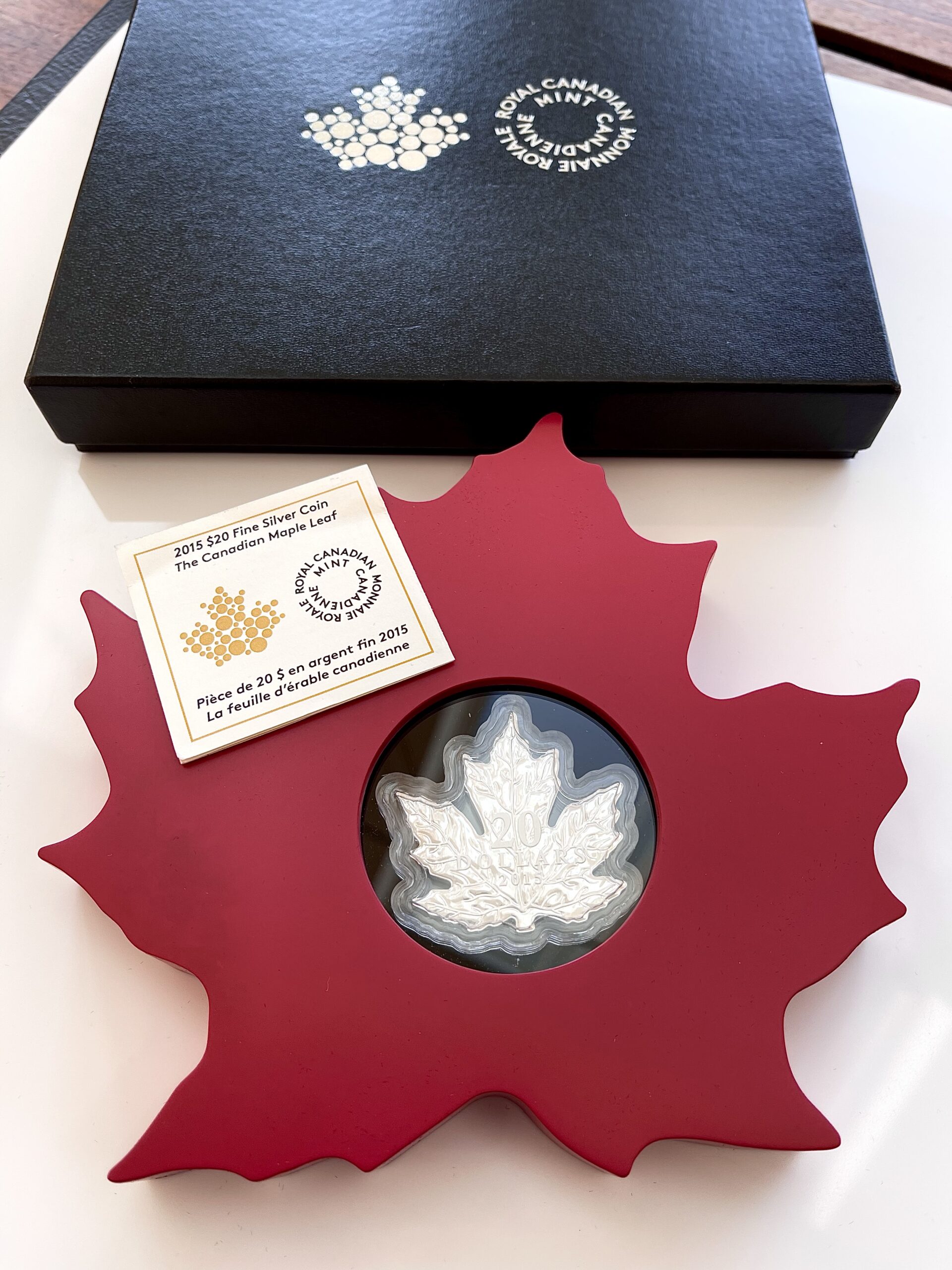

Maple Leaf Coin History – From Canadian Flag Symbol to Royal Canadian Mint Icon
The Maple Leaf is far more than a beautiful motif; it represents identity and craftsmanship. A cultural emblem of the 19th century, it evolved over several stages to become the centerpiece of Canada’s national flag in 1965 and, step by step, one of the world’s most recognizable coin designs. In this guide, we connect the history of the maple leaf with Canadian numismatics, from early cent coins featuring leaf wreaths to the
Early roots of the maple leaf as a symbol
-
1834 – With the Société Saint-Jean-Baptiste, the maple leaf is officially established for the first time as an emblem of French-Canadian identity.
-
1836 – Shortly thereafter, the newspaper Le Canadien frames its cover with a maple leaf wreath and explicitly refers to the paper as the emblem of Lower Canada, thus further consolidating the symbolism in the public eye.
-
1867 – With the patriotic song “The Maple Leaf Forever,” the symbol spread beyond the French-Canadian community and gained additional appeal in English Canada.
-
1868 – The leaf subsequently found its way into the coats of arms of Ontario and Québec and was later, in 1921, also incorporated into the Canadian coat of arms.
-
1965 – The development finally culminated in the modern red and white flag with the stylized, eleven-pointed maple leaf as the national symbol.
These successive stages paved the way for the maple leaf to appear on Canadian coins long before the bullion series were created.
Maple leaf on Canadian coins before the bullion series
- 1858 One Cent – the first decimal 1 cent features a circular maple leaf wreath by Leonard C. Wyon. It shaped the imagery for generations.
- 1876 to 1901 – Maple leaves appear across the denominations of Canadian circulation coins.
- 1937 One Cent – the famous two-leaf branch by artist GE Kruger-Gray debuts and remains in use with minor adjustments until the cent’s discontinuation in 2012.
These circulation coins made the maple leaf a daily focal point – the natural basis for a later leading coin.
Creation of the Gold Maple Leaf
In 1979, the Royal Canadian Mint launched the Gold Maple Leaf (GML) as a 1 oz 24 karat coin, which offered exceptional purity for its time. Initially, the pieces were minted with a .999 fineness from 1979 to mid -1982 ; from the end of 1982 , the Mint raised the standard to .9999 fine gold, finally making the GML the market benchmark. The reverse also features the finely crafted leaf by master engraver Walter Ott , which significantly contributes to its recognition value. In the following years, further fractions were added, and selected .99999 issues underscored the Mint’s art of refining and further positioned the series at the top of the range.
Security and design upgrades
To strengthen trust and protect against counterfeiting, the Mint introduced:
- 2013 – laser-microengraved maple leaf privy with year inside, visible under magnification.
- 2015 – precisely milled radial lines on the fields for a characteristic light pattern.
- Bullion DNA support for professional verification.
A sensational moment
In 2007, the Mint unveiled the 100-kg Big Maple Leaf , $1 million face value, struck in .99999 gold. This demonstrated technical prowess and enhanced the series’ worldwide prestige.
Silver, Platinum and Palladium Maple Leafs
- Silver Maple Leaf (SML) – introduced in 1988 in .9999 silver. In 2014, the micro-engraved privy and radial lines, similar to the GML, were added. Special privy marks and special finishes appear in select years.
- Platinum Maple Leaf (PtML) – also launched in 1988 , in several sizes, struck in .9995 platinum. After a hiatus from 2002, the 1 oz coin returned in 2009 and remains the premium platinum option within the family.
- Palladium Maple Leaf (PdML) – first minted in 2005 in .9995 palladium. After brief early runs and a 2009 issue, the series has been regularly released again since 2015, complementing the product range for diversification.
New Obverse – Charles III
Following the death of Queen Elizabeth II, Canadian coins switched to the portrait of King Charles III on bullion and collector issues in 2024. The obverse change is now part of Maple Leaf history and marks a clear turning point in sets across all four metals.
Collector’s editions and privy marks with potential
Maple Leaf coins are more than standard bullion. Collectors look for limited-edition features that increase rarity and appeal:
- Privy Marks – from fireworks “2000” to event or trade fair privies like ANA. The micro-engraved security privy with the year is standard on modern bullion.
- Five Nines Gold – selected GMLs in .99999.
- Ultra High Relief and Proof finish – strong plasticity, often with low editions and cases.
- Anniversary and faction sets – curated sets for milestones like 25 or 30 years.
Collection focus – building a Maple Leaf collection with a target image
Because Maple Leaf coins cover four metals, multiple finenesses, and many years of design updates, it’s easy to plan clearly focused yet diverse collections. In practice, it’s best to start with a clear goal and then narrow down the selection gradually. The following approaches can be combined depending on your budget and focus.
- Typeset by metal: Start with one key date per metal, and focus on top quality and consistent slabs whenever possible. This creates a calm and harmonious presentation, while making differences between gold, silver, platinum, and palladium immediately apparent.
- Security Feature Set: Assemble a compact run that shows the evolution of security features, from the pre-2013 condition through the micro-engraved Privy to the radial lines from 2015 onwards. This makes the technical evolution directly visible.
- Obverse Portrait Set: Select representative years that document the effigy changes from Elizabeth II and show the transition to Charles III starting in 2024. Arrange the pieces chronologically to make the change in era clear and vivid.
- Privy and Special Finish Set: Focus on low-edition pieces, ultra-high reliefs, and striking event privies, and complement your selection with appropriate accompanying documents. This will clarify the curatorial thinking behind the collection.
For authenticity and liquidity, it is recommended to choose specimens certified by PCGS or NGC , as these are easily verifiable internationally. Population data also helps identify top pop or condition rarities and secure pricing decisions. For proof coins, the following also applies: The value remains consistent only with the complete package—capsule, COA, and box. Furthermore, the certification number should be documented in the inventory so that queries can be answered quickly and unambiguously.
Key timeline – from emblem to coin
- 1834 – cultural emblem by the Société Saint-Jean-Baptiste.
- 1868 – Maple leaves in provincial coat of arms, 1921 in national coat of arms.
- 1858 – first decimal cent with maple leaf wreath.
- 1876 to 1901 – Maple leaves on numerous circulation coins.
- 1937 – Branch with two leaves on the cent becomes a classic until 2012.
- 1965 – Flag with stylized maple leaf becomes official.
- 1979 – Gold Maple Leaf launches (.999, later .9999).
- 1988 – Silver Maple Leaf and Platinum Maple Leaf are released.
- 2005 – Palladium Maple Leaf debuts.
- 2007 – 100 kg “Big Maple Leaf” in .99999 gold.
- 2013 – micro-engraved security privy on bullion maples.
- 2014 – SML with Privy and radial lines.
- 2015 – Radial lines standard on the GML.
- 2024 – Obverse with Charles III.
FAQs
What type of maple is depicted on the coins?
The Maple Leaf coins feature the iconic Canadian maple leaf in the Royal Canadian Mint’s stylized interpretation. In collecting practice, it is often associated with the sugar maple, also due to the motif tradition and the thematic context.
What does .99999 mean on Gold Maple Leafs?
.99999 stands for the so-called Five Nines fineness. Selected issues thus underscore the Royal Canadian Mint’s refining expertise and, not least because of their exceptional purity, are primarily aimed at premium collectors.
How do I verify authenticity?
To verify bullion authenticity, it’s recommended to first look for the fine radial lines and the small maple leaf privy with the year. Specialist dealers can also use the RCM Bullion DNA Reader. For graded pieces, you should also check the serial numbers with PCGS or NGC.
Why do the portraits on the obverse change?
The portraits change because Canadian coins depict the reigning monarch. Accordingly, Elizabeth II appears in several effigies until 2023, while King Charles III has been featured on the obverse since 2024.
Are Proof Maple Leafs suitable for the long term?
Yes – especially for small print runs or distinctive features like Ultra High Relief. The key factors are proven quality, complete features, and stable demand for the respective theme. Those who also pay attention to certification and comprehensive documentation will increase marketability in the long term.
Read more – recommended articles and resources
Planning a gold coin collection – budget, target image and practice
A good collection begins with a clear vision. This article guides you from motif and vintage selection to proof versus bullion, documentation, storage, and sensible budget planning—so that your Maple Leaf collection grows in a structured way.
Planning a gold coin collection – budget, target image and practice
Counterfeit protection of modern coins – radial lines and micro-engraved privy
Modern Maple Leafs feature fine radial lines and a micro-engraved maple leaf privy. We’ll show you step by step what to look for with a magnifying glass, how to read the year on the privy, and how professional dealers use bullion DNA testing.
Counterfeit protection of modern coins – radial lines and micro-engraved privy
Understanding Certification – NGC, PCGS and CAC
Those who collect Maple Leaf coins specifically will make more confident decisions with certified pieces. In this guide, we explain how to read grades, labels, and additional notes, how to compare PCGS and NGC certificate numbers, and when a CAC sticker indicates additional value.
Understanding Certification – NGC, PCGS and CAC
Canadian Gold Coins – Collector’s Guide with Maple Leaf and Royal Canadian Mint
Here, we’ve compiled selected materials on Canada and Canadian gold coins for you, bringing together knowledge and practical experience in one place and providing a quick overview of everything you need to know. You’ll discover background information on the Royal Canadian Mint and the Maple Leaf series, as well as what’s important about proof issues, privy marks, and security features such as radial lines and micro-privy. We also demonstrate how PCGS and NGC certification creates transparency and how you can build a coherent collection step by step with clear collecting goals.
We also provide links to practical guides on storage, documentation, and resale, helping you turn individual pieces into a stable, long-term collection. And if you’re looking for a specific Canadian coin that’s not currently listed, please drop us a line. We’ll check availability and, if possible, source it for you.
Welcome to Wasserthal RareCoin.Store. Here you can see our currently available Canadian coins. If you don’t see the coin you’re looking for, just drop us a line. We’ll search our network and get back to you with suitable options – including certification details and photos, if you wish.
-

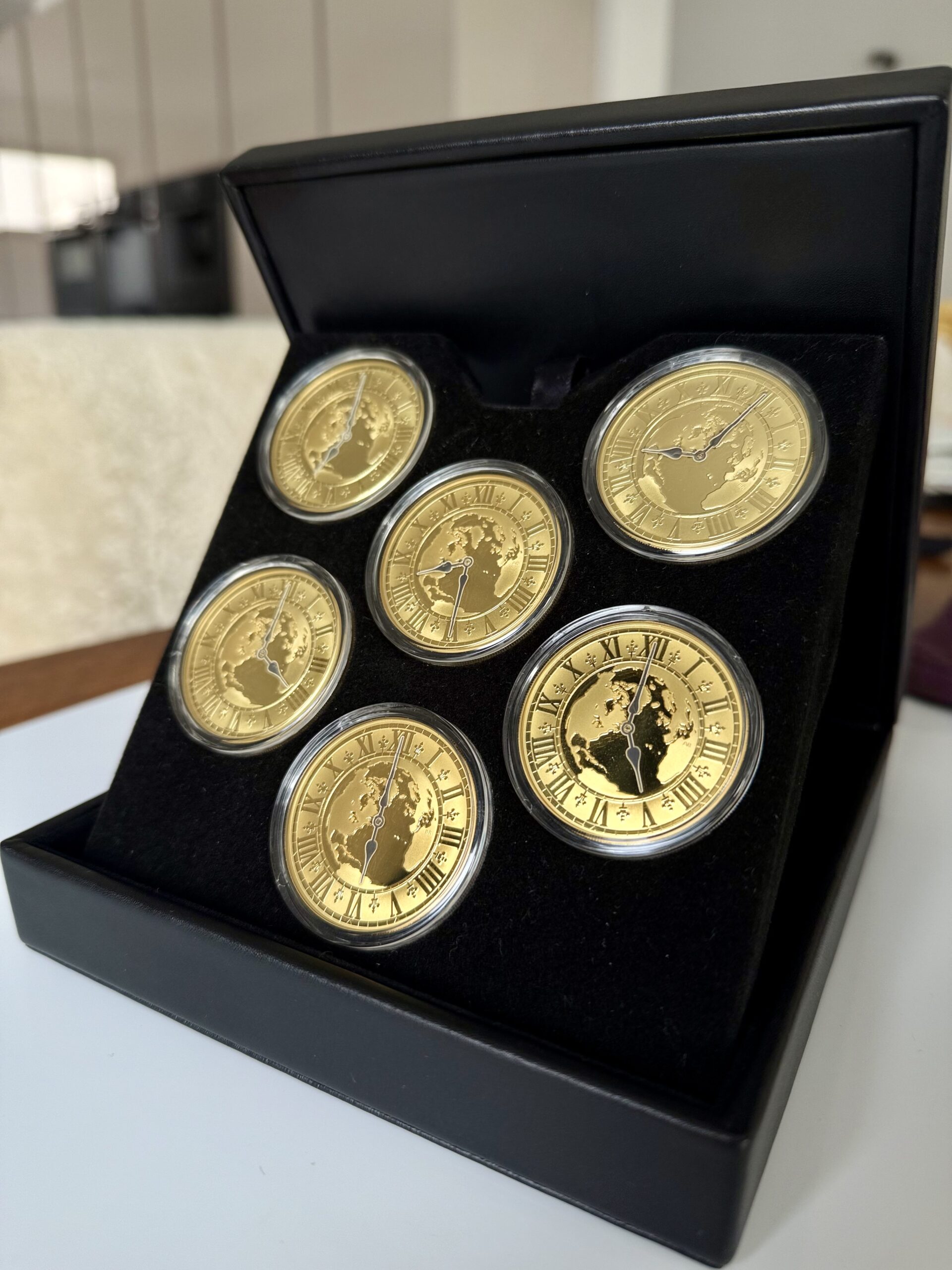
Kanada – 2005 – 300 Dollar – Zeitzonen Kanadas – 5,06oz – 6 Goldmünzen Proof Set – im Etui mit 6 COA
21.950,00 €
Enthält 0% Mwst. befreit gem. §25c UStG
plus Versand
Jetzt entdecken -
Kanada – 2016 – 300 Dollar – Maple Leaf Forever – 1oz Platin Reverse Proof – First Release – ANACS RP70 DCAM
3.500,00 €
Enthält 0% Mwst. befreit gem. §25c UStG
plus Versand
Jetzt entdecken -
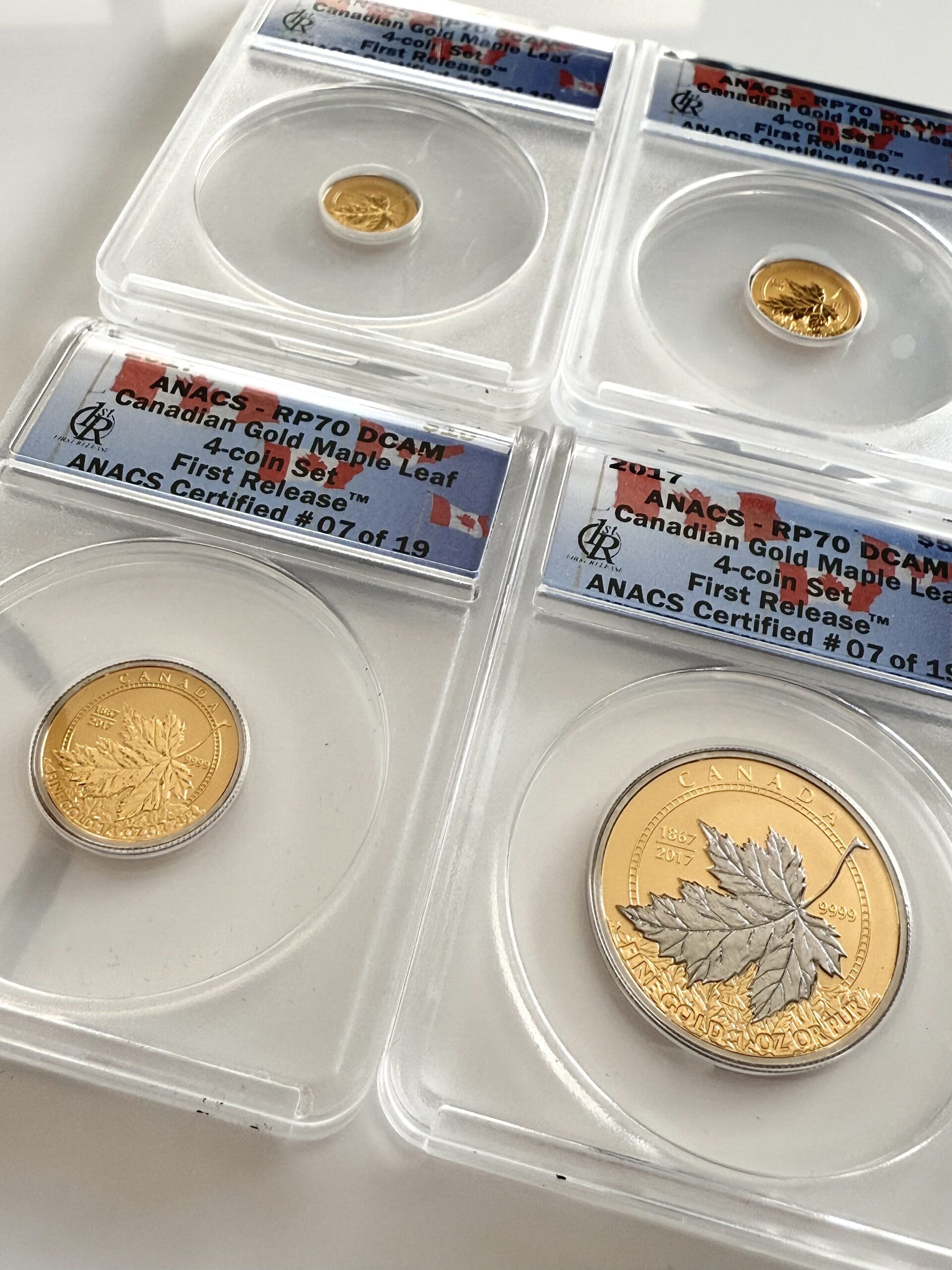
Kanada – 2017 – Maple Leaf – 4 Goldmünzen Reverse Proof Fractional Set – First Release – ANACS RP70 DCAM
7.500,00 €
Enthält 0% Mwst. befreit gem. §25c UStG
plus Versand
Jetzt entdecken -
Kanada – 2003 – White Trillium – 350 CAD – 1,22oz – Gold Proof – mit Box und Zertifikat
6.100,00 €
Enthält 0% Mwst. befreit gem. §25c UStG
plus Versand
Jetzt entdecken -
Kanada – 2024 – 200 Dollar – Puma – Ultra High Relief – 1oz Gold Proof – PCGS PR70 DCAM
5.200,00 €
Enthält 0% Mwst. befreit gem. §25c UStG
plus Versand
Jetzt entdecken -
Kanada – 2004 – 350 Dollar – Yukon Weidenröschen – Gold Proof – PCGS PR69 DCAM
6.100,00 €
Enthält 0% Mwst. befreit gem. §25c UStG
plus Versand
Jetzt entdecken -
Kanada – 1999 – 350 Dollar – Goldener Frauenschuh Orchidee – Gold Proof – PCGS PR69 DCAM – Top Pop
6.100,00 €
Enthält 0% Mwst. befreit gem. §25c UStG
plus Versand
Jetzt entdecken -
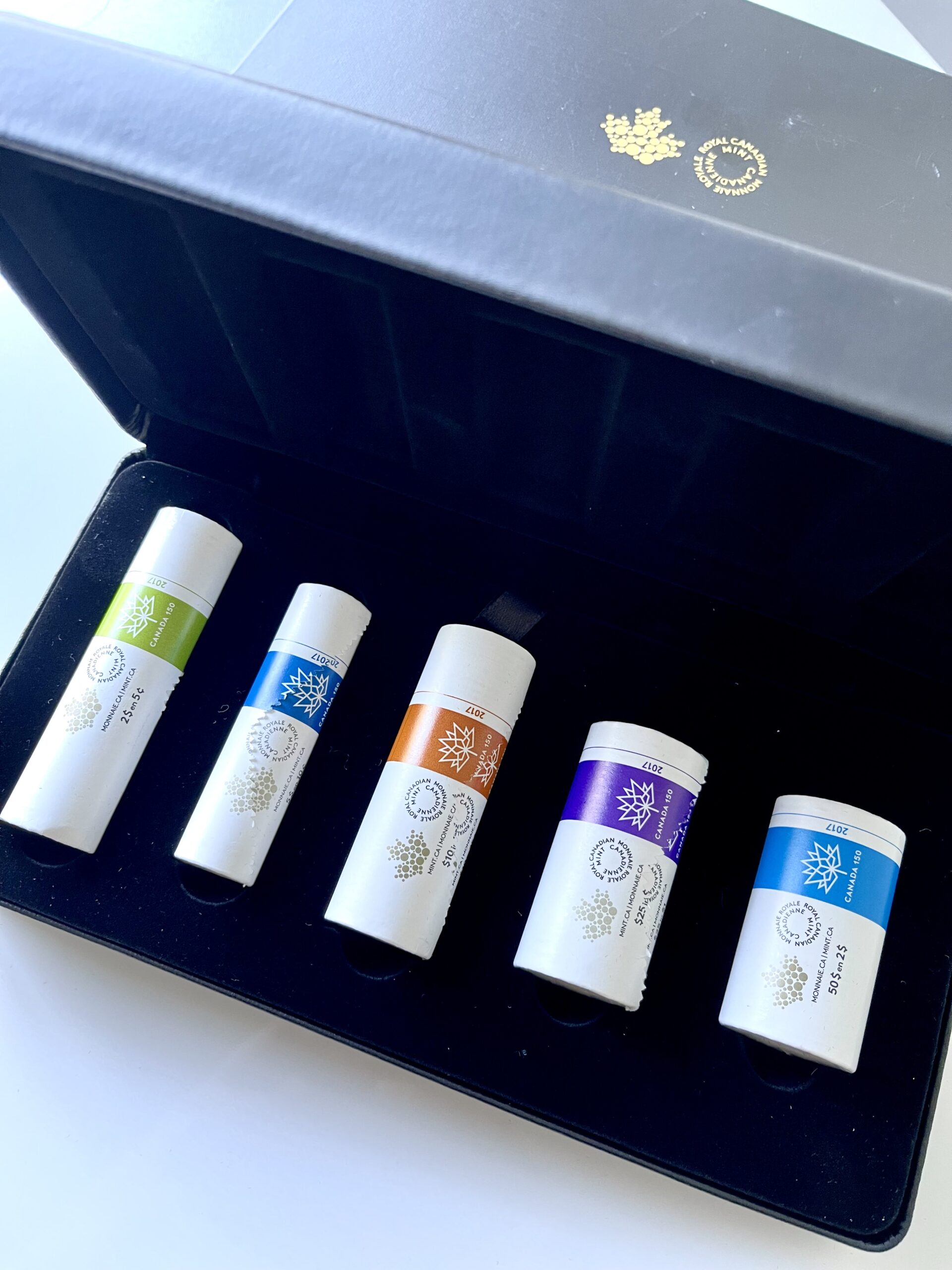
Kanada – 2017 My Canada – My Inspiration – Special Wrap Roll Collection – Mit Box und Zertifikat
Ursprünglicher Preis war: 175,00 €150,00 €Aktueller Preis ist: 150,00 €.
plus Versand
Jetzt entdecken -
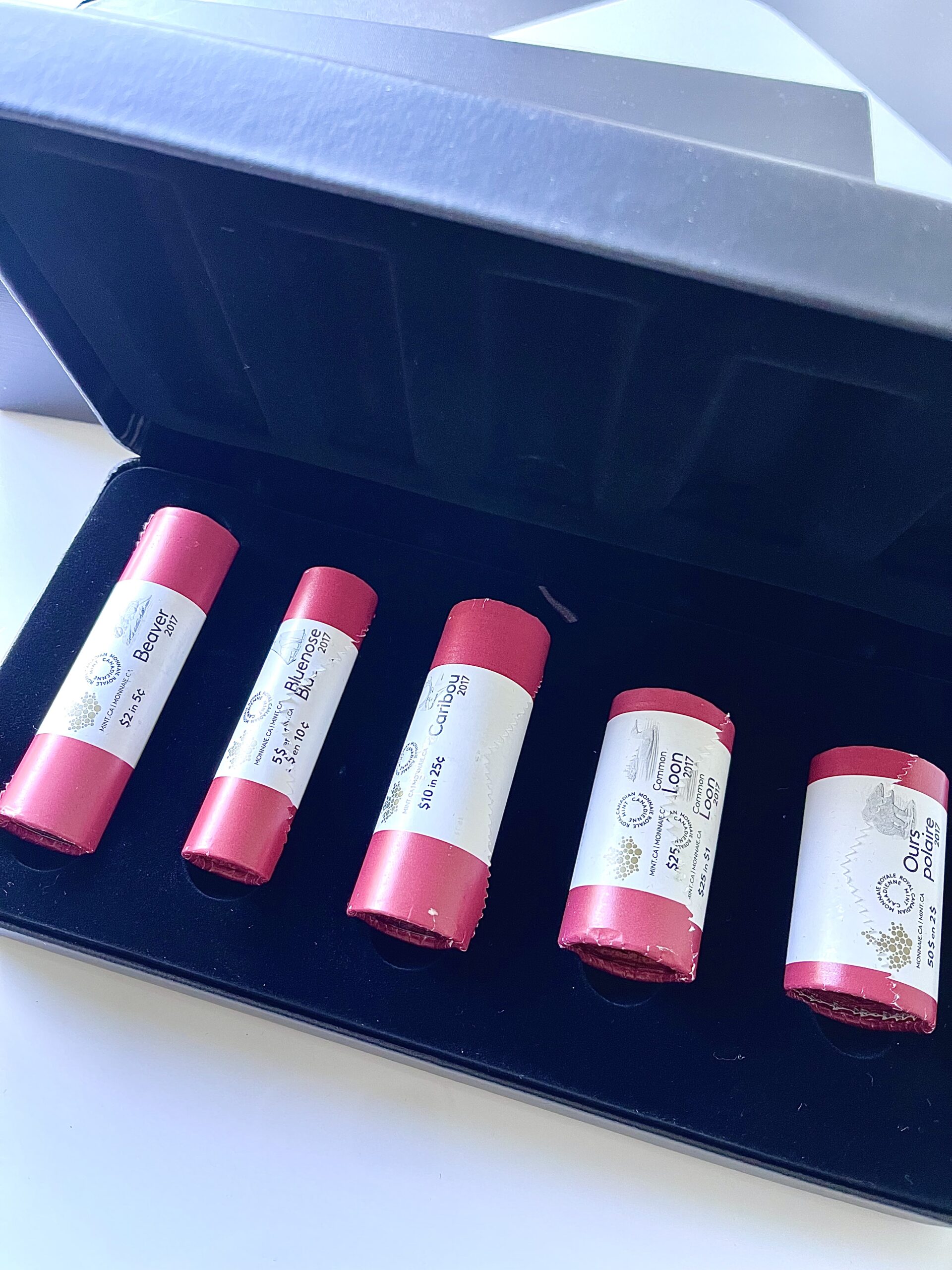
Kanada – 2017 Classic Canadian Coin Special Wrap Roll Collection – Mit Box und Zertifikat
Ursprünglicher Preis war: 175,00 €150,00 €Aktueller Preis ist: 150,00 €.
plus Versand
Jetzt entdecken -
Kanada – 2015 – 20 Dollar – Canadian Maple Leaf – Proof Silbermünze
150,00 €
plus Versand
Jetzt entdecken