
How can you read a coin?
Components of a coin: obverse, reverse, rim, inscriptions and design
Coins are far more than just means of payment. For collectors and numismatists, they are carriers of information whose details can be read like an open book. Understanding how a coin is constructed allows for a much better understanding of its origin, meaning, and value.
This guide explains the most important components of a coin – clearly, systematically and practically.
Correctly distinguishing between the front (obverse) and back (reverse)
The front – the obverse
The front , also called the obverse , is usually the side with the governmental reference. It often shows:
-
the portrait of a ruler or head of state
-
the state coat of arms or the country name
-
the nominal value
-
the year of issue
-
the mint mark
Modern coins often also include information about the metal, fineness, or weight. The mint mark also allows for a clear identification of the mint, such as the Moscow or St. Petersburg mint.
The reverse side – the back
The reverse side usually bears the actual motif of the coin. These include:
-
Animals, buildings, or historical scenes
-
Commemorative or anniversary motifs
-
Artist or designer initials
A classic example is the Krugerrand, where the sculptor’s initials are subtly integrated into the design.
Important:
There are exceptions. Some coins deliberately deviate from this rule, which makes variations particularly interesting for collectors.
The rim – more than just the edge of the coin
The rim is the side boundary of a coin. Historically, it served to protect against manipulations such as the cutting off of precious metal. Today it fulfills additional functions:
-
Protection against wear and tear
-
Security feature
-
Carriers of marginal inscriptions or ornaments
Edges can be smooth, reeded, or inscribed. Especially with gold coins, the edge is an important indicator of authenticity.
The legend – texts and symbols on the coin
The term “legend” refers to all the inscriptions on a coin. You can:
-
running in a circular pattern around the edge
-
be integrated into the motif
-
numbers, letters, or symbols
The legend often provides crucial information about the issuing country, denomination, year of minting, or responsible institution.
Relief and field – understanding the surface correctly
The relief
The relief encompasses all raised elements of the coin: portraits, inscriptions, ornaments. Differences in relief can arise from:
-
embossing process
-
technical deviations
-
targeted collector coins
High-quality collector coins feature a particularly sharp and detailed relief.
The field
The coin field is the smooth background between the relief elements. In proof versions, this field is often mirror-polished, while the relief appears matte.
Minting quality and condition
Embossing quality
The minting quality describes how a coin was produced, for example:
-
Uncirculated (BU)
-
Polished plate (proof)
Proof coins are characterized by a mirrored field and matte relief and are specially manufactured for collectors.
Conservation status
Regardless of the minting quality, the actual condition can vary. Scratches, wear, or damage significantly affect the collector’s value.
Grading (Slabbing) – objective evaluation of coins
Grading involves an independent company evaluating a coin and sealing it in a transparent protective case. The certificate contains information about:
-
Country
-
Nominal value
-
Year
-
State of preservation
For international collectors, grading increases transparency, comparability and market acceptance.
Why it’s worthwhile to be able to “read” coins
Understanding the components of a coin allows you to:
-
Securely identify coins
-
Identifying variants and special features
-
Easier exclusion of counterfeits
-
to assess the collector’s value more realistically
This knowledge is a crucial advantage, especially when it comes to modern collector and gold coins.
Discover the new additions to our gold coin collection in the current range!
-

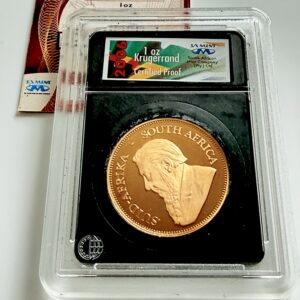
Südafrika – 2006 – Krügerrand – 1oz Proof Gold – Certified Proof – mit Zertifikat
5.300,00 €
Enthält 0% Mwst. befreit gem. §25c UStG
plus Versand
Jetzt entdecken -
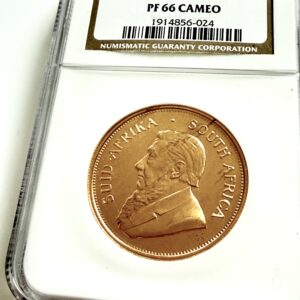
Südafrika – 1968 – Krügerrand – 1oz Gold Proof – NGC PF66 Cameo
6.600,00 €
Enthält 0% Mwst. befreit gem. §25c UStG
plus Versand
Jetzt entdecken -
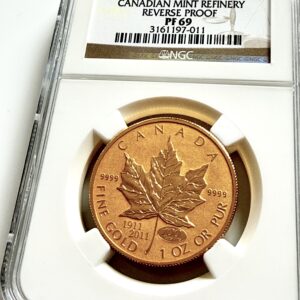
Kanada – 2011 – 50 Dollars – Maple Leaf – Canadian Mint Refinery – 100 Jahre Privy Mark – Gold – Reverse Proof – NGC PF69
5.500,00 €
Enthält 0% Mwst. befreit gem. §25c UStG
plus Versand
Jetzt entdecken -
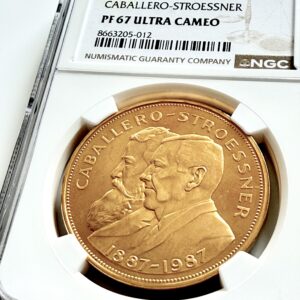
Paraguay – 1987 – 250.000 Guaranies – Caballero-Stroessner – Gold – Proof – NGC PF67 Ultra Cameo
8.500,00 €
Enthält 0% Mwst. befreit gem. §25c UStG
plus Versand
Jetzt entdecken -
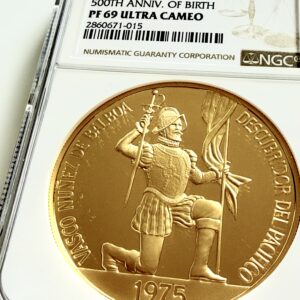
Panama – 1975 – 500 Balboas – Vasco Núñez de Balboa 500th Anniversary of Birth – Gold – Proof – NGC PF69 Ultra Cameo
6.200,00 €
Enthält 0% Mwst. befreit gem. §25c UStG
plus Versand
Jetzt entdecken -
Peru – 1967 – 100 Soles – Seated Liberty – Gold – NGC MS65
7.500,00 €
Enthält 0% Mwst. befreit gem. §25c UStG
plus Versand
Jetzt entdecken -
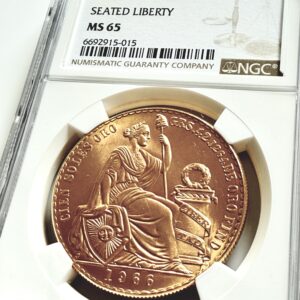
Peru – 1966 – 100 Soles – Seated Liberty – Gold – NGC MS65
7.500,00 €
Enthält 0% Mwst. befreit gem. §25c UStG
plus Versand
Jetzt entdecken -
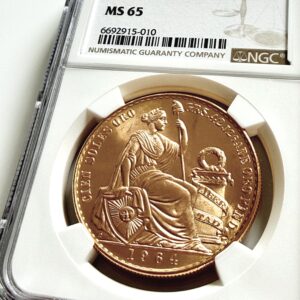
Peru – 1964 – 100 Soles – Seated Liberty – Gold – NGC MS65
7.500,00 €
Enthält 0% Mwst. befreit gem. §25c UStG
plus Versand
Jetzt entdecken -
Peru – 1963 – 100 Soles – Seated Liberty – Gold – NGC MS65
7.500,00 €
Enthält 0% Mwst. befreit gem. §25c UStG
plus Versand
Jetzt entdecken -
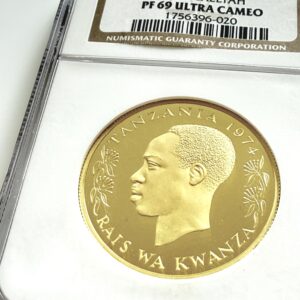
Tansania – 1974 – 1500 Shilingi – Cheetahs – Conservation Series – WWF – Gold – Proof – NGC PF69 Ultra Cameo
5.500,00 €
Enthält 0% Mwst. befreit gem. §25c UStG
plus Versand
Jetzt entdecken