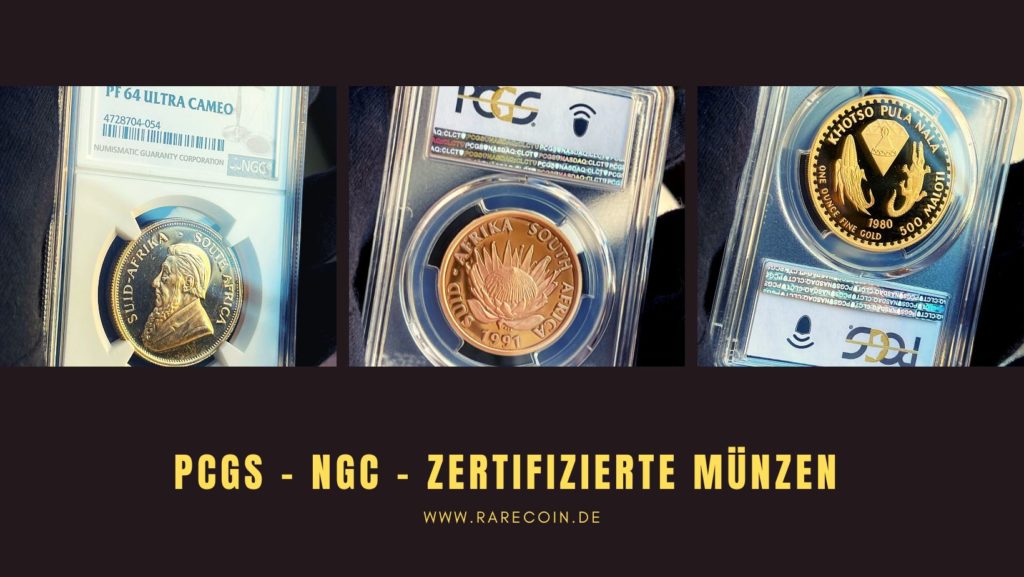
NGC, the Numismatic Guaranty Company, and PCGS, the Professional Coin Grading Service, are two third-party grading and certification services. They are the two most well-known and respected independent coin grading companies in the world.
Both companies have established themselves as market leaders in coin grading, providing collectors and investors with valuable information about the condition and authenticity of their coins.
PCGS was founded in 1986, while NGC was founded a little later in 1987. Both companies were formed with the goal of providing an independent and unbiased rare coin grading service that would ensure the integrity of the coin collecting and investing industry.
The evaluation process used by PCGS and NGC is similar in many respects. Both companies use a 70-point scale to grade coins, with 70 being the highest possible grade. Coins are graded based on a number of factors, including the coin’s condition, luster, minting, and overall visual impression. In addition, both PCGS and NGC use a numerical grading system to indicate the condition of the coin, with grades ranging from 1 (poor) to 70 (perfect).
What exactly does 70 mean?
At 70, NGC or PCGS designates a coin with full mint luster or in polished plate (PP = Proof) that shows no post-production damage under fivefold magnification.
When a coin is submitted to PCGS or NGC for grading, it is first reviewed by a team of professionals who assess the coin’s condition and authenticity. The coin is then encapsulated in a tamper-proof holder (also known as a slab ) that protects it from the environment and preserves its condition.
One of the differences between PCGS and NGC is that they focus on different types of coins. PCGS is known for its expertise in grading U.S. coins, while NGC is known for its expertise in grading world coins. However, both companies grade a wide range of coins from around the world, and collectors and investors can submit their coins to either company for grading.
Overall, both PCGS and NGC are highly respected and trusted coin grading companies whose services are essential to gold coin collectors and investors who want to ensure the authenticity and quality of their coins. Whether you are a gold coin collector or a novice investor, you can have your coins appraised by a reputable independent appraisal company to make informed decisions and ensure the long-term value of your coin collection.
Value and authenticity
The advantage of a certified coin is that its authenticity and condition are professionally tested and verifiably documented. At the same time, the holder protects the coin from direct contact and many external influences. Especially with rare and valuable coins, certification thus provides an important basis for comparability, trading, and resale.
PCGS and NGC verify the authenticity of a coin and assess its condition according to established grading standards. For coins certified accordingly, guarantees regarding authenticity and the assigned grade are provided – within the framework of the respective guarantee terms. However, the market value of a coin is not guaranteed, as this depends on factors such as rarity, demand, population, quality, and the current market situation.
After inspection, the coin is encapsulated in a sealed holder containing the certification number, description, and grading result. The certification can be verified directly with PCGS or NGC using the respective certification number.
For collectors and investors, such certification significantly reduces uncertainty when buying. Authenticity and condition no longer need to be judged solely based on personal experience, but are documented by an independent professional appraisal. This is particularly helpful in international trade, facilitating the clear description and comparability of rare coins.
Rating scale
NGC uses the internationally recognized Sheldon grading scale from 1 to 70. This scale is considered the industry standard. For example, 70 MS/PF means a coin without any rework flaws under 5x magnification (the highest grade), or 69 MS/PF means a fully struck coin with barely perceptible flaws. MS stands for Mint State , and PF for Proof . The PCGS rating scale is also based on the numbers 1-70 of the Sheldon scale.
There are other valuation services on the market, but PCGS and NGC are the only two that are universally recognized worldwide. We personally do not recommend any other services as they simply do not meet PCGS and NGC standards. Before therefore buys and sells RareCoin only PCGS and NGC certified gold coins and silver coins.
Difference between PCGS and NGC
PCGS and NGC are already world leaders in coin grading. So, what’s the difference ? However, one of the biggest differences between PCGS and NGC is that NGC is more open and shares more detailed information about the evaluation process. At NGC, each coin is appraised separately by two experts , and if they cannot agree on the coin’s value, a third expert is consulted. PCGS offers an outstanding restoration service, also known as a Gold Shield Service, in conjunction with a secure database. Both are highly reputable companies , and you can be confident that they will professionally appraise your coins.
RareCoin is an NGC authorized dealer and PCGS authorized dealer. Please contact us if you have any questions about NGC or PCGS grading or/and would like your coins graded.
PCGS NGC certified – 6 advantages when buying rare coins
PCGS and NGC-certified coins help collectors to more accurately assess high-quality pieces. Especially when buying rare gold coins, not only the appearance matters, but also verifiable, independent documentation .
- The certification confirms the authenticity and condition of the coin.
- The slab protects the coin and documents important grading data.
- The numerical degree makes coins more comparable internationally.
- The certification number enables transparent verification with the respective provider.
- Population reports show how rarely a particular degree has been certified.
- Certified coins are often easier to trade internationally and are easier for buyers to understand.
About the author: Larissa Wasserthal
Larissa Wasserthal analyzes the international market for modern, certified gold coins and their grading by PCGS and NGC at Wasserthal RareCoin.Store. Her focus is on grading, population, preservation, and how certification creates trust, transparency, and international comparability.
She combines numismatic expertise with practical market experience from the trade in rare gold coins – especially for issues whose collector value is strongly influenced by condition, certification, rarity and actual market availability.
This article was updated for you in April 2026.
The information on PCGS and NGC-certified coins, authentication, grading, slab and international tradability was revised and clarified.