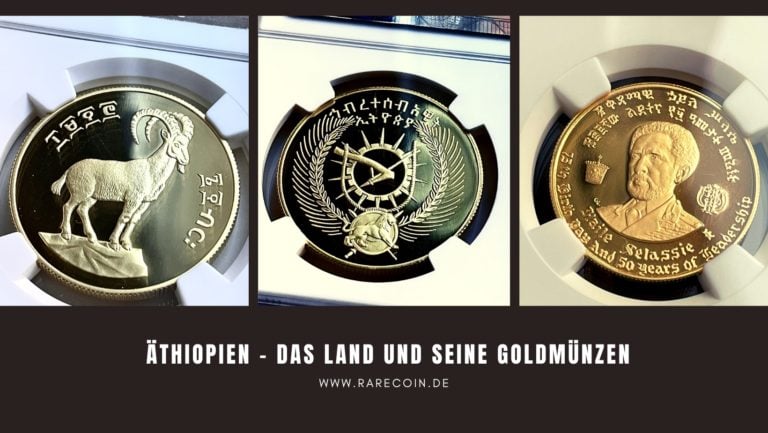

Proof, Reverse Proof, and Enhanced Reverse Proof refer to different surface finishes on modern collector coins. While classic Proof coins typically feature mirrored fields and frosted designs, Reverse Proof reverses this contrast. Enhanced Reverse Proof further combines several graduated polished and frosted areas.
These differences primarily affect a coin’s visual appeal. However, its collector value also depends on mintage, demand, condition, precious metal, certification, and market availability.
The differences at a glance
- Proof : Reflective fields and matte motif elements
- Reverse Proof : Matte fields and reflective motif elements
- Enhanced Reverse Proof : Matted fields as well as several selectively graduated polished and matt areas within the design.
1. The classic polished plate (proof)
Proof coins, internationally known as polished plates , are a coin type produced specifically for collectors. Historically, particularly carefully minted pieces were used as testing, presentation, or reference pieces, among other things. Today, proof coins are predominantly issued as standalone collector releases.
The crucial difference to standard bullion coinage lies in the meticulous preparation. The dies are polished to a high gloss, either manually or with diamond paste, to guarantee a flawless surface. The blanks (planchets) also undergo an elaborate polishing process. While circulating coins are produced with a single, quick strike, proof coins are often struck two or three times with lower pressure. This perfectly fills even the finest engravings of the die.
The visual result is the famous cameo contrast : the motif (relief) appears matte and frosted, while the background (field) acts like a dark mirror. These coins are almost always issued in limited editions and in representative cases with a certificate, making them the foundation of any serious collector’s portfolio. Proof coins are frequently issued in limited editions and often come with a case and certificate of authenticity.
2. Reverse Proof: The aesthetic reversal
Reverse Proof coins reverse the typical contrast of a classic Proof coin . The United States Mint first used this design in 2006 as part of its anniversary program for the American Gold Eagle and American Silver Eagle. Reverse Proof is now also used by numerous other mints.
As the name suggests, this process reverses the principle of proof coinage. The background of the coin – the field – is frosted, giving it a silky, almost velvety appearance. In contrast, the raised parts of the design, such as the portrait or inscription, are highly polished.
This effect is often more modern and technical than with classic proofs. A prime example is the 2021 Libertad gold coin, reverse proof, 1 oz, from Mexico . Here, the goddess of victory, Victoria, shines with a polished luster against a matte, deep background, giving her an almost floating, three-dimensional appearance.
3. Enhanced Reverse Proof: The next stage of evolution
Enhanced Reverse Proof (ERP) is the most complex of all finishing processes. It was developed to give designs even more depth and dimension than is possible with conventional methods. While standard reverse proofing polishes the entire image, ERP relies on selective contrasts .
In this process, individual parts of the design are treated differently. Modern mints use computer-controlled lasers to apply microscopically fine textures to specific areas of the design. The result is a dynamic depth: some details are highly polished, others slightly matte, and still others deeply matte.
An excellent example of this craftsmanship is the 2021 Wedge-Tailed Eagle 1oz Gold (NGC PF70) . Here, the eagle’s feathers are depicted in such detail through various levels of matte finish that each feather stands out in three dimensions. The interplay between polished highlights and matte shadows creates a visual dynamism that is perceived as “alive” to the naked eye. Such coins are often strictly limited and are usually produced only for special anniversaries. Reverse-proof issues frequently appear in limited mintages. However, a small mintage alone does not guarantee an increase in value, as demand, condition, and market availability are also crucial.
4. What influence does the minting design have on the collector’s value?
An elaborate minting design can influence the issue price and demand. However, it alone does not make a coin rare or valuable. What is crucial is the interplay of mintage, collector demand, condition, precious metal, certification, and actual market availability.
Scratches, fingerprints, and other imperfections are particularly noticeable on reflective or selectively polished surfaces. Therefore, flawless and certified specimens in NGC PF70 or PCGS PR70 can fetch higher prices. However, such a grading does not guarantee a specific price development.
5. Handling and care
Proof, reverse-proof, and enhanced reverse-proof coins should never be touched directly on their surface. Skin oils and residue can leave visible fingerprints and cause long-term changes to the surface.
Therefore, store non-certified coins in their original capsule whenever possible. Cleaning should be avoided altogether, as even careful rubbing can cause fine scratches and permanent damage.
6. Conclusion: Which version suits your collection?
Proof refers to the classic contrast between reflective fields and matte motifs. Reverse Proof reverses this effect, while Enhanced Reverse Proof combines multiple graduated surfaces within a single design.
Which version is most interesting for a collection depends on personal taste and the specific collecting area. However, for collector value, mintage, demand, condition, certification, and market availability remain more important than the designation of the coin type alone.
Updated on June 18, 2026: This article has been professionally refined and supplemented with a direct comparison of the minting versions as well as additional information on collector value, grading and care.
About the author
Larissa Wasserthal is the co-founder of Wasserthal RareCoin.Store. She presents numismatic topics in an understandable way and combines technical minting details with a focus on modern collector coins.