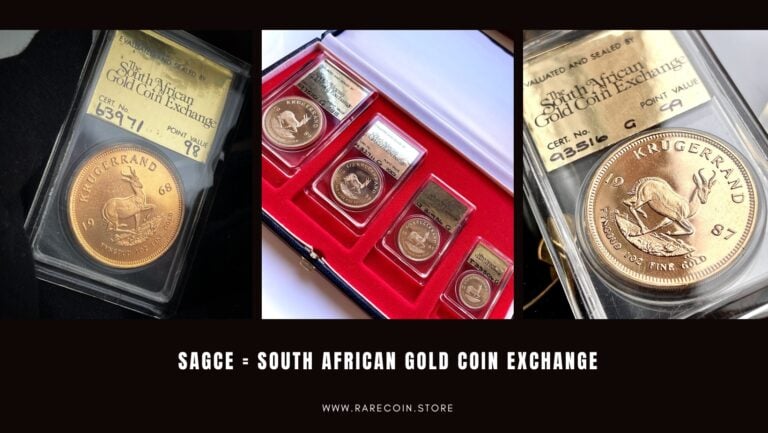

What do privy marks and mint marks mean on gold coins?
In short:
Privy marks, mint marks, and special symbols help collectors identify special issues, mints, series, or limited editions of a coin. Especially with modern gold coins, such details can be important for classification, rarity, and collector interest.
If you’ve ever wondered about the meaning of small symbols, letters, or engravings on modern gold coins, you’re not alone. These marks—often inconspicuous but full of meaning—can significantly influence a coin’s numismatic value and appeal. In this article, we explain what privy marks, mint marks, and other special markings mean, how they are used, and why they are so important to collectors.
Important to know: The terms Privy Mark and Mint Mark originally come from English and have also become established as technical terms in German-speaking countries – they are therefore usually not translated.
1. What are privy marks?
Privy marks (also known as secret marks or special marks) are small additional markings that are minted onto a coin for design or collector strategy reasons. They usually serve to identify specific occasions, themes, or series – without significantly altering the main design of the coin.
Examples of privy marks:
- A stylized “50” on the 2011 Krugerrand to celebrate “50 years of decimalization”
- Animals, buildings, or letters on investment coins to distinguish different mintings
- Year numbers, anniversary symbols or country codes
Privy marks are not security features – they serve purely aesthetic or collector-related purposes and are deliberately placed in small editions to create exclusivity.
2. What are Mint Marks?
Mint marks are markings that indicate at which mint a coin was produced. While many national mints—such as the Perth Mint—produce at only one location, the United States Mint has multiple mints, each with its own mint mark.
Examples of mint marks:
- “P” for Perth Mint (Australia)
- “S” for San Francisco Mint ( USA )
- “MMD” for the Moscow Mint (Russia)
- “SPMD” (SPMD) for the Saint Petersburg Mint (Russia)
For collectors, a specific mint mark can mean the difference between a standard issue and a rarity in otherwise identical coins.
3. Other special characters: serial numbers, serial numbers, engravings
Besides privy marks and mint marks, there are other forms of special markings on coins:
- Series mark : These indicate which motif series a coin belongs to. Well-known examples are:
- The Big Five series from South Africa features changing animal motifs – important: the actual Krugerrand coins in the series bear the series symbol, not the coins with the animal motifs themselves. Each issue consists of a set of two coins : a Krugerrand coin with the respective animal symbol (e.g., elephant) and a separate Big Five coin with the corresponding animal motif.
- Serial numbers : Some modern coins bear an embossed serial number directly on the coin’s edge – particularly noteworthy are:
- Zimbabwe gold coins , introduced to combat inflation and individually numbered.
Individual engravings on coin capsules, boxes or cases can also be part of the overall concept of a limited collector’s edition.
4. Why are these symbols important for collectors?
These small details often have a big impact on the collector’s value:
- Limited editions and rarity : Privy Mark editions are often released in very small print runs.
- Recognition value : Collectors can recognize at a glance whether a coin belongs to a particular series.
- Identification and authenticity verification : The combination of Privy, Mint Mark and certificate allows for unambiguous traceability.
- Market value increase : Especially with first editions or defective privy marks, prices on the secondary market often rise sharply.
5. Enhanced collector value through certification: Krugerrand 2012 “One of First 300 Struck”
A prime example of a numismatically significant special mark outside of the minting process is the 2012 Krugerrand Proof coin with the label “One of First 300 Struck.” This additional mark is awarded by NGC and documents that the coin is among the first 300 minted specimens. Such pieces regularly fetch significantly higher prices on the market than standard issues.
Conclusion
Privy marks, mint marks, and other special markings are far more than mere decorative details – they are expressions of rarity, significance, and collecting passion. Those who know how to interpret these marks can recognize true numismatic treasures where others see only a gold coin.
About the author
Larissa Wasserthal is the co-founder of Wasserthal RareCoin.Store. Together with Dirk Wasserthal, she focuses on modern numismatic gold coins, rare proof issues, and special collector variants such as privy marks, mint marks, and special mintings. Their focus is on the authenticity, traceable provenance, condition, and collector-relevant details of modern gold coins.