
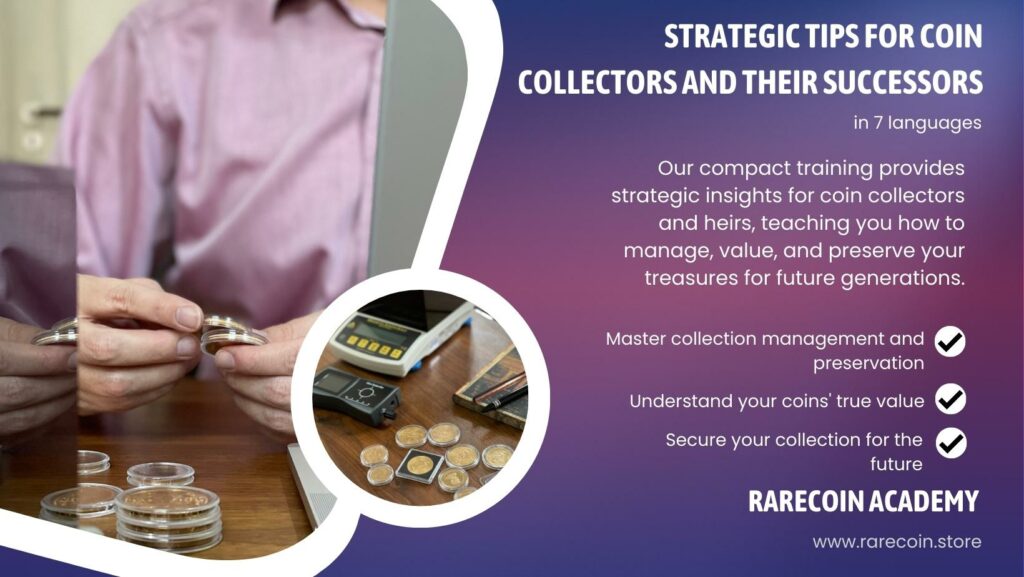
1.3. Best practices for coin care and storage
Storage tips for your coin collection
Preserve the value and longevity of your treasured coins
Your coin collection is not just an investment, but also a journey through history, art, and culture. Proper storage is crucial for preserving the value and aesthetic appeal of your collection. Below you will find some important storage tips and what to avoid to ensure your coins remain in top condition for years to come.
1. The Ideal Environment:
Temperature and humidity: Store coins in a stable environment with constant temperature and humidity. Rapid fluctuations can cause tarnishing. Maintain a room temperature and low humidity.
Light: Prolonged exposure to light, especially direct sunlight, can cause discoloration. Store your collection in a dark or dimly lit place.
2. Use the right mounts :
Coin holders: These are individual plastic holders, ideal for particularly valuable or unique coins. They allow a clear view of the coin while providing protection.
Coin albums: These book-like folders are ideal for thematic collections. They offer a simple way to display and browse your coins.
Coin tubes: Tubes are very efficient for storing large quantities, especially coins of the same size. Make sure they are made of non-reactive materials.
Coin plates: For coins of high value and with different grades, the use of coin plates is recommended – sealed plastic blocks that protect the coin from all environmental influences.
3. Materials to avoid:
PVC: Polyvinyl chloride (PVC) can degrade over time and release acids that can damage coins. Always choose PVC-free storage solutions.
Paper and cardboard: Some paper products contain sulfur, which can tarnish coins. If you use paper envelopes, make sure they are sulfur-free.
Rubber bands: These can decompose and release sulfur, which can cause tarnishing. Avoid using them near coins.
4. Handling your coins:
Wear gloves: Oils and dirt from your fingers can damage the surface of a coin. Therefore, always use cotton gloves. Hold the coin by the edges: Handle a coin by its edges to avoid touching the face.
Clean surface: When placing your coins, ensure the surface is clean and free of contaminants. Use a soft cloth or pad for this.
5. Avoid cleaning:
While you might be tempted to polish an old coin, cleaning can diminish its numismatic value. If you need to clean a coin, consult a professional to learn about the best methods, or better yet, have your coin professionally cleaned or restored by a PCGS or NGC service. Restoration services remove foreign substances that appear to have been intentionally added to the coin, including materials like putty and grease commonly used by counterfeiters. They also remove contaminants resulting from improper handling or storage, such as PVC and verdigris. It is also possible to remove fresh fingerprints.
6. Security:
Bank safe deposit box: A bank safe deposit box is a good option for particularly valuable collections. However, bear in mind that the coins may be exposed to moisture there.
Home safe: A home safe offers easy access. Make sure it is both fireproof and waterproof.
7. Regularly review your storage methods:
As your collection grows and new storage solutions emerge, it is important to regularly review your storage methods and improve if necessary.
Conclusion :
Storing coins may seem simple, but given the numerous materials and environments that can affect their condition, it’s important to take the time to store them properly. Whether you’re a casual collector or a seasoned numismatist, protecting your investment and the historical significance of your collection should always be a top priority.
Take care when cleaning:
Seek advice first: If you believe a coin needs cleaning, you should consult a professional first. Improper cleaning can drastically reduce a coin’s value.
Avoid abrasives: Never use abrasive materials or solutions, as these can scratch and damage the surface of the coin.
In conclusion, it should be emphasized that effective collection management requires both meticulous documentation and conscientious care to ensure that each coin retains its value, aesthetic appeal, and historical relevance. By following these principles and continuously expanding your knowledge of numismatics, you will safeguard and enhance your heritage for future generations.
Further materials :
You have inherited a gold coin collection, now what?
Quick Guide – Coin Care and Maintenance: The ultimate guide to preserving your precious collection


